BTS has found itself at the center of another uncomfortable controversy after an unexpected song choice during the group’s Chicago concert triggered accusations of insensitivity toward women. During the second Chicago stop of the ARIRANG World Tour on August 28, BTS participated in a spontaneous DJ segment in which songs from their catalog are randomly selected for the members to perform. The surprise selection was “134340,” a track from the group’s 2018 album Love Yourself: Tear that had not been performed live by BTS since 2019. What should have been a nostalgic moment for longtime fans quickly became controversial because of the history surrounding one of the song’s credited producers. Some fans argued that bringing the track back under the current circumstances was deeply inappropriate, while others insisted that interpreting the performance as a deliberate statement was an unfair leap. The dispute has therefore become less about the song itself and more about what BTS’s decision appeared to communicate during an already sensitive period.
The controversy centers on Bobby Jung, also known as Jung Dae Wook, a songwriter whose involvement in “134340” has become the focus of renewed scrutiny. According to the report, Jung was accused of sexually assaulting a young aspiring singer and illegally recording the assault, although he pleaded not guilty and the initial case was eventually dismissed. A later complaint resulted in prosecutors combining the cases and indicting him under South Korea’s Sexual Violence Crime Penalty Act. In 2022, Jung was sentenced to one year in prison for non-consensual filming and was also prohibited from working in certain facilities involving children, young people, or people with disabilities for five years. His legal history explains why some fans reacted so strongly when “134340” unexpectedly appeared in the concert rotation. For those fans, the issue was not simply who received songwriting credits but whether BTS should have continued publicly performing music connected to someone with such a controversial history.
The timing made the situation particularly sensitive because BTS has already faced criticism concerning associations with controversial male artists. The Koreaboo report specifically connects the “134340” debate with the ongoing backlash surrounding some members’ association with Chris Brown, whose history of violence against women has repeatedly generated public criticism. Against that backdrop, some fans saw the return of a song connected to Bobby Jung as another example of poor judgment. Their frustration was intensified by the fact that “134340” had reportedly been absent from live performances for several years. Fans therefore questioned why the song suddenly returned during a period when discussions about accountability and women’s safety were already circulating heavily online. For critics, the coincidence was difficult to ignore even if there is no confirmed evidence that BTS intentionally selected the song because of its producer.

The history of BTS distancing itself from Bobby Jung is another reason the performance surprised people. After Jung’s controversy became public, HYBE and BTS were reported to have avoided emphasizing his involvement in their music. Two songs involving him, “Home” and “Love Maze,” were reportedly removed from the Permission to Dance On Stage US DVD release even though they had previously been performed at concerts. That earlier decision created an expectation among some fans that songs associated with Jung would remain largely avoided in future BTS activities. Seeing “134340” suddenly return therefore appeared inconsistent with the precedent fans believed HYBE and BTS had established. To critics, the problem was not simply that an old song was performed but that the performance seemed to reopen a door that had previously been deliberately closed.
However, the strongest criticism rests on an assumption that the song selection was deliberate rather than random. The concert format reportedly includes a DJ segment specifically designed to create spontaneous performances from BTS’s catalog. That means the appearance of “134340” does not automatically establish that the members personally chose the track or intended to make a statement about Bobby Jung. A random selection can still produce an unfortunate result without reflecting the beliefs of the performers on stage. This distinction matters because online discussions can quickly transform coincidence into supposed evidence of intent. The available report does not establish that BTS knew in advance the song would be selected or that the group deliberately chose it despite its controversial history. As a result, the accusations should be understood as fan interpretations rather than confirmed claims about BTS’s motives.

Still, that explanation does not completely erase the criticism because large entertainment organizations are expected to anticipate sensitive issues. BTS is no longer a small act performing in an environment where catalog choices can happen without scrutiny. Every song, image, collaboration, and public appearance is examined by millions of people around the world. When a song has a controversial connection that the company previously appeared to acknowledge, fans can reasonably ask whether stronger internal safeguards should have existed. If the DJ segment genuinely relies on random selections, the production team could potentially have removed songs with problematic credits from the pool. The fact that “134340” was apparently available for selection therefore raises legitimate questions about how carefully the catalog was being managed. Even if BTS had no personal intention behind the performance, the controversy demonstrates how quickly a seemingly harmless production decision can become a reputational problem.
The emotional reaction from some fans also reflects a broader frustration with how female victims are treated within celebrity culture. Fans who criticized the performance were not necessarily arguing that BTS personally supported Bobby Jung’s alleged or convicted misconduct. Rather, some were questioning why music connected to him could be brought back into a major public performance when his history was already known. For those fans, continuing to use the work can feel uncomfortably close to separating the art completely from the circumstances surrounding its creator. Others strongly reject that interpretation, arguing that artists cannot permanently erase every piece of music associated with someone who later becomes controversial. The disagreement therefore exposes a difficult question that extends far beyond BTS: when should a performer’s work become inseparable from the behavior of the people involved in creating it?

The debate becomes even more complicated because “134340” itself has meaning for BTS fans. The song is one of the tracks associated with the Love Yourself: Tear era, making its unexpected return potentially exciting for longtime supporters. Some fans reacted positively simply because the group had not performed it live in years. The song’s rarity meant that hearing it again could have been an emotional surprise completely unrelated to the producer controversy. For those supporters, allowing the controversy surrounding one credited songwriter to dominate the conversation unfairly diminishes the work of BTS and the other people who contributed to it. That perspective is important because the song does not belong emotionally to one producer alone; it has become part of BTS’s artistic history and fans’ memories. The same performance can therefore represent nostalgia to one listener and an uncomfortable ethical question to another.
The response from defenders of BTS has been especially dismissive of the idea that the performance itself proves anything about the group’s attitude toward women. Some fans argued that the accusations were exaggerated and deliberately malicious. Their basic argument is straightforward: BTS has a large catalog, and the existence of a controversial contributor does not automatically make every associated song morally unusable. They also point out that Bobby Jung was only one person involved in the creation of the music and that BTS should not necessarily be treated as responsible for his actions. From that perspective, demanding that BTS permanently remove every song connected to him could create an impossible standard. The defenders therefore see the controversy as an example of social media turning an unfortunate coincidence into a much larger accusation.
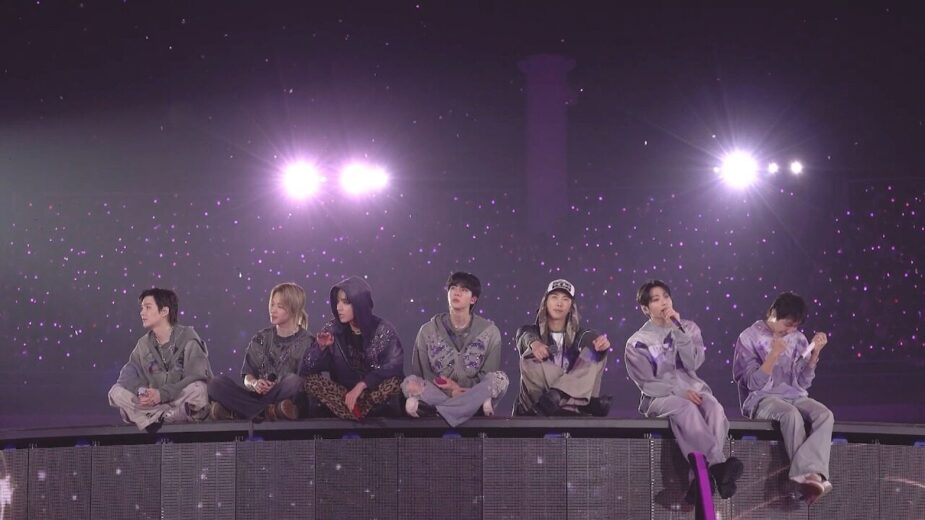
Yet the anger cannot simply be dismissed as irrational because BTS’s enormous influence changes the stakes. The group has spent years presenting itself as an artist whose music can provide comfort, empowerment, and emotional solidarity to fans. Many supporters therefore expect the members and their management to demonstrate awareness when issues involving violence against women arise. When a controversial song unexpectedly appears during a period of heightened scrutiny, some fans naturally question whether the group’s actions match the values they believe BTS represents. That does not prove hypocrisy, but it explains why the reaction can be stronger than it would be for a less influential artist. The bigger the public platform, the more carefully seemingly minor choices can be interpreted.
Another unresolved issue is BTS’s continued silence regarding the broader Chris Brown controversy mentioned in the report. Critics have argued that the absence of a clear statement makes the “134340” performance look worse because it arrives amid an existing conversation about accountability. When multiple controversies overlap, fans often interpret each new development through the lens of the previous one. A song that might normally have been treated as an exciting surprise can therefore become evidence in a larger argument about the group’s judgment. BTS may not have intended the connection, but public perception does not always operate according to intention. The lack of clarification leaves space for competing interpretations, allowing critics to frame the incident as deliberate while defenders frame it as an innocent accident. That uncertainty is arguably one of the biggest reasons the controversy has grown so quickly.
There is also a larger problem with treating every controversial artistic decision as proof of a performer’s personal beliefs. Celebrity culture encourages audiences to search for hidden messages in everything, especially when a star already faces criticism. A song title, lyric, collaboration, or performance can suddenly be interpreted as a coded statement even when the artist has provided no such explanation. In BTS’s case, the spontaneous nature of the DJ segment makes that tendency particularly relevant. If the song really was selected randomly, then assigning a specific political or ethical message to the performance could be fundamentally misleading. At the same time, random selection does not eliminate the responsibility of the production team to consider whether certain songs should remain eligible for public performance. Both realities can exist simultaneously.
Ultimately, the “134340” controversy reveals a difficult tension between artistic history, corporate responsibility, and audience expectations. BTS fans are divided between those who see the performance as an innocent return of a beloved song and those who believe the decision was deeply insensitive given Bobby Jung’s history and the broader discussion surrounding violence against women. The available reporting does not establish that BTS deliberately chose the song as a message of support for Jung, so claims about intentionality should be treated cautiously. Nevertheless, the fact that the performance generated such immediate backlash shows that fans expect a higher level of awareness from an act of BTS’s global stature. The controversy also demonstrates that distancing oneself from a controversial collaborator is not always a permanent solution when the associated music remains part of an artist’s catalog. For BTS and HYBE, the incident may ultimately become less about one surprise performance and more about whether their future decisions show that they have learned how carefully such associations must be handled.
In the end, the most serious question is not whether BTS secretly intended to defend Bobby Jung, because there is currently no evidence establishing that claim. The more reasonable question is whether BTS and its production team understood how that performance would look given the circumstances surrounding the song. Performing “134340” after years of apparent avoidance inevitably invited scrutiny, particularly while fans were already debating the group’s handling of other controversial associations. Supporters are justified in pointing out that a random song selection does not prove misogyny or support for an alleged abuser. Critics are equally entitled to ask why a track connected to such a controversial figure remained available for selection at all. Until BTS or HYBE provides clearer context, the incident will remain an uncomfortable example of how one seemingly spontaneous concert moment can trigger a much larger debate about accountability, women’s rights, and the responsibilities that come with global celebrity.