BTS may have walked away from the 2026 Grammy Awards, but the group could be preparing to write another major chapter in its international awards history at the MTV Video Music Awards.
The K-pop superstars are back in the spotlight after “SWIM,” the title track from their fifth studio album ARIRANG, earned a nomination for Song of the Year at the 2026 VMAs.
And this time, BTS isn’t competing in a category created specifically for K-pop.
They are going head-to-head with some of the biggest names in global music.
The nomination comes at a particularly interesting moment for the group. BTS recently confirmed that it would not submit music for Grammy consideration this year, following controversy surrounding the Recording Academy’s newly introduced Best Asian Pop Music Performance category.
Now, with the VMAs placing “SWIM” directly in one of its major categories, the group has another opportunity to prove that K-pop can compete on the same stage as the world’s biggest pop acts.
“SWIM” returns BTS to a race they couldn’t finish before
According to the 2026 VMA nominations announced on August 18, “SWIM” is among the contenders for Song of the Year.
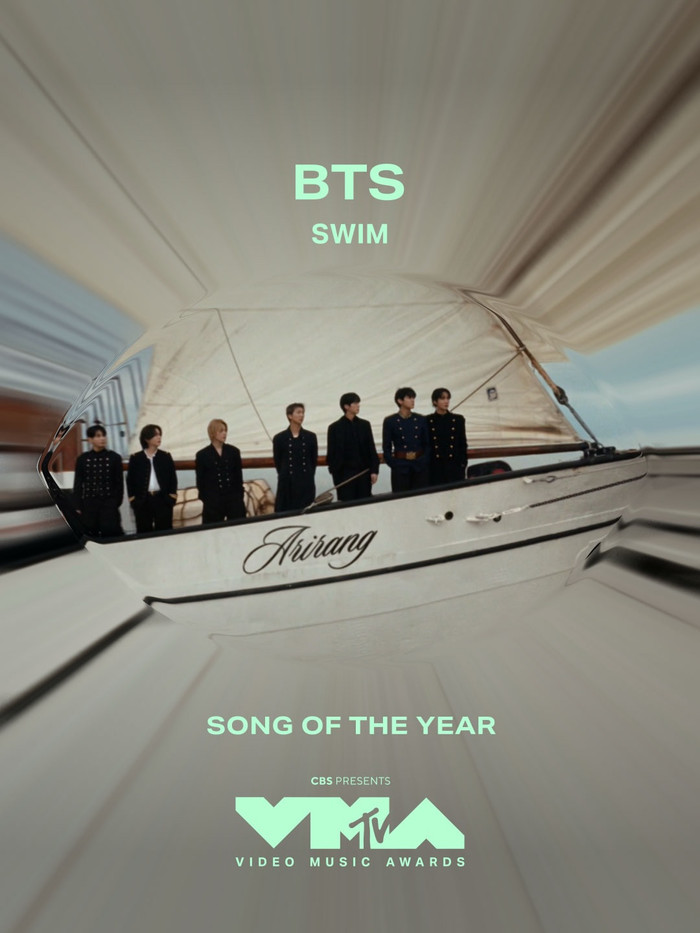
The nomination carries extra significance because this isn’t BTS’ first appearance in the category.
In 2021, “Dynamite” made BTS the first Korean act to receive a Song of the Year nomination at the VMAs. The group ultimately failed to take home the trophy.
Five years later, “SWIM” has put BTS back into the same race.
And that gives the nomination a very different meaning.
This isn’t simply another VMA nomination. It is a chance to finish what “Dynamite” started.
The competition, however, is anything but easy.
BTS is facing major names including Madonna and Sabrina Carpenter with “Bring Your Love,” PinkPantheress and Zara Larsson with “Stateside,” and RAYE with “WHERE IS MY HUSBAND!”
“GOLDEN,” the hit from Netflix’s KPop Demon Hunters, is also part of the Song of the Year field.

That means BTS won’t simply be competing against other K-pop acts.
They will be competing against the wider global pop industry.
The trophy BTS has never won
There is another reason the category has fans watching so closely.
Despite BTS’ enormous VMA history, the group has yet to win Song of the Year.
BTS previously dominated the Best K-Pop category, winning three consecutive times from 2019 through 2021.
But the group’s success in that category has never translated into a Song of the Year victory.
That makes 2026 potentially historic.
If “SWIM” wins, BTS would finally claim a trophy in one of the VMAs’ most prestigious categories — turning a nomination that began with “Dynamite” into a victory several years later.
And then there’s the bigger K-pop story

The potential significance of a BTS victory extends beyond the group itself.
In 2025, Rosé and Bruno Mars won Song of the Year with “APT.”, giving K-pop its first victory in the category.
If BTS follows that with a win for “SWIM” in 2026, K-pop would have consecutive Song of the Year victories at the VMAs.
That would create a powerful narrative:
Two consecutive years. Two major K-pop-associated victories. One increasingly global music industry.
For BTS, however, the symbolism could be even more significant because of the group’s decision regarding the Grammys.
BTS’ Grammy decision changed the conversation
The Recording Academy recently introduced Best Asian Pop Music Performance, a category covering Asian pop music, including K-pop, J-pop and C-pop.
The new category immediately sparked debate.
While the Recording Academy said the category was created to recognize the rapid growth and diversity of Asian pop, critics questioned whether creating a regional category could inadvertently reinforce the idea that Asian artists belong in a separate lane.
BTS publicly addressed the issue by saying the group would not submit music for Grammy consideration this year.
The group’s stated position was that it wanted its music to be judged for the music itself rather than being divided by region or language.
Recording Academy CEO Harvey Mason Jr. subsequently defended the new category, explaining that its purpose was not to exclude Asian artists from general Grammy competition.
He also acknowledged that some artists felt the new structure did not fully represent their identity or achievements.
That debate remains part of the backdrop surrounding BTS’ VMA campaign.
The VMAs offer BTS exactly what they wanted

And this is where the 2026 VMAs become particularly interesting.
BTS doesn’t need a separate K-pop category to compete for Song of the Year.
“SWIM” is already in the main race.
That distinction is likely to make the nomination especially meaningful to fans.
If BTS wins, the victory could be interpreted as more than another award added to the group’s enormous résumé.
It could become a statement that K-pop can compete directly in major general categories without needing to be separated by geography or language.
And considering BTS’ decision not to submit for the Grammys, the timing could hardly be more dramatic.
Could “SWIM” finally finish the “Dynamite” story?
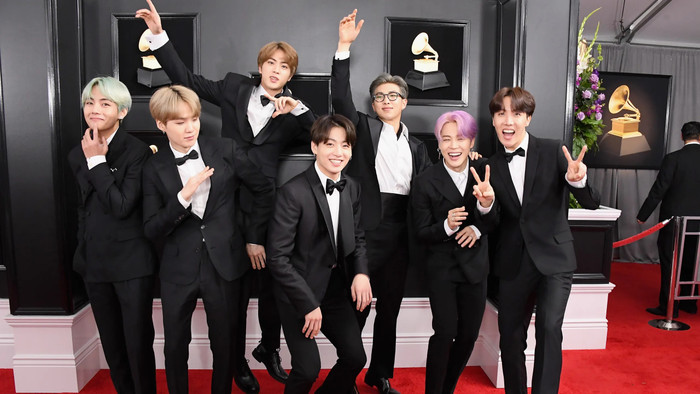
For years, “Dynamite” represented one of BTS’ biggest breakthroughs in the American awards landscape.
It made history.
It opened doors.
But it stopped short of delivering the Song of the Year trophy.
Now, “SWIM” has another chance.
A victory would give BTS its first Song of the Year trophy at the VMAs and potentially make the moment one of the most significant awards milestones of the group’s post-hiatus era.
It would also strengthen the broader K-pop narrative already taking shape at the VMAs following Rosé and Bruno Mars’ 2025 victory.
BTS turned away from one awards stage. Now another major stage has opened its doors.
And this time, they aren’t asking for a K-pop-only lane.
They’re walking straight into one of the biggest races of the night.
The question is no longer whether BTS can earn another nomination. “SWIM” has already done that. The real question is whether BTS can finally turn the unfinished “Dynamite” dream into a Song of the Year victory — and leave the 2026 VMAs with the trophy that has eluded them for years.