In the finished mythology of Yellowstone, Rip Wheeler feels inevitable—John Dutton’s adopted blade, Beth Dutton’s only soft landing, the ranch hand who became the ranch’s moral weather. Fans who met Cole Hauser through that character often assume the casting was destiny on a page.
It was not.
Before cameras rolled, the people closest to the project tried to steer Hauser somewhere else. Taylor Sheridan and John Linson’s neo-Western had sons of John Dutton to fill. Rip, on paper, looked like a pilot utility knife: two scenes, hard edges, limited runway. Hauser’s own representation, in Linson’s view, pushed him toward one of the Dutton boys—the kind of role that traditionally owns a show’s long arc.
Hauser read the same pages and heard a different future.
How the script reached him

Hauser has described getting the Yellowstone material through John Linson, a friend who was also an executive co-producer and co-creator of the series. That personal pipeline matters. This was not a cold attachment dropped by a stranger’s office. It was a trusted collaborator opening a door—and then, with management’s encouragement, pointing Hauser toward the family surname rather than the hired gun.
The industry logic was familiar. In a dynasty drama, bloodline parts are supposed to be the crown jewels. A ranch enforcer who appears briefly in a pilot can read, to agents and managers, like a guest-star trap: memorable for a week, gone by the renewal.
Hauser did not buy the trap theory.
“I just didn’t see it,” he said on the Ryen Russillo Podcast of the suggested Dutton-son path. “The one [character] that jumped off the page was Rip, and [his management team] were like, ‘What are you doing? It’s two scenes in a pilot.’”
His answer was instinct dressed as stubbornness:
“No, this character’s gonna have something really good. I can just feel it.”
That sentence is now part of Yellowstone lore because the feeling proved correct. At the time, it was a working actor overruling conventional career math.
What Hauser saw in Rip that the “dead end” label missed
Rip, even in miniature, was not empty. He was pressure concentrated: loyalty without a last name, violence with rules, tenderness rationed to one person who could survive it. Hauser had spent years playing enforcers, sergeants, villains, and compromised professionals—Dazed and Confused, 2 Fast 2 Furious, Tigerland, Pitch Black, Rogue. He knew the difference between a thug who fills space and a man whose silence organizes a world.
A Dutton son would have given him plot by birthright. Rip offered him authorship by behavior. In Sheridan’s universe, that is often the better deal. The ranch does not only run on inheritance. It runs on men who choose the brand as if it were blood.
Hauser’s bet was that Sheridan would not leave a character that vivid starved for oxygen. Two scenes in a pilot are only a dead end if the writers have no curiosity. Hauser gambled they did.
What the choice changed on screen

Casting Hauser as Rip rather than as a Costner offspring reshaped the show’s emotional geometry. John Dutton already had Kayce, Jamie, and Beth as competing definitions of legacy. Rip became something adjacent and, for many viewers, more pure: the son John effectively built rather than fathered, the partner Beth could not manipulate in the way she manipulated everyone else, the foreman whose code made the ranch’s brutality feel like religion instead of chaos.
The Beth–Rip romance—one of the series’ few relationships that feels like mutual recognition rather than strategy—depends on that casting counterfactual. A different actor in a bloodline role would have given Yellowstone another Dutton. Hauser as Rip gave it a gravity well.
The “dead end” became, across five seasons, one of the franchise’s primary reasons to care.
The later fear: not the role, but the audience
Years after that pilot argument, Hauser’s anxiety flipped direction. During the long interruption around season five—writers’ strike, actors’ strike, creative turmoil, Kevin Costner’s exit narrative, endless delay—he worried the audience might cool before the ending arrived.
“I was worried that we might lose our audience before season five, but it was quite the opposite,” he told Esquire while discussing Free Rein Coffee and the fan loyalty that carried the show through the gap.
“The fanbase truly loves not just my character, but everyone. It’s pretty special to know that people care that much. That’s certainly what you do it for.”
The contrast is almost too neat for biography. In the beginning, professionals feared Rip was too small to matter. In the end, Hauser feared the audience might stop mattering to the show’s fractured schedule—and discovered the character he had refused to abandon had helped bind viewers to the whole ensemble.
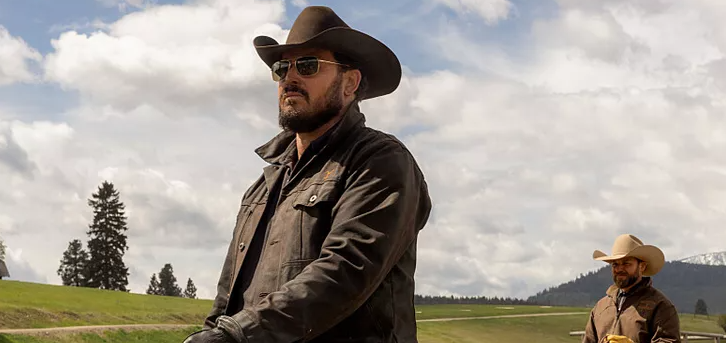
From two scenes to a franchise spine
Yellowstone eventually closed its main series run with the second half of season five after years of speculation, strikes, and leadership conflict. Rip did not vanish with the finale’s uncertainty; Hauser carried the character forward into the wider Dutton ecosystem, including Dutton Ranch, proof that the “two scenes” part had been a floor, not a ceiling.
None of that was guaranteed when management preferred a Dutton son. Hauser’s contribution to his own legend is not mystical foresight. It is literacy—the ability to read a supporting role for latent centrality—and the willingness to say no to a safer attachment.
Hollywood is full of actors who took the bigger title on the call sheet and disappeared into competent obscurity. Hauser took the part that looked like a dead end and rode it until the dead end opened into the center of the map. Rip Wheeler’s intensity, loyalty, and mystique belong to Sheridan’s writing and Hauser’s performance. The fact that we ever met that Rip at all belongs to a simpler, earlier act:
A working actor looked at two scenes, ignored the warning, and said, this one is going to be really good.
He was right.