BTS made history on July 19 by performing during the first-ever halftime show at the FIFA World Cup Final, but while the group’s appearance was widely celebrated, their live vocals quickly became one of the most debated topics on social media.
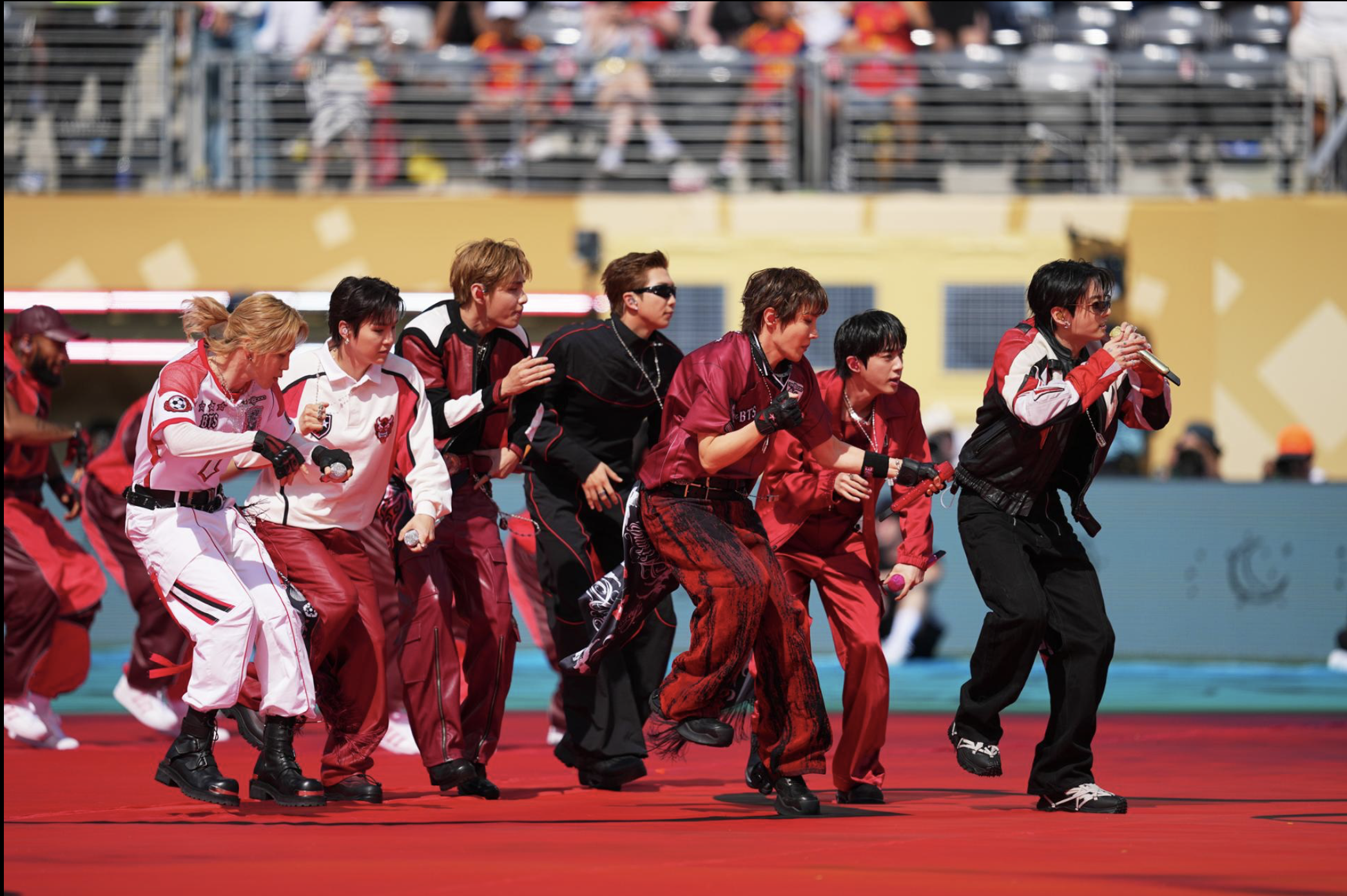
Sharing the global stage with music icons including Madonna, Justin Bieber, Shakira, Burna Boy, Gustavo Dudamel, Coldplay, and the PS22 Chorus, BTS delivered a high-energy performance of “Dynamite” instead of the previously rumored “Permission to Dance.” Although the performance lasted only around 90 seconds, it immediately generated millions of reactions online.
Many fans praised the group’s powerful stage presence, synchronized choreography, and ability to command one of the world’s biggest stages despite an extremely demanding schedule. Others, however, focused on the live vocals, with particular attention directed toward Jimin’s performance.
One of the most widely shared clips featured Jimin remaining silent for the opening seconds of his part before joining the song. Supporters argued that this moment actually proved BTS were singing live rather than relying entirely on prerecorded vocals. They pointed out that his voice blended naturally with the instrumental once he entered, describing it as evidence of genuine live singing.
Jung Kook also received widespread praise from fans, with many commenting that his live vocals sounded remarkably similar to the studio recording. Numerous posts described his performance as “flawless” and highlighted his vocal stability while performing demanding choreography.
Across social media, many ARMYs celebrated BTS for delivering live vocals under intense circumstances, calling the performance another example of the group’s professionalism.

Not everyone agreed.
Several clips criticizing the performance also went viral, particularly those focusing on Jimin. Some viewers claimed that a brief moment during the performance sounded off-key or strained, leading to criticism from users outside the fandom. A number of posts questioned his vocal stability, while others argued the short halftime format made any vocal imperfections more noticeable.
The contrasting opinions quickly divided online audiences.
Supporters emphasized that live performances naturally include small imperfections and that those moments distinguish genuine live singing from heavily edited or fully lip-synced stages.
Critics, meanwhile, argued that an event as prestigious as the FIFA World Cup Final leaves little room for vocal mistakes.
As debates intensified, many fans defended the group by pointing to BTS’ demanding travel schedule.
Less than 24 hours before taking the World Cup stage, BTS had completed the second of two sold-out concerts at Stade de France in Paris, officially closing the European leg of their ARIRANG World Tour. Following the concert, the members immediately traveled across the Atlantic to New York to prepare for the halftime show, leaving them with little time for rest before rehearsals and the performance itself.
Supporters argued that maintaining stable live vocals while adjusting to international travel, time zone changes, and continuous rehearsals demonstrated the group’s professionalism rather than exposing weaknesses.
Many also praised the members’ energy, noting that despite the exhausting schedule, BTS still performed with the precision and synchronization that have become their trademark throughout their career.
The halftime show itself marked another historic milestone for the group.
After Jung Kook became the first Korean artist to perform at a FIFA World Cup opening ceremony in Qatar in 2022 with “Dreamers,” the entire group now shared the stage at the inaugural halftime show of a World Cup Final, further cementing BTS’ place among the world’s biggest music acts.
While opinions about the live vocals remain divided, the performance once again demonstrated BTS’ ability to dominate global conversation. Within hours of the show, clips from the performance accumulated millions of views across X, TikTok, Instagram, and other platforms, with fans and critics alike analyzing every second.
For some viewers, the performance showcased BTS’ impressive live abilities under extraordinary pressure. For others, it highlighted moments they felt could have been stronger.
Regardless of where opinions fell, one thing was undeniable: BTS once again turned a brief 90-second performance into one of the most talked-about moments of the 2026 FIFA World Cup Final, proving that even the smallest details of their performances continue to captivate audiences around the world.