
The opening night of BTS’s ARIRANG World Tour in Seoul on April 9 was meant to mark a triumphant new chapter for the global superstars. While the concert received widespread praise for its масштаб scale and emotional intensity, it has also sparked heated debate—particularly over the group’s noticeably reduced choreography.
For more than a decade, BTS has been synonymous with powerful, intricate performances. However, during the concert, several tracks featured minimal movement, leaving fans divided. Some attributed the change to the heavy rain that made the stage slippery and potentially unsafe. Others, however, pointed to a deeper creative decision—one that traces back to Bang Si-hyuk.
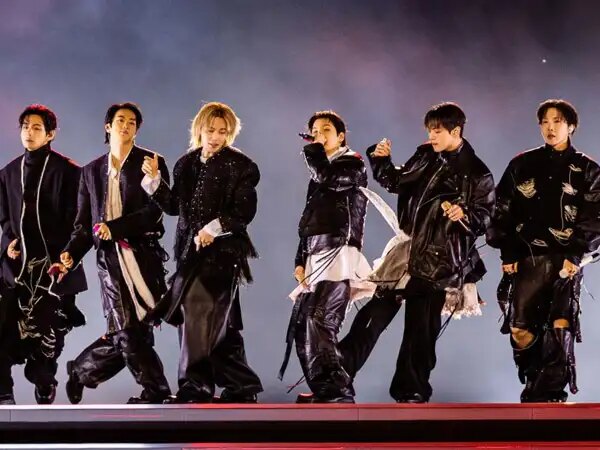
In a recent interview, Bang openly addressed his role in shaping the performance direction of the album ARIRANG, describing the decision as a bold artistic risk.

“The greatest risk in this project was whether the public would accept the bold shift we defined as BTS 2.0,” he said.
“When it came to choreography, we pursued two completely different forms of risk-taking at the same time.”
According to Bang, the creative process was far from smooth. Even in the later stages of production, choreography had not been finalized—leading him to make a drastic call.
“I decided to step in and reset everything—to discard all existing choreography drafts,” he revealed.
For songs like “Swim” and “Hooligan,” the result was a stripped-down performance style that surprised even the members themselves.
“The choreography was reduced to a level where it almost felt like there was none,” Bang explained, adding that the members questioned whether this approach truly reflected BTS’s identity.
Responding to their concerns, he shared the philosophy behind the decision:
“You already possess the kind of aura that can command a stage just by existing. For artists like you, standing still can be more than enough.”
“The intense choreography you’ve done in the past can sometimes overshadow the music. If you’re opening a new chapter, you need a new kind of performance—one that allows the music itself to be heard.”
While Bang noted that the members eventually came to understand and embrace this vision, the reaction from fans has been far more divided.
On social media, many ARMYs voiced frustration, arguing that choreography is a core part of BTS’s identity and what makes their performances so impactful. Some criticized Bang’s direct involvement, questioning whether such a defining element should have been altered so drastically.
At the same time, others defended the decision, emphasizing the physical demands of a global tour. With BTS preparing for an extensive schedule across multiple continents, a less physically taxing performance style could help protect the members’ health and stamina. Fans pointed out that during previous tours, the group often pushed themselves to their limits—suggesting that this shift may be a strategic move for longevity.
The controversy doesn’t end there. The concert has also been caught up in discussions surrounding live vocals, further intensifying scrutiny around BTS’s comeback. Still, despite the mixed reactions, the group’s ability to spark conversation remains undeniable.
As BTS continues their ARIRANG World Tour, the debate highlights a larger question: how does a group known for redefining performance evolve without losing the essence that made them iconic?
For now, one thing is certain—whether through bold risks or divided opinions, BTS is once again at the center of the global music conversation.