When Finn Little returned as Carter for Dutton Ranch, the biggest challenge was not necessarily stepping back into the boots of a character he had played for years. The Australian actor had already spent a major portion of his adolescence inside the Yellowstone universe, growing from a 14-year-old newcomer into a 20-year-old performer returning for a new chapter. What genuinely made him nervous was something much more human: walking onto a new set filled with unfamiliar people and wondering whether the same sense of family would still exist. Little told WHO that during his years on Yellowstone, the returning cast and crew gradually became like family, creating a comfortable environment where he knew what to expect. Moving into Dutton Ranch meant rebuilding that atmosphere from scratch, and he admitted he initially worried that the new production might feel completely different. Instead, he discovered that the new crew quickly gave him the reassurance he needed, turning what could have been an uncomfortable transition into another meaningful chapter of his career.
That concern reveals something important about why Carter has become more than just another television role for Little. Unlike many actors who play a character for a few months and then move on, Little essentially grew up while portraying Carter, meaning the character became intertwined with his own transition into adulthood. He was vulnerable on camera during some of his most formative years, while simultaneously developing relationships with actors and crew members who repeatedly returned to the production. That kind of environment can create an unusual emotional attachment because the workplace becomes connected to memories of growing up. When Little says that he made lifelong friends through Yellowstone and Dutton Ranch, he is describing something deeper than ordinary professional networking. The franchise has effectively followed him through different stages of his life, making the return to Carter feel almost like revisiting an important part of his own past.

His anxiety about the new production therefore makes perfect sense, especially because Dutton Ranch was not simply another season of the original show. New characters, new crew members, and a different production environment meant that many of the familiar routines Little had relied upon were suddenly gone. On Yellowstone, he knew the people around him and had developed years of shared history with them, which naturally made difficult scenes easier to navigate. Starting again meant wondering whether he would have to rebuild those relationships while simultaneously carrying a more mature version of Carter. The fact that he eventually described the new crew as “lovely” suggests that the fear was resolved relatively quickly. Rather than replacing the old family, Dutton Ranch appears to have created another professional family around him.
The surprise reunion with Jai Courtney added another emotional layer to the experience. Little had previously worked with Courtney on Storm Boy in 2019, years before they unexpectedly found themselves together again in the Yellowstone universe. What makes the reunion especially amusing is that Little did not even know Courtney had been cast in Dutton Ranch. He recalled arriving in Texas and discovering the familiar Australian actor during one of his first days on set, describing himself as shocked but genuinely happy to see him again. That moment must have felt almost surreal because Storm Boy represented an earlier stage of Little’s career, while Dutton Ranch represented the much larger world he had grown into. Suddenly, two completely different chapters of his acting life were occupying the same production.
Courtney’s role also makes the reunion more complicated than a simple nostalgic callback. In Dutton Ranch, Jai Courtney plays Rob-Will Jackson, who is positioned as a major antagonist to Carter, Beth, and Rip. That means the two actors could reconnect personally while simultaneously portraying characters whose interests are directly opposed. There is something almost ironic about that arrangement because Little’s memories of Courtney are connected to an earlier, more innocent stage of his career, while their new characters are placed inside a much darker conflict. The reunion therefore carries emotional significance without necessarily making the on-screen relationship easier. If anything, their existing familiarity could make their scenes more interesting because both performers already understand how to work together. A friendly off-screen relationship can sometimes create even sharper on-screen tension when the characters are required to become enemies.

Perhaps the most significant revelation in the interview, however, is Little’s description of how he originally became Carter. His connection to Taylor Sheridan began before Yellowstone, when the two worked together on Those Who Wish Me Dead. Little’s performance apparently left enough of an impression that Sheridan eventually brought him into Yellowstone and wrote the role of Carter specifically for him. That makes Carter unusual within the franchise because the character was not simply another role that Little auditioned for and happened to win. The character was created with him in mind, meaning that Carter’s development has always been closely linked to Little’s own growth as an actor. It also helps explain why Little speaks about the role with such affection rather than treating it as merely another credit on his résumé.
The relationship with Sheridan is particularly meaningful because Yellowstone became the project through which Little transitioned from a promising young Australian actor into an international performer. At 14, he entered a franchise populated by established stars and immediately had to operate within a demanding Western environment. That experience could have been overwhelming, yet it became the foundation of a character he would eventually carry into a dedicated spinoff. Little now describes the franchise as deeply meaningful because he has essentially grown alongside it. Carter changed as Little changed, and the actor’s increasing maturity naturally gives the character a different emotional weight. What audiences are watching is therefore not simply Carter becoming older; they are watching an actor who has spent years learning how to inhabit the same character in increasingly complicated circumstances.
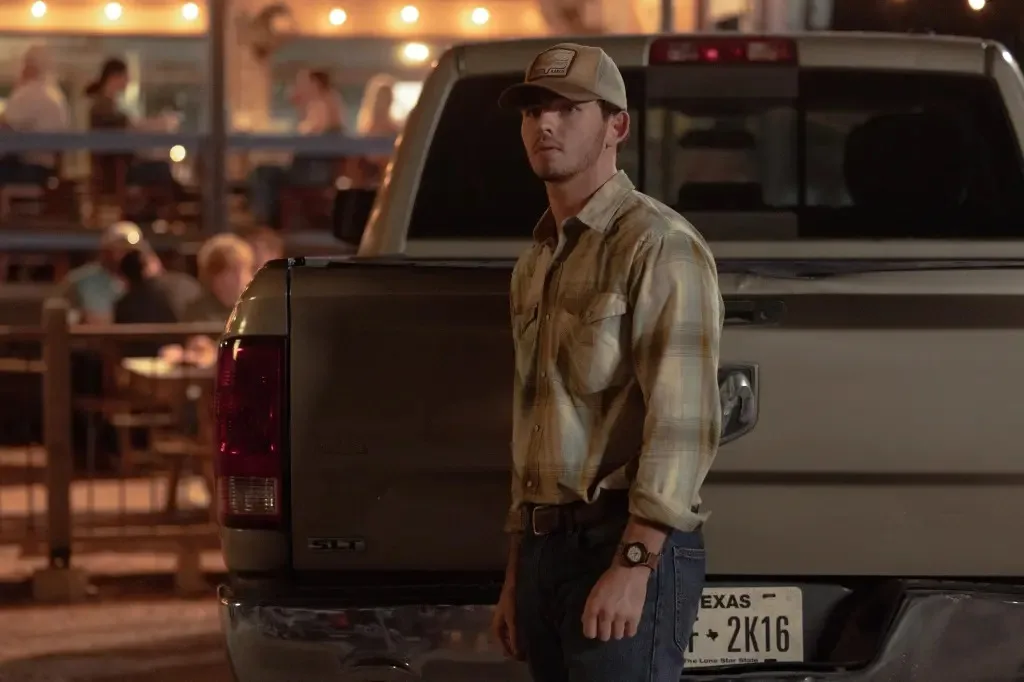
This makes the decision to center Dutton Ranch partly around Carter far more significant than it initially appears. For years, Carter existed on the edges of larger Dutton conflicts, particularly through his relationships with Beth and Rip. He was important emotionally, but the central machinery of the franchise usually revolved around older characters fighting over land, power, loyalty, and survival. The spinoff creates room for Carter to become an active participant rather than simply someone being protected or mentored. That shift is essential because a character cannot remain permanently defined by the adults who rescued him. Eventually, Carter has to make decisions that belong to him, and Little’s own age and experience make him better positioned to portray that transition. The new series can therefore function as both a continuation of Carter’s story and a coming-of-age narrative for the actor who has played him.
The emotional stakes are also higher because Carter’s relationships with Beth and Rip are no longer simply about family stability. As he gets older, their influence inevitably becomes more complicated because he must decide which parts of their worldview he wants to inherit. Rip represents toughness, loyalty, and the brutal realities of ranch life, while Beth represents intelligence, aggression, emotional intensity, and an almost obsessive determination to protect the people she considers family. Carter has learned from both of them, but learning from someone does not mean becoming exactly like them. The more interesting storyline is whether he can absorb their strengths while rejecting the destructive patterns that have repeatedly damaged the Dutton family. Little’s transition into adulthood gives Dutton Ranch the perfect opportunity to explore that question.
There is also a fascinating contrast between Little’s initial fear of starting over and Carter’s own journey toward independence. Little worried that entering a new production would mean losing the familiar relationships he had built over years. Carter, meanwhile, is increasingly being pushed toward building an identity beyond the people who raised him. In real life, Little discovered that a new environment could still provide meaningful connections, while Carter may have to discover the same thing inside the fictional world. That parallel gives the character’s journey an additional layer, even if it was not deliberately designed that way. Both actor and character are confronting versions of the same fundamental challenge: how do you move into something new without losing everything that made you who you are?
The surprise appearance of Jai Courtney also reinforces how interconnected Little’s career has become. The actor he once worked with on Storm Boy unexpectedly appeared during a new chapter of his life, almost like a reminder of how quickly his career has evolved. Little was once a young Brisbane actor working on an Australian film, and now he is playing a major character in a global franchise alongside Kelly Reilly and Cole Hauser. That trajectory makes Carter more than a fictional role because the character has effectively become a marker for Little’s professional development. Every new stage of Carter’s story corresponds with another stage of Little’s growth as an actor. The reunion with Courtney therefore carries a symbolic quality that fans might not immediately notice when watching the show.
What makes Little’s interview particularly revealing is how little of his enthusiasm is centered on fame itself. He does not primarily discuss the prestige of working with major stars or the commercial scale of the Yellowstone universe. Instead, he repeatedly returns to relationships, friendships, familiar faces, and the emotional significance of continuing to play Carter. That suggests his attachment to the franchise is rooted as much in people as it is in professional opportunity. For an actor who entered the series so young, that distinction matters because the production environment effectively became part of his adolescence. Returning to Dutton Ranch therefore means returning to a world that has witnessed his transformation firsthand.
The interview also makes Little’s confidence about the new series feel more meaningful. He initially worried that Dutton Ranch might feel completely different because of the new people involved, yet he ultimately found himself surrounded by what he called “good eggs.” That transition from uncertainty to comfort mirrors the broader purpose of a spinoff: preserving what audiences love while creating something capable of standing on its own. The show has to honor the emotional history of Yellowstone without simply copying it. Little’s experience suggests that the production found a way to give him both familiarity and renewal. He could continue being Carter while still entering an environment that allowed the character and the actor to grow.
Ultimately, Finn Little’s WHO interview reveals that the most important story behind Dutton Ranch may not be the ranch wars, rivalries, or family conflicts at all. It may be the story of an actor who entered the Yellowstone universe as a teenager and is now returning as an adult who has spent years growing alongside his character. His initial fear that the new production would lack the family atmosphere of Yellowstone was understandable, but the experience appears to have proven that meaningful relationships can survive even when everything else changes. The unexpected reunion with Jai Courtney added a nostalgic connection to his earlier career, while his relationship with Taylor Sheridan explains why Carter was such a uniquely personal opportunity in the first place. Most importantly, Little’s return gives Carter the chance to finally become more than the troubled kid Beth and Rip once took in. If Dutton Ranch continues allowing Carter to evolve on his own terms, Finn Little may eventually discover that the role he grew up with is also the role that finally allows him to step fully into adulthood.