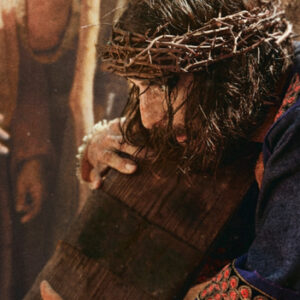
The Chosen has always balanced biblical history, Christian theology, and dramatic storytelling, but Season 6 has pushed that balance into sensitive territory. Creator Dallas Jenkins recently revealed that he and Jonathan Roumie, the actor portraying Jesus, had their most serious creative disagreement while filming the crucifixion. The issue was not a refusal to follow directions, but a question about how Jesus should speak while enduring extreme suffering. Jenkins and his co-writers had imagined Jesus saying casual or lighthearted things from the cross, while Roumie felt that tone could weaken the meaning of Christ’s Passion. Because Roumie is a devout Catholic and Jenkins is an evangelical Protestant, their disagreement also revealed two perspectives on the same sacred material. More broadly, it shows why portraying Jesus on screen is uniquely difficult: almost every creative choice can carry theological meaning.
Roumie’s discomfort was strong enough for him to tell Jenkins that he had never felt so uneasy about material they were filming. That matters because Roumie has spent years embodying Jesus and has generally worked closely with Jenkins on decisions involving the character. According to Jenkins, Roumie has questioned scripts and consulted theological advisers before, but this was the first time the issue became this serious. The problem was not simply whether a particular sentence was biblically documented, since the Gospels do not record every word Jesus spoke during the crucifixion. Instead, Roumie was responding to the atmosphere, arguing that extreme suffering should not be presented with a breezy tone. His objection was therefore about what audiences would feel and understand, not merely what Jesus technically could have said. That distinction matters because The Chosen often fills biblical gaps with imagined conversations that become meaningful once viewers emotionally accept them as part of Jesus’ story.
Jenkins’ original approach reflects one of The Chosen’s defining strategies: making biblical figures feel human. Throughout the series, Jesus laughs, jokes, builds friendships, becomes tired, and interacts with people in intimate ways rather than appearing distant. That style is a major reason the show connects with viewers who want Gospel stories to feel personal. Yet the crucifixion creates a boundary that even this humanizing approach may struggle to cross. A casual remark that makes Jesus approachable in another scene could feel jarring when his body is being tortured and death is imminent. Roumie’s resistance therefore was not necessarily a rejection of The Chosen’s human Jesus, but a warning that humanity should not accidentally dilute the gravity of the Passion.
The disagreement became more significant because David Guffey, a Catholic priest and theological consultant for The Chosen, reportedly shared Roumie’s concerns. That gave the objection another dimension, because it was no longer simply an actor’s instinct about performance. Jenkins explained that the concern was that the material was not reverent or accurate enough to capture what Christians consider a defining moment of Christ’s Passion. The situation created a fascinating creative triangle: Jenkins represented dramatic vision, Roumie represented a performer’s spiritual relationship with Jesus, and Guffey added theological scrutiny. Their perspectives did not automatically cancel one another, but each carried different responsibilities. The debate became productive precisely because nobody treated creative authority as more important than the sacred subject itself.
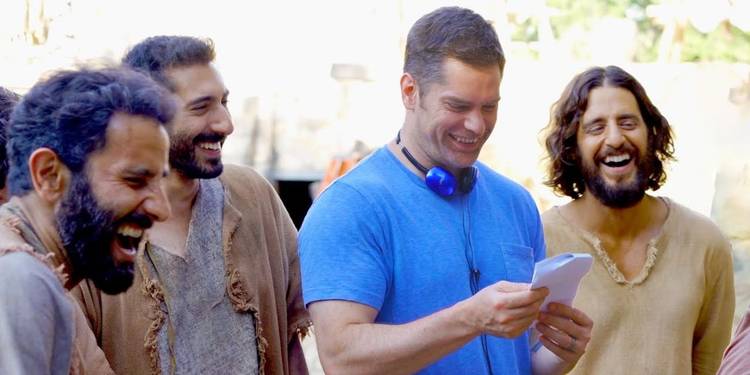
What happened next is perhaps more revealing than the disagreement itself. Jenkins said the two men spent hours going back and forth before reaching a version of the scene that made them both comfortable. Some material was already likely to be trimmed, while other adjustments were made because Jenkins respected Roumie’s perspective. Crucially, Jenkins did not describe the outcome as surrendering his artistic vision, but as finding a middle ground that preserved what the scene needed. Roumie did not refuse to perform, and Jenkins did not dismiss his concerns simply because he was the director; instead, both men treated discomfort as information that could improve the final product. That makes the episode look less like a feud and more like a rare example of creative accountability.
The physical and emotional demands of Season 6 make Roumie’s objection easier to understand. He has described the crucifixion process as mentally, psychologically, emotionally, and physically exhausting, and he previously said he prayed to experience even a tiny fraction of Christ’s suffering. During filming, he suffered an AC joint injury after a fall, involving the same shoulder used to carry the crossbeam. He has also explained that actors can experience powerful reactions when they convince themselves that extreme circumstances are real. This means the dialogue debate happened inside an already intense performance process rather than during an ordinary script meeting. For Roumie, speaking casually while portraying Jesus in agony may have felt emotionally false as well as theologically questionable.
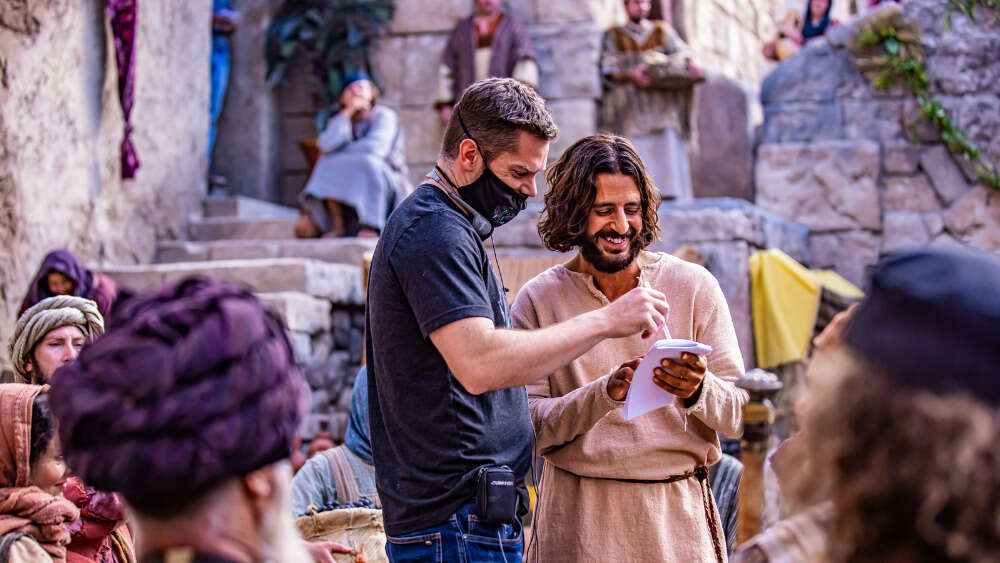
The production itself has reportedly carried extraordinary emotional weight for the wider cast and crew. Behind-the-scenes footage showed people overwhelmed by the crucifixion process, while Roumie said cast and crew members were struggling emotionally and supporting one another. Season 6 was filmed in Matera, Italy, an ancient setting that adds another layer of visual and psychological immersion. That atmosphere reinforces The Chosen’s attempt to make the Passion feel tangible rather than abstract. It also makes tone especially important, because viewers are meant to experience the crucifixion emotionally rather than observe it as a detached lesson. If a line feels too casual, it could break that immersion at exactly the moment the production wants audiences to confront the seriousness of Jesus’ sacrifice.
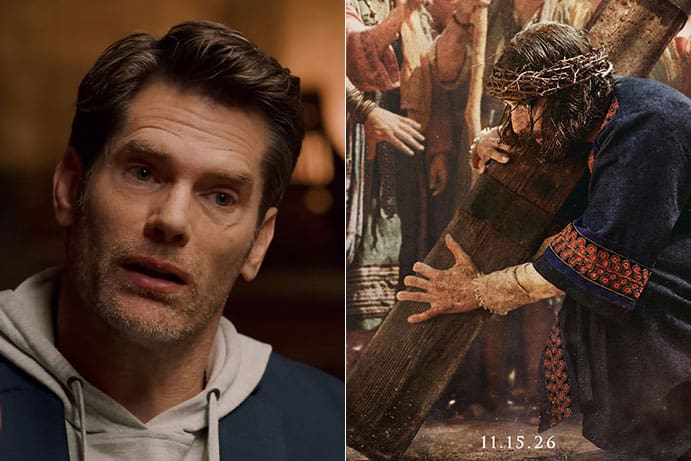
Ultimately, the Jenkins-Roumie disagreement is less about conflict than conviction. Both men wanted The Chosen to remain emotionally powerful, but Jenkins initially prioritized dramatic humanity while Roumie protected the reverence of the moment. Their ability to disagree without turning the production into a personal battle suggests their collaboration is stronger than a simple hierarchy of director and star. It also shows why the best creative decisions sometimes emerge when someone is willing to say that something feels wrong before audiences ever see it. Season 6 will be judged by whether its crucifixion captures the event’s gravity without losing the intimate humanity that made The Chosen successful. By listening, revising, and finding common ground, Jenkins and Roumie may have turned an uncomfortable disagreement into one of the season’s most meaningful creative safeguards for many viewers.