A recent social media interaction by Jungkook has ignited a heated online debate, after a dancer he reposted found herself at the center of intense criticism.
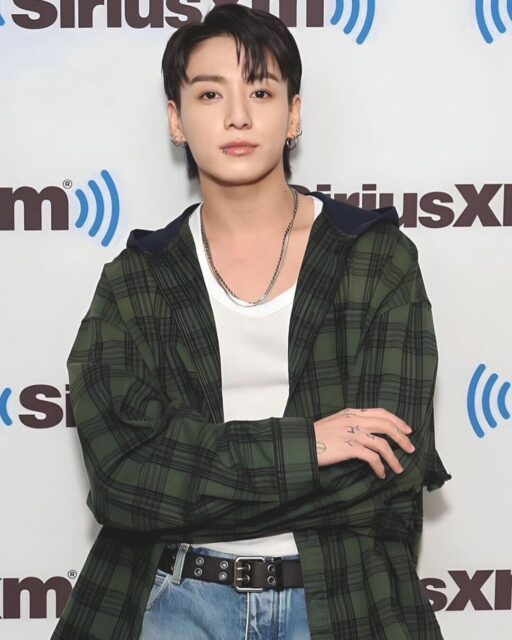
Since BTS returned with their latest album Arirang, Jungkook has been notably active online, frequently engaging with fan content. But one repost in particular has taken a controversial turn. The idol shared a video of a dancer performing choreography to the track “Hooligan,” drawing attention to her talent and boosting the video’s reach.
While the clip quickly gained traction — surpassing hundreds of thousands of views — it also became a target for negativity. Instead of focusing on the dancer’s performance, some fans began criticizing her outfit, calling it too revealing. The comments escalated rapidly, flooding her post and spreading across platforms like X (formerly Twitter).
The dancer later addressed the situation herself, writing, “Jungkook reposted me, and now I’m in the middle of a hate comment party because of it… I guess I should just enjoy it?” Her response, though light in tone, highlighted the pressure and backlash she unexpectedly faced after the repost.
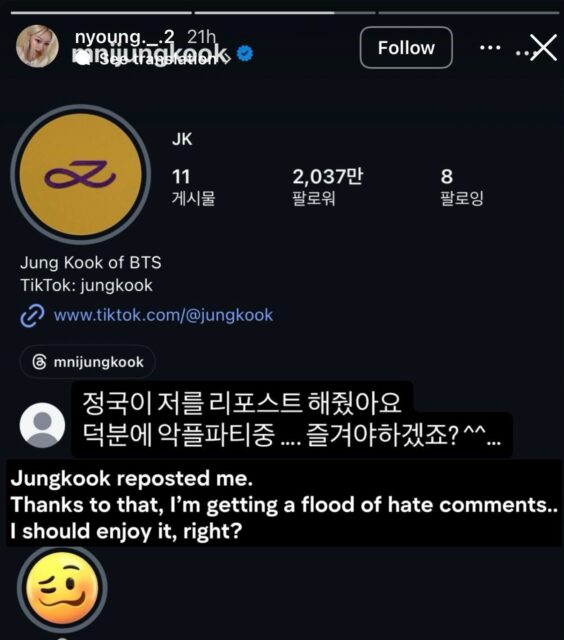
As the situation gained attention, criticism extended beyond the dancer to Jungkook himself. Some netizens argued that, given his massive global fanbase, he should be more cautious about sharing content from smaller creators. Viral posts accused him of unintentionally enabling harassment, suggesting that public attention from a star of his scale can sometimes bring harmful consequences.
Others pushed back strongly against that narrative.
Supporters of Jungkook emphasized that he cannot control how individuals behave online. They argued that reposting fan content is a common way artists show appreciation and support, especially for emerging creators. In this view, the responsibility lies with those leaving harmful comments — not with the artist who highlighted the work.
The divide in reactions has turned the situation into a broader conversation about fandom culture and accountability in the digital age.
At its core, the controversy raises difficult questions:
👉 Should public figures limit their interactions to avoid unintended backlash?
👉 Or should individuals be held fully responsible for their own behavior online?
For many observers, the incident reflects a recurring pattern in large fandoms, where visibility can be both an opportunity and a risk. Being noticed by a global star like Jungkook can instantly elevate a creator’s platform — but it can also expose them to intense scrutiny.
As the debate continues, one point remains clear: the focus has shifted far beyond a single dance video.
What began as a moment of recognition has evolved into a discussion about online responsibility, fan behavior, and the unintended consequences of viral attention. And with BTS once again dominating the global stage, moments like this are likely to remain part of the conversation.