BTS member Jungkook has found himself at the center of a heated online debate after a casual interaction with fans on Instagram was followed by an angry warning directed at individuals allegedly gathering near his home.
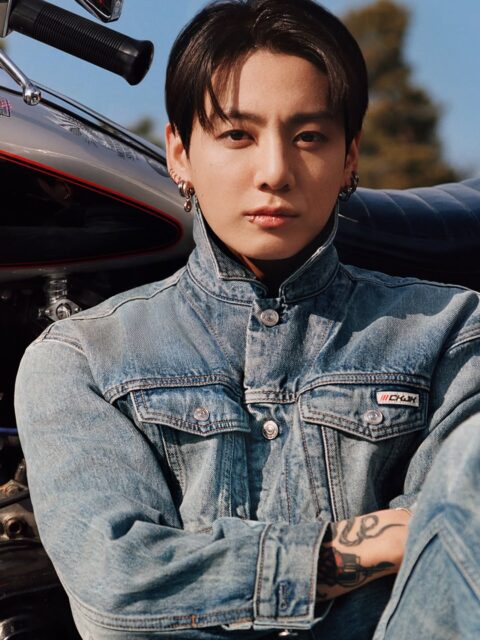
The incident began during a relaxed Q&A session on Instagram Stories, where Jungkook spent time answering fan questions and sharing moments from his day. The interaction was widely praised by fans, who have enjoyed seeing the singer become more active on social media in recent weeks.
One particular post quickly drew attention.
Jungkook uploaded a video of himself running outdoors and playfully captioned it:
“Selfie if you catch me.”

Many fans interpreted the message as a lighthearted joke, consistent with the idol’s often playful personality. The post quickly spread across fan communities, generating excitement and discussion among followers.
However, the tone changed dramatically not long afterward.
Jungkook later uploaded another video in which he appeared visibly frustrated while addressing individuals who had reportedly gathered near his residence. In the clip, he made it clear that he had never intended for anyone to wait outside his home and expressed anger toward those crossing personal boundaries.
According to fans who viewed the video, Jungkook warned that he would expose people who continued engaging in such behavior.
The message immediately sparked widespread reactions online.
Many fans rushed to defend the singer, arguing that no celebrity should have to tolerate people appearing outside their home, regardless of anything they post on social media.

Supporters emphasized that sharing updates about daily activities is not an invitation for strangers to invade private spaces. They argued that a person’s residence should remain off-limits and that the responsibility lies with those choosing to violate those boundaries.
For many fans, the issue was straightforward.
Posting a video while exercising or joking with followers is fundamentally different from encouraging people to visit a private residence. They viewed Jungkook’s frustration as both understandable and justified.
At the same time, the situation also sparked criticism from another segment of online users.
Some argued that celebrities must be cautious when sharing real-time updates about their whereabouts, particularly given the existence of obsessive fans known as sasaengs.
Critics pointed specifically to the “Selfie if you catch me” caption, suggesting that even if it was intended humorously, it could be interpreted by some individuals as encouragement to seek him out.
Others questioned whether posting location-sensitive content in real time unintentionally increases security risks for public figures.
This perspective does not necessarily excuse the behavior of those waiting near Jungkook’s home. Rather, supporters of this argument believe celebrities should avoid providing information that could make tracking them easier.
The debate has therefore evolved into two separate discussions.
The first concerns the actions of sasaeng fans themselves. Across both Korean and international fan communities, there is broad agreement that stalking, following celebrities to private locations, and gathering outside their homes are unacceptable behaviors.
The second discussion focuses on how public figures navigate social media in an era where personal updates can spread instantly to millions of people.
For years, K-pop idols have struggled to balance authenticity and accessibility with privacy and security. Fans often ask for more personal content, yet the more openly celebrities share their lives, the greater the risk that some individuals will abuse that access.
Jungkook’s recent experience highlights that challenge.
Most observers agree on one key point: regardless of how a social media post is interpreted, waiting outside someone’s home crosses a line. While people may debate whether celebrities should be more cautious about sharing their locations, personal safety and privacy remain fundamental rights.
As the discussion continues across social media platforms, the incident serves as another reminder of the difficult relationship between fame, fan culture, and personal boundaries in the digital age. For many fans, Jungkook’s message was less about a single Instagram post and more about a simple principle: being a public figure does not mean surrendering the right to a private life.