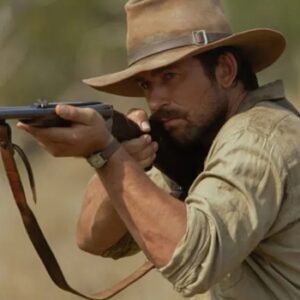
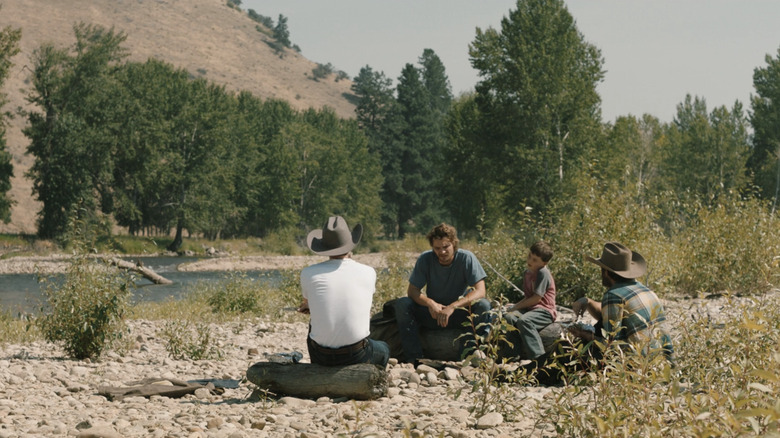
Luke Grimes has always gravitated toward the quieter corners of Kayce Dutton’s world and his favorite Yellowstone scene proves it without any need for extra drama. In the pilot episode Daybreak the character sits by a river with his young son Tate and his brothers Jamie and Lee after a simple fishing trip. They cook the catch over an open fire and trade the kind of low-stakes teasing that only brothers who still like each other can manage. The warmth stays intact even when the jokes land a little sharp and the whole thing ends with Tate chucking a fish at one of his uncles while the group breaks into real laughter. Compared to the rest of that first episode the moment feels like a brief pocket of calm before the larger Dutton storm arrives. Grimes has called it one of the best scenes he got to play across the entire five-season run and the choice makes perfect sense once you look at the kind of energy he brings to the role.
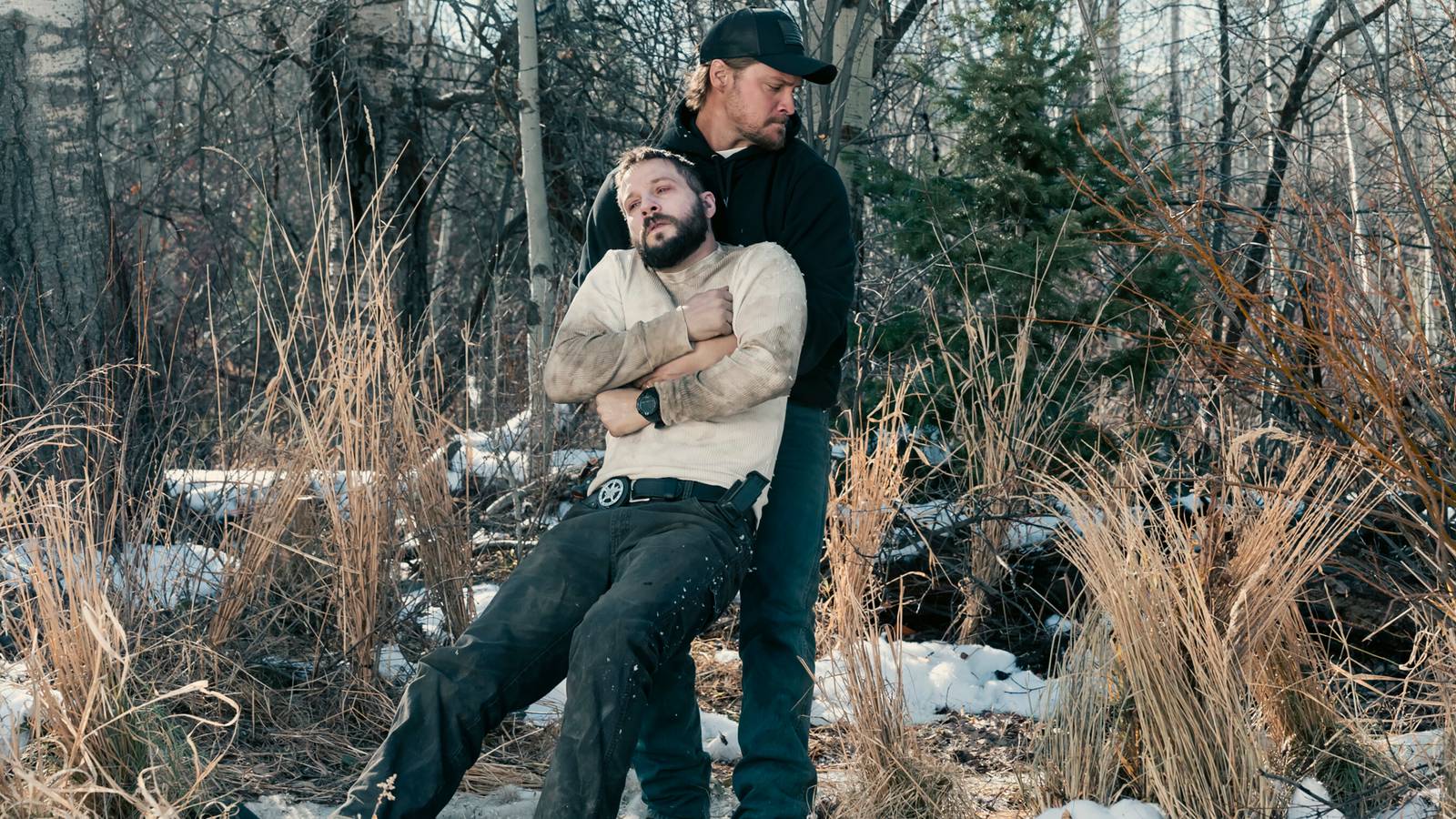
The fact that this particular riverside sit-down was also his original audition scene only deepens the attachment. Grimes still keeps the old audition file on his computer years later and has said that doing the same material on the actual day of filming felt especially meaningful. Landing the job with a scene that captures Kayce at his most grounded and least guarded created an early emotional baseline that never really left. The actor has always played the character as someone who would rather sit still and take in the landscape than chase the next power move. Choosing the fishing sequence as his personal highlight is less about nostalgia and more about recognizing the version of Kayce that feels most authentic to him. In a series full of explosive confrontations the quiet ones still hold the strongest claim on his memory.
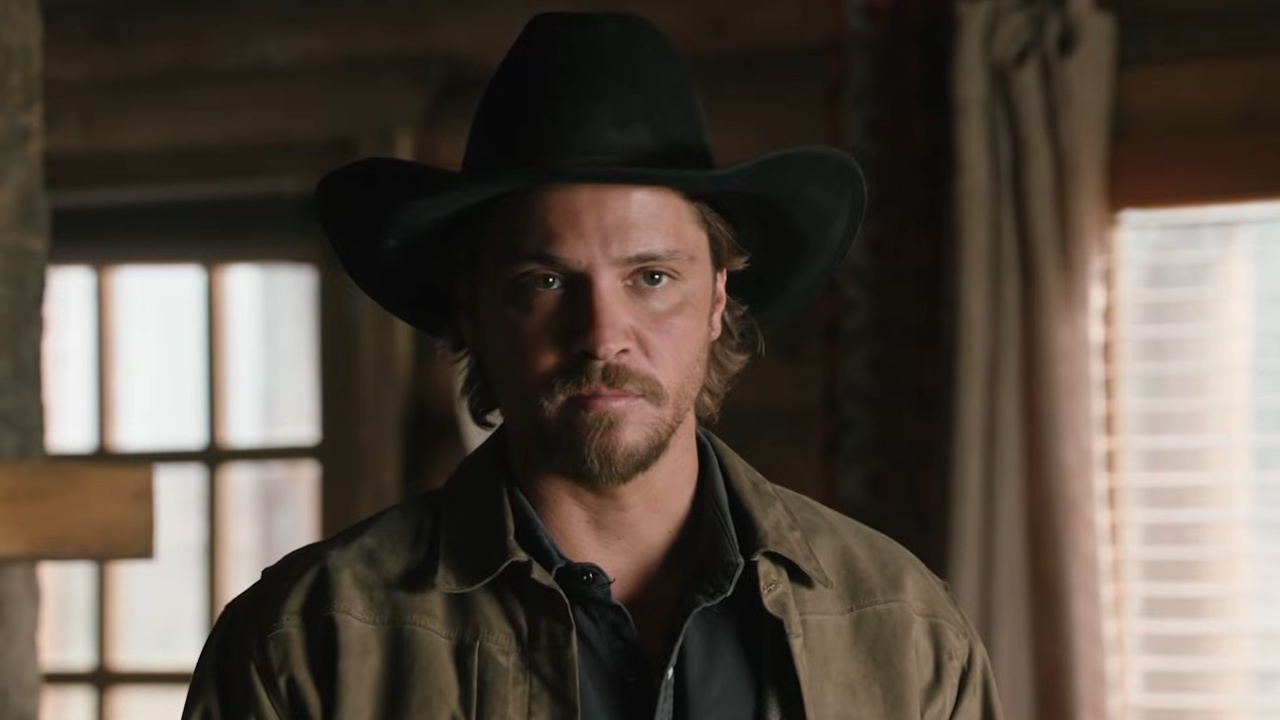
Daybreak itself was never only about brotherly bonding and riverbanks. By the end of the pilot Lee Dutton is shot dead by Robert Long a member of the Broken Rock tribe and Kayce’s own brother-in-law and the episode forces Kayce to kill Robert in return. That sudden swing from easy laughter to irreversible violence set the tone for everything that followed. The contrast is exactly why the earlier fishing scene stands out so sharply in hindsight. It remains one of the few moments when the three brothers exist in the same frame without the weight of inheritance or revenge already crushing the air. Grimes’s preference for that calmer register lines up with the way he has always underplayed Kayce’s intensity. The character can be lethal when the situation demands it yet his default setting is closer to watchful stillness than constant heat.

The realism of those early interactions is part of what made Yellowstone connect so widely in the first place. Taylor Sheridan’s neo-Western mixed melodrama with small human details that felt lived-in rather than written and the riverside scene is a perfect example of the latter. Brothers giving each other a hard time over life choices while a kid throws a fish is the kind of ordinary texture that keeps the larger-than-life family saga from floating away. Grimes has always seemed more interested in that texture than in the soapiest plot turns and his favorite-scene choice reflects the same priority. Even when the show leaned harder into chaos the actor kept locating the quieter emotional truth underneath. That instinct is what made Kayce feel like a person rather than just another piece on the Dutton chessboard.
For a while the character actually got the peaceful ending that matched the spirit of that early fishing trip. Kayce Monica and Tate survived the final season sold off their claim on the main ranch and settled into the relative quiet of East Camp. The resolution felt earned precisely because it honored the part of Kayce that never wanted the whole empire in the first place. Of course the calm did not last. Marshals pulls him back into high-stakes federal work after Monica’s death and the dysfunction that Brett Cullen’s character once described as living in Dutton blood reasserts itself. Still the fact that Grimes keeps returning to the river scene as his personal favorite suggests he has never fully let go of the version of Kayce who just wanted to sit still and watch the water. The preference feels less like a rejection of the louder storylines and more like a steady compass pointing toward what always mattered most.
In the end the choice of favorite scene reveals as much about the actor as it does about the character. Grimes has spent years playing a man who can handle extreme violence yet still prefers the sound of a river and the company of people who do not need him to perform. The pilot’s fishing sequence captured that preference before the plot had a chance to complicate it and the memory has stayed clean ever since. Even while Marshals pushes Kayce into a new chapter of badges and manhunts the actor’s own attachment remains fixed on the quieter origin point. That consistency is part of why the performance never feels like it is chasing the drama for its own sake. The riverbank is still there in the background of every heavier scene and Grimes has never stopped treating it as home base.