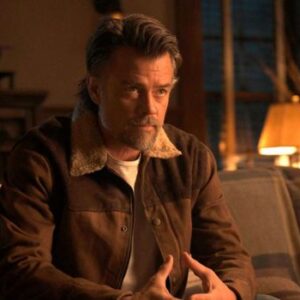
For more than five decades, Michael Landon’s portrayal of Charles “Pa” Ingalls has remained one of television’s most beloved father figures. His warm smile, unwavering optimism, and seemingly endless strength helped define Little House on the Prairie for generations, turning Pa into the gold standard of the ideal television dad. But now, nearly 50 years later, Netflix’s reboot has introduced an entirely different interpretation through Australian actor Luke Bracey—and the comparison has become one of the biggest conversations surrounding the new series.
:max_bytes(150000):strip_icc()/Michael-Landon-and-Dean-Butler-724-112425-6ef00dee60024ae5adb696a1c7c6182c.jpg)
Although both actors portray the same historical figure, Laura Ingalls Wilder’s real-life father, the two versions couldn’t be more different in philosophy.
Michael Landon’s Charles Ingalls was intentionally larger than life. Already a household name from Bonanza, Landon had enormous creative influence over the original 1974 series, shaping Pa into an almost mythical hero. He was brave, wise, endlessly patient, and rarely showed genuine weakness. Even when hardships struck the Ingalls family, viewers could always count on Pa to find the right answer. His version became the embodiment of the perfect husband, father, and protector—a character many viewers still consider one of television’s greatest role models.
Netflix, however, has taken a dramatically different approach.
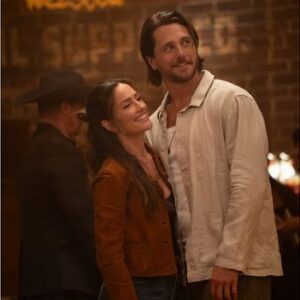
Instead of presenting Charles Ingalls as an untouchable hero, Luke Bracey portrays him as a man struggling to survive the brutal realities of frontier life. His Pa still wants to be a devoted husband and loving father, but he makes mistakes, doubts himself, and carries the emotional weight of every difficult decision.
Bracey has explained that authenticity—not perfection—was always his goal.
“He wants to be a good man,” Bracey said when discussing the role. “He wants to be a good husband, a good father, and a good member of his community. He’s not perfect. He makes mistakes… I wanted to honor him in that way without being trapped by expectations.”
That philosophy perfectly reflects Netflix’s broader creative vision.
Perhaps the most significant difference appears in Charles’ relationship with Caroline Ingalls.
In the original series, Karen Grassle’s Caroline was deeply supportive but often remained in the background while Charles made the family’s biggest decisions. Their marriage was loving, but it largely reflected the traditional gender roles commonly portrayed on television during the 1970s.
The Netflix adaptation offers a far more balanced partnership.

Rebecca Sonnenshine, the show’s creator and executive producer, has emphasized that the real Charles and Caroline Ingalls shared a relationship built on genuine equality. Rather than allowing one partner to lead while the other follows, the new series presents them as two strong individuals working together through impossible circumstances.
“They truly loved each other,” Sonnenshine explained. “No one makes decisions alone. They’re united in trying to build a better life for their family. They don’t always agree, and sometimes there’s conflict, but that’s what happens in a marriage between two strong people.”
That shift has fundamentally changed the emotional tone of the series.
Instead of focusing solely on Pa’s heroism, the Netflix version explores the difficult choices both parents must make while raising children on the American frontier. Financial uncertainty, fear, exhaustion, and disagreement become essential parts of the family’s story, making their victories feel even more meaningful.
Not everyone agrees with the new direction.
Many longtime fans still prefer Landon’s comforting, idealized portrayal, arguing that his version represents the timeless optimism that made Little House on the Prairie such an enduring classic. Others believe Bracey’s more vulnerable performance brings the character closer to Laura Ingalls Wilder’s original books and makes him feel more relatable to modern audiences.

Rather than replacing Michael Landon’s legacy, Luke Bracey appears to be reinterpreting it for a different generation.
One Pa represents the television hero audiences needed in the 1970s—a symbol of hope, strength, and unwavering moral certainty. The other reflects today’s storytelling, where even the strongest fathers wrestle with fear, failure, and impossible choices.
Both versions capture different truths about Charles Ingalls.