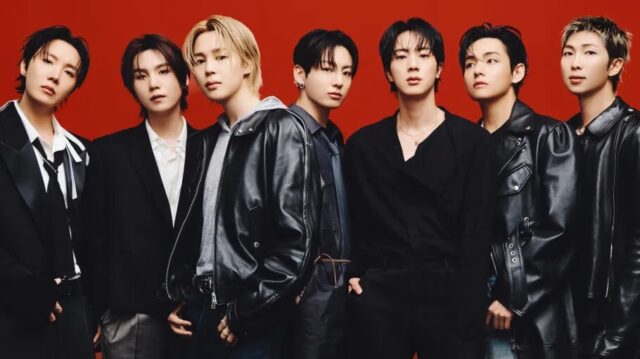
Social media has become abuzz with a video going viral, accusing Mnet of manipulating audience reactions to a BTS performance.
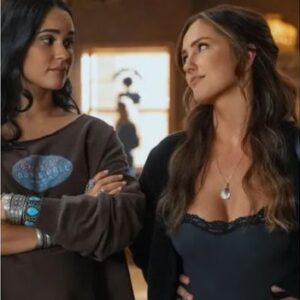
The fiasco began with a TikTok user posting a video claiming that during BTS’s 2019 promotion of “Boy With Luv,” Mnet showed a clip of them cheering enthusiastically to the performance when those reactions were actually for a different artist. The OP (original poster) claimed that she was actually reacting to girl group Badkiz’s performance of “Hot Place,” but the network edited the clip to make it appear as if she were watching BTS’s performance.
— Diamond Moon (@lucelalesbo) April 25, 2026
This clip quickly spread across X (formerly Twitter), drawing swift accusations toward BTS’s label for “paying” for this edit. Some went a step ahead and speculated that they specifically went for “white people in the crowd” as bragging points.
And it’s not like they didn’t have people losing their mind there they definitely did they just wanted white people in the crowd to brag about them #lol https://t.co/5Ncs7qJNTz
— !!! (@UpWomyn) April 25, 2026
However, ARMYs have strongly pushed back against these unfounded theories, arguing that in 2019, BTS was already a globally known name and didn’t need a random audience member’s reaction to push any agenda for them.
HYBE didnt even exist in 2019 duffer dangar bhenchod https://t.co/zETh2KFj4I
— Moonchild 2! 3! ⁷ ♡ ⊙⊝⊜ARIRANG 🪭 (@knjrkive613) April 25, 2026
As the clip continued to circulate, more users began digging into old broadcast footage from Mnet, attempting to verify whether the alleged editing actually took place during BTS’s 2019 “Boy With Luv” promotions. Some claimed they found inconsistencies in camera angles and crowd shots, while others argued that similar reaction cuts are standard practice in music show editing.
Industry insiders and longtime K-pop viewers were quick to point out that live music broadcasts often splice together audience reactions from different moments to enhance the viewing experience. This technique, while not always explicitly disclosed, has been widely used across entertainment programs — not just in Korea, but globally.
Still, the timing of the viral post has fueled suspicion.
The renewed attention on a 2019 performance — years after the fact — has led many to question whether the controversy is rooted in genuine concern or simply another example of fandom-driven narratives gaining traction online. On platforms like TikTok and X, where short clips can quickly lose context, even minor inconsistencies can spiral into major accusations.
Supporters of BTS have emphasized that during the “Boy With Luv” era, the group was already at the peak of their global expansion. The song, a collaboration with Halsey, broke multiple records and dominated international charts, making it unlikely that manipulated crowd reactions would have been necessary to amplify their success.
“They didn’t need this kind of push,” one fan wrote. “The demand was already there.”
At the same time, some neutral observers have taken a more measured stance. Rather than focusing solely on BTS or their label, they argue that the situation highlights a broader issue within the entertainment industry — the blurred line between “enhanced” broadcasting and misleading editing.
“If this did happen, it’s not about one group,” a user commented. “It’s about how shows present reality.”
So far, neither Mnet nor any representatives associated with BTS have issued an official statement addressing the allegations. Without confirmation, much of the discussion remains speculative, driven largely by fan interpretations and fragmented video evidence.
What’s clear, however, is how quickly narratives can form — and spread — in the digital age.
A single clip, stripped of context, can ignite debates that reach millions within hours. And in a landscape where fandom loyalty runs deep, those debates rarely stay neutral for long.
Whether this controversy fades as just another viral moment or sparks deeper scrutiny into broadcast practices, it serves as a reminder of how powerful — and potentially misleading — edited media can be.
For now, the question remains unresolved: was it manipulation, or simply standard editing taken out of context?
In the world of K-pop, even years-old footage can still make headlines.