The other left him behind.
And the terrifying part is… they were both right.
That night, the Ardennes forest was almost completely swallowed by snow and darkness, the cold biting deep into flesh until even breathing felt heavy, and in that suffocating silence, artillery suddenly tore the sky apart, crashing down like hammers, shaking the ground as if the war itself was breathing beneath their feet.
Easy Company was pinned down.
No visibility.
No clear communication.
Only one order: hold the line.
And then, in a moment no one could fully control, a young soldier—someone who perhaps had never truly learned what it meant to be hunted by death—panicked, broke formation, and ran into the darkness like a shadow slipping out of place.
In war, a man leaving his position is not just a man who might die.
He is a gap.
A signal.
A risk that could get everyone killed.
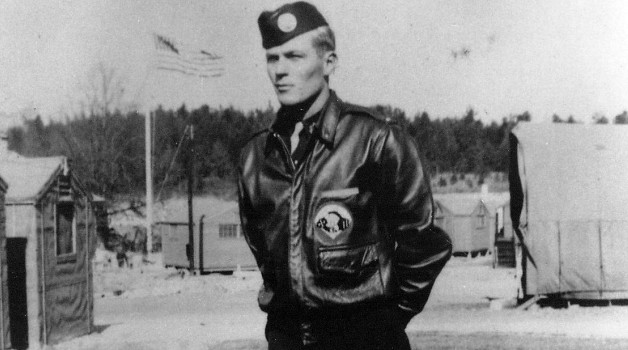
Richard Winters saw it.
He didn’t shout.
He didn’t curse.
He stood still for a single second—just long enough to understand everything—then turned to the others:
“Hold your positions.”
And before anyone could react, he moved.
Not like a hero from a story.
But like a man who knew that if he didn’t go, no one else would.
Each step he took crushed into the snow, exposed under the flare-lit sky, every second a chance to die, and yet he kept moving forward, reached the soldier, pulled him down, held him steady—not with orders, but with presence.
And then he brought him back.
No anger.
No punishment.
Just a light tap on the shoulder—as if to say: “You’re still here. That’s enough.”
But war does not create only one kind of leader.
Weeks later, in a situation almost identical—the same chaos, the same cold, the same fear tightening around men’s minds—another soldier broke.
This time, the man in command was Ronald Speirs.
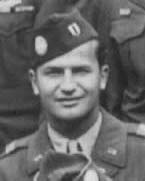
He saw it.
No one knows what went through his mind in that moment.
Maybe he measured the distance.
Maybe he calculated the risk.
Or maybe—he simply understood something the others didn’t want to accept.
That soldier… had already left the line.
And in war, there are lines that, once crossed, cannot be undone without a cost.
Speirs did not move.
He didn’t call out.
He didn’t order anyone to stop him.
He simply watched… for a few seconds.
Then turned to the rest, his voice calm in a way that felt colder than the night itself:
“Keep moving.”
No one asked what happened to that soldier.
No one turned back.
No one spoke his name again that night.
But everyone understood one thing:
Speirs had made a choice.

Two men – Two definitions of responsibility
Richard Winters believed that a leader’s duty was to bring his men home—as many as possible—and to preserve their humanity, even while the world around them was trying to strip it away.
He fought, but he held a line—an invisible boundary he refused to cross, because he understood that some victories, if achieved by losing yourself, were just another kind of defeat.
Ronald Speirs saw war differently.
Not as good or evil.
But as something more real—and far more unforgiving.
He understood that in certain moments, going back for one man could mean losing ten.
He understood that discipline does not always come from respect.
Sometimes, it comes from fear.
And he accepted that.
Without explanation.
Without apology.
Only action.
Fear and trust – which one is stronger?
The men under Winters fought because they trusted him.
They believed he wouldn’t abandon them.
They believed his decisions had limits.
And that trust pushed them forward.
But the men under Speirs operated differently.
They didn’t need to believe.
They needed to survive.
And they understood that under someone like Speirs,
there was no room for mistakes.
No gray area.
No second chances.
And that created a kind of discipline that was absolute.
The moment when theory stops mattering
During Bastogne—when cold, hunger, and artillery pushed men to their absolute limits—the difference between these two styles stopped being theoretical.
It became survival.
Winters stayed back, holding the structure together, making sure the unit didn’t collapse.
Speirs?
He ran.
Straight through enemy lines.
No hesitation.
No pause.
No need to be seen.
Just doing what needed to be done—in the fastest, most direct, and most dangerous way possible.
And then, the truth no one wants to admit…
After the war, it was easy to call Richard Winters a hero.
Because he represents something people want to believe:
That you can go through war… and still remain human.
But when it comes to Ronald Speirs, things become more complicated.
He isn’t a model.
He isn’t a symbol.
He is a question.
A question so uncomfortable… most people would rather not answer it.
Because the real question isn’t how different they were
It’s this: If you had only a few seconds to decide… who would you become?
The man who turns back to save one—
or the man who keeps moving to save the rest?