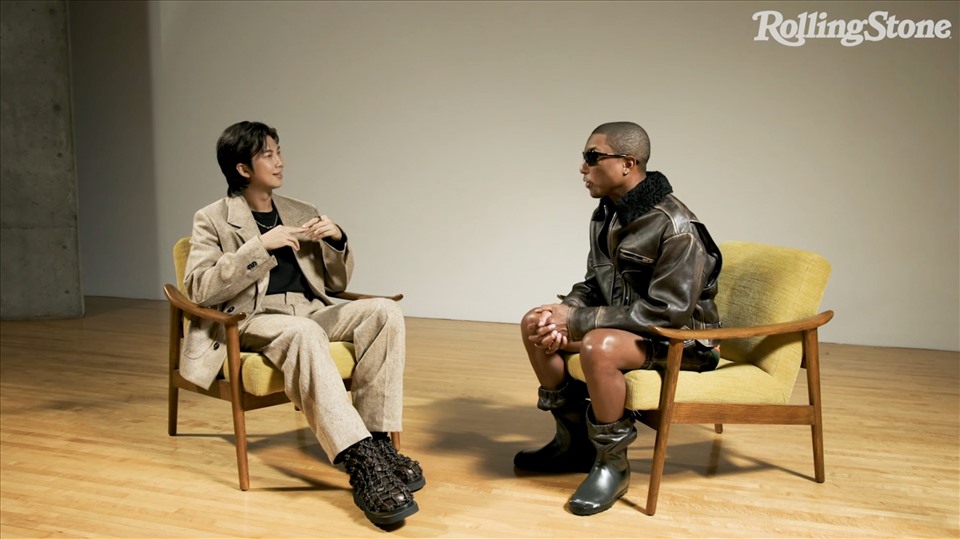
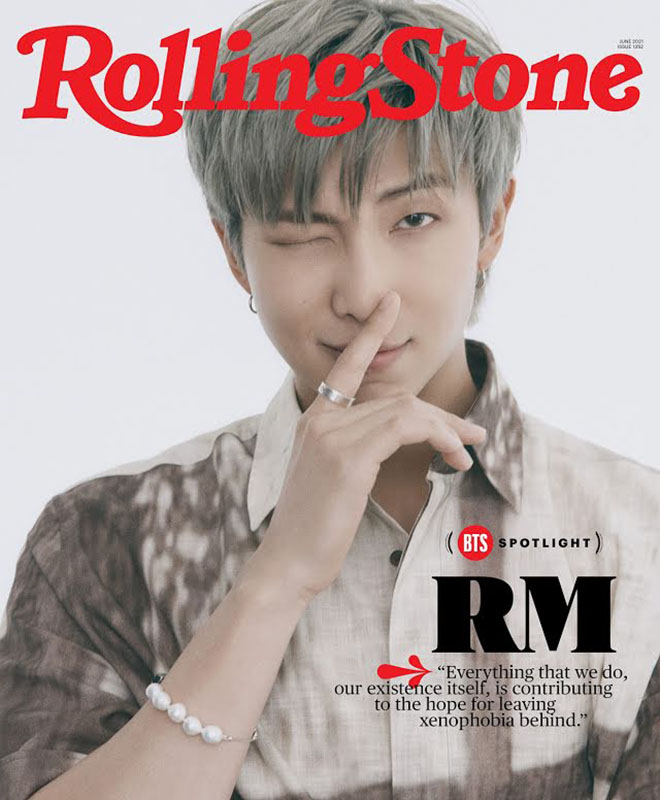
A recent interview with Rolling Stone has unexpectedly sparked online debate among BTS fans after leader RM shared a behind-the-scenes story involving Jungkook’s hit solo track “Seven.”

In the interview, RM revealed that he had supported Jungkook’s decision to keep the song’s now-famous explicit lyric—“I’ll be f*ckin’ you right / seven days a week”—despite initial hesitation from executives at HYBE. According to RM, the label had considered changing the line to a softer version, “loving you right,” but he pushed back.
“I told the label, ‘Please don’t change! Why not? He’s all grown up. He can sing an f-word,’” RM said, emphasizing his belief that Jungkook should have full freedom to express himself as an artist.
While the anecdote appeared to highlight RM’s support for his bandmate, it quickly became a point of contention on social media. A wave of criticism emerged from some fans of BTS, particularly those who felt that Jungkook’s solo success should be credited solely to his own decisions and artistic direction.
Several posts circulating online accused RM of overstating his involvement. One viral comment read, “The bullshit this man keeps saying in every interview is embarrassing…” Another user wrote, “This man has absolutely no shame.”
.@bts_bighit‘s RM (#김남준) says he told music execs to let Jung Kook (#전정국) get explicit on “Seven.”
“I told the label, ‘Please don’t change! Why not? He’s all grown up. He can sing an f-word.’”
Story: https://t.co/WZIvWh2t1t pic.twitter.com/eS1Oo47QxJ
— Rolling Stone (@RollingStone) April 13, 2026
Others questioned the necessity of RM’s involvement altogether, with one post stating, “Other members have released songs with swear words but when it’s Jungkook he needed someone to advocate for him? Absolute bs!”
Some comments went further, suggesting the story might not be accurate. “He made that up or JK didn’t even know he was asked because he never mentioned it,” one user speculated. Another added, “Seven’s success still hunting everybody—they wanna get credit on it.”
Despite the backlash, a large portion of ARMYs quickly rallied in RM’s defense, arguing that his comments were being misinterpreted or taken out of context. Supporters pointed out that RM did not claim ownership over Jungkook’s success but instead described a moment of internal support within the group.
Many fans emphasized that BTS has always operated as a collaborative unit, where members advocate for and uplift one another—even in their solo ventures. From this perspective, RM’s statement was seen less as self-credit and more as an example of leadership and solidarity.
One fan response pushing back against the criticism noted, “Solos really do hate their faves with a passion… JK would spit on them, lord have mercy.” The comment reflects a growing frustration within the fandom toward so-called “solo stans,” who focus exclusively on individual members and often reject narratives involving group support.
Notably, neither Jungkook nor RM has addressed the controversy directly. There has also been no indication of any disagreement between the two artists, with most of the discourse remaining confined to fan communities online.
The situation highlights the increasingly complex dynamics within global fandoms, where even brief remarks can be dissected and reframed into larger narratives. In an environment shaped by rapid translations, viral clips, and differing interpretations, intent and context can easily become blurred.
For RM, known for his articulate and thoughtful communication, the incident underscores the challenges of speaking openly about internal processes in a group as globally visible as BTS. Meanwhile, Jungkook’s “Seven” continues to stand as one of the most successful solo releases to come out of the group’s hiatus era.
As discussions continue, the episode serves as a reminder of both the passion and the volatility within modern fan culture—where