HYBE may have just delivered the strongest financial results in its history, but Wall Street—and South Korea’s stock market—are telling a very different story. The company’s share price has fallen dramatically from its 52-week high, erasing an estimated 1.4 trillion won from Chairman Bang Si Hyuk’s stock holdings in just one quarter. Analysts say the market is no longer focused on HYBE’s record-breaking earnings, but instead on one unsettling question: Can the company continue growing after BTS? As concerns over future profitability, concert margins, and a slowing K-pop market continue to spread, investors are becoming increasingly cautious about what lies ahead.

According to recent reports, HYBE’s stock has tumbled from more than 410,000 won (approximately $293 USD) at its 52-week peak to around 160,000 won (roughly $114 USD), representing a decline of about 60%. The steep fall has made HYBE one of the biggest stories on the Korean stock market, especially because it has occurred during a period when the company has actually reported record financial performance.
The decline has had a massive impact on Chairman Bang Si Hyuk, whose personal stake in HYBE has lost significant value. Data released by the Korea CXO Institute, which analyzed stock holdings among executives at 46 of South Korea’s largest business groups, showed that Bang recorded the largest loss among all executives surveyed during the second quarter. His stock holdings reportedly shrank by approximately 1.4058 trillion won (around $1 billion USD) over just three months, representing a decline of 35.8% in value.
What makes the situation even more surprising is the timing. Just before the stock price continued its downward slide, HYBE announced the strongest quarterly earnings in the company’s history.
For the second quarter, HYBE reported 1.45 trillion won (approximately $1.04 billion USD) in revenue and 170.9 billion won (around $122 million USD) in operating profit. Compared with the same period last year, revenue increased by 105.5%, while operating profit surged by 159.3%. Those numbers made HYBE the first Korean entertainment company ever to surpass both 1 trillion won in quarterly revenue and 100 billion won in operating profit at the same time.
Despite those historic achievements, investors remained unconvinced.
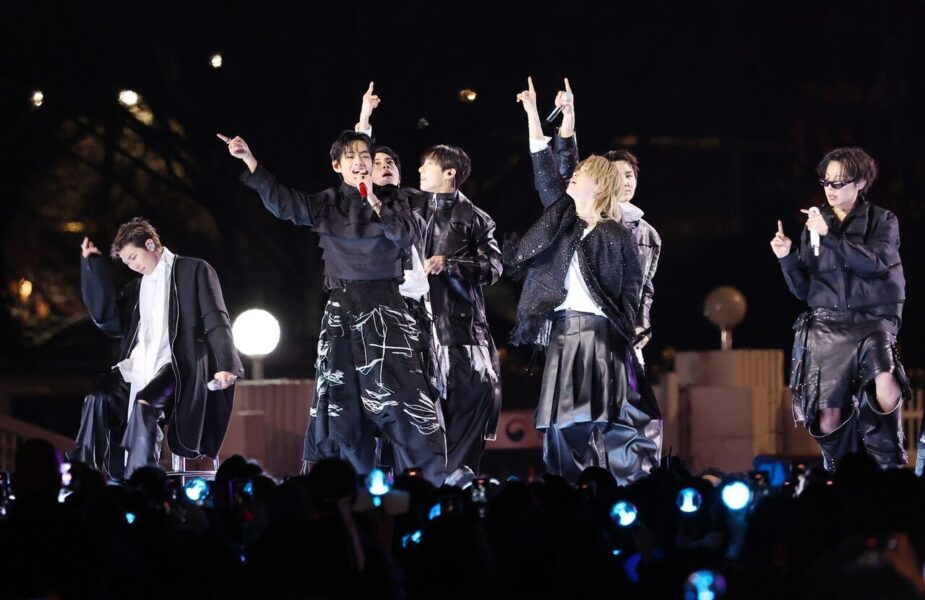
Market analysts believe the primary concern is not HYBE’s current financial performance but its future growth potential. Much of the company’s record-breaking revenue has been fueled by BTS’s highly successful world tour, which generated enormous demand for concerts, merchandise, and related content. However, some investors now fear the company may have reached a temporary peak, raising concerns that future growth could slow once BTS’s current activities become less intense.

Analysts have also questioned the long-term profitability of HYBE’s concert business. While large-scale tours undoubtedly generate substantial revenue, several reports suggest that the operating margins from concert operations may not be as strong as investors had hoped. As a result, some securities firms have lowered their target prices for HYBE shares despite the company’s record earnings.
The concerns extend beyond HYBE alone. Industry observers note that the broader K-pop market has begun facing new challenges. Album sales, long considered one of the industry’s most reliable revenue sources, are reportedly showing signs of slowing. At the same time, investors have increasingly shifted their attention toward semiconductor companies and other large-cap technology stocks, reducing enthusiasm for entertainment companies.

Because of these changing market conditions, expectations for several other major K-pop agencies have also become more conservative.
For now, HYBE remains one of the most profitable entertainment companies in South Korea, and BTS continues to be a major driver of its business. Yet the sharp decline in the company’s stock price demonstrates that investors are looking beyond today’s record earnings and focusing instead on whether HYBE can sustain this level of success over the coming years in an increasingly competitive entertainment landscape.