A South Korean Air Force soldier has made Kendrick Lamar’s music the center of an international debate today. Private First Class Eom Jun, from the 19th Fighter Wing’s Military Police Battalion, performed “Not Like Us” and “TV Off” during KFN’s Comfort Train program. The clip later went viral after a Kendrick Lamar X account shared it on September 1, 2026. American hip-hop outlets quickly picked it up, exposing the performance to audiences far beyond South Korea. Some praised Kendrick Lamar’s global reach, while others questioned the cultural context of those songs. What looked like a routine morale performance suddenly became a debate about globalization, interpretation, and cultural boundaries.
The performance took place within South Korea’s military entertainment culture, where soldiers often perform popular songs for fellow service members. Comfort Train is designed to boost morale, so Eom Jun’s appearance was fundamentally recreational rather than political. He performed in military uniform, turning two recognizable Kendrick Lamar tracks into high-energy stage numbers. Both songs were also featured during Kendrick Lamar’s Super Bowl halftime show, which helped make them familiar to mainstream audiences. Korean coverage reported that the video had already gained substantial views before its international explosion. The controversy therefore emerged mainly when foreign viewers encountered the performance through social media.

“Not Like Us” created the strongest backlash because its meaning is inseparable from Kendrick Lamar’s feud with Drake. Released during their 2024 rap battle, the song became a diss track, cultural phenomenon, and global anthem. Its references are rooted in American hip-hop history, Black cultural expression, and a specific conflict between two artists. International listeners can easily recognize the song without necessarily understanding every layer behind it. For many fans, especially after the Super Bowl, it simply sounds like a huge Kendrick Lamar hit. That disconnect between global popularity and original context sits at the heart of the controversy.
Several international commenters argued that Eom Jun’s performance missed the cultural message behind Kendrick Lamar’s music. Some questioned why a South Korean military event would use songs connected to such specific Black American experiences. Others criticized the institutional setting, suggesting that complex cultural material had been reduced to entertainment. Those reactions raise questions about context, but they can also oversimplify how global music consumption works. People can enjoy, perform, and reinterpret music without sharing the artist’s nationality or background. The more difficult issue is whether institutions should consider cultural meaning before choosing songs for official performances.
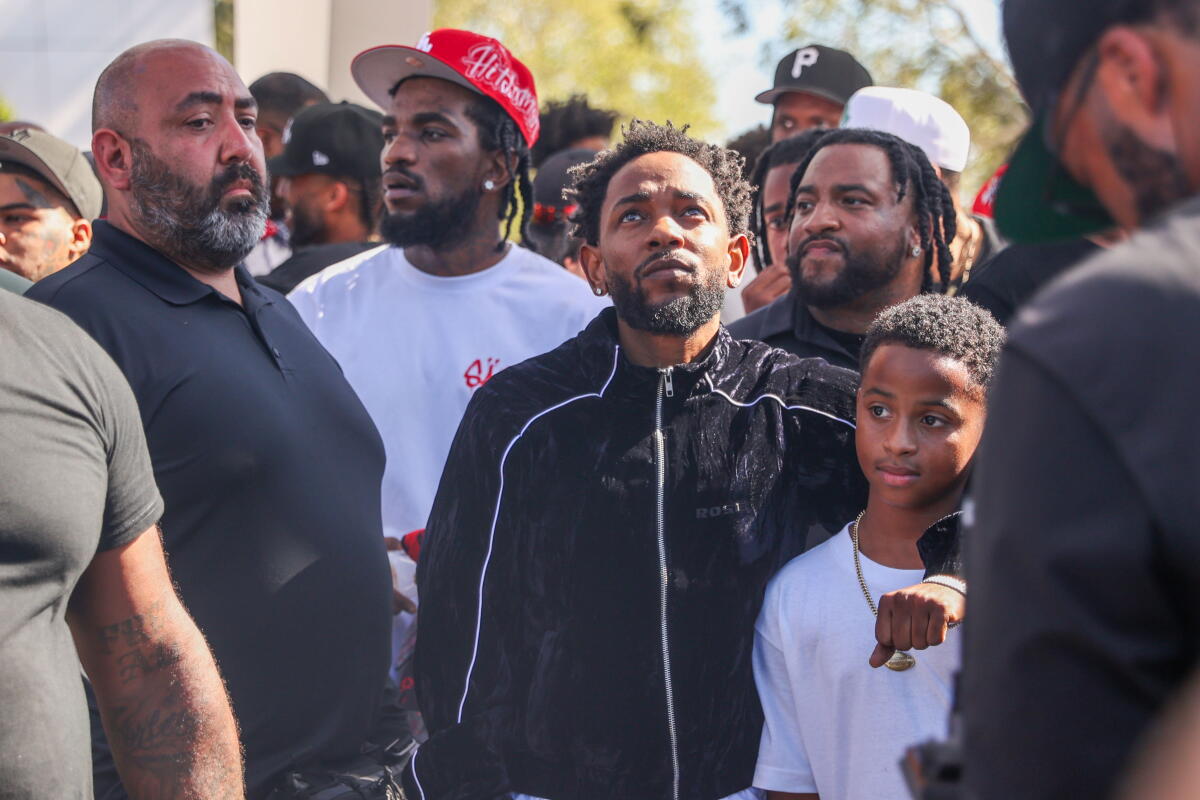

There was also a strong positive reaction, with many viewers celebrating Kendrick Lamar’s extraordinary influence. Supporters saw Eom Jun’s performance as proof that Black music has become a global cultural language worldwide. That interpretation focuses on exchange rather than ownership, showing how music can connect audiences separated by geography and history. Kendrick Lamar’s work has reached listeners far outside the United States, including South Korea. Yet global influence does not automatically remove questions about context or representation. Both ideas can exist together: the performance can demonstrate cultural reach while still inviting a serious conversation about meaning.
The military setting makes the debate interesting because it changes how the performance can be perceived. Eom Jun was participating in a morale event, and there is no indication that he intended commentary about race, American politics, or Kendrick Lamar’s feud with Drake. He likely selected recognizable songs because they were energetic and suited to an audience. However, viewers unfamiliar with Comfort Train may see the military uniform before understanding the program’s entertainment purpose. That difference creates a gap between intention and interpretation. Once the video reached international audiences, the original Korean context became only one part of its meaning.

The involvement of XXL Magazine and hip-hop accounts accelerated the controversy dramatically online. Once the footage reached people familiar with Kendrick Lamar’s catalog, viewers supplied their own knowledge of the songs and their histories. Social media then compressed a local performance into a debate about race, authenticity, military symbolism, and cultural exchange. This is how internet virality works: context becomes shorter while reactions become louder. A harmless performance for Korean service members can look provocative when presented to an American hip-hop audience. Neither reaction fully explains the event, but both show how digital platforms reshape cultural meaning.
The contrast between Kendrick Lamar’s artistic identity and the military stage also explains the unusual reaction. Kendrick Lamar is associated with Black identity, social commentary, personal struggle, and detailed storytelling about American life. “Not Like Us,” despite becoming a party anthem, originated from an intensely personal rap conflict rather than generic entertainment. “TV Off” carries its aggressive, high-energy character, making it easier to use as a performance track. Placing both songs inside Comfort Train inevitably changes how some viewers interpret them. That does not automatically make the performance inappropriate, because music has always evolved through reinterpretation.

More broadly, the incident highlights the complicated globalization of Black music. Hip-hop has influenced audiences across Asia, Europe, Africa, and Latin America for decades, while K-pop has similarly absorbed and transformed international musical influences. Kendrick Lamar’s popularity shows that this exchange now operates on a mainstream scale. However, consuming global music does not guarantee understanding every historical or cultural layer attached to it. The debate around Eom Jun therefore concerns more than whether Koreans can perform Kendrick Lamar. It asks how audiences should engage responsibly with music once it travels far beyond the community that created it.
Ultimately, Eom Jun’s viral performance is neither simply an offensive misunderstanding nor a flawless example of cultural exchange. It demonstrates how far Kendrick Lamar’s music has traveled while exposing the different meanings listeners attach to the same songs. A routine Comfort Train appearance became global news because social media removed it from its original environment and invited worldwide judgment. The backlash shows that cultural appreciation and cultural misunderstanding can exist in the same conversation. More importantly, the debate reveals how globalization allows music to cross borders faster than context can follow. Kendrick Lamar’s songs reached a South Korean military stage, and the controversy became another unexpected chapter in their global cultural journey worldwide.