The shot did not sound louder than the others.
In the frozen silence of March 1940, on a snow-covered stretch of forest somewhere along the Finnish front, gunfire had already become part of the landscape—sharp cracks echoing across white emptiness, swallowed quickly by the cold air. Men fired, moved, hid, and fired again. Nothing about that moment seemed different.
Until it was.
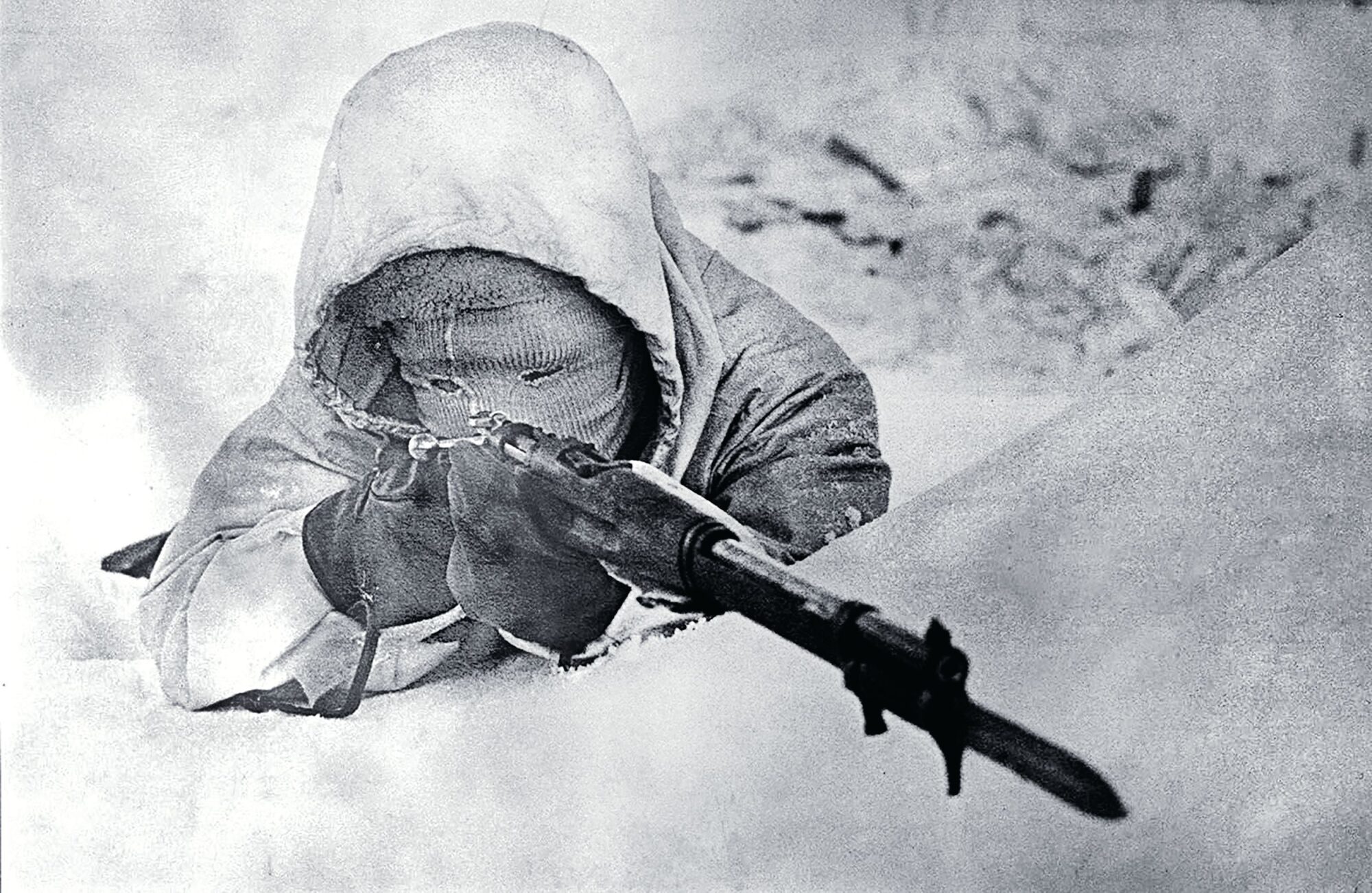
Simo Häyhä—the man Soviet soldiers had begun to call The White Death—had been operating as he always did: low to the ground, perfectly still, blending into the snow so completely that even trained eyes struggled to detect him. His rifle rested firmly against packed snow, carefully shaped to support his aim. No unnecessary movement. No wasted breath.
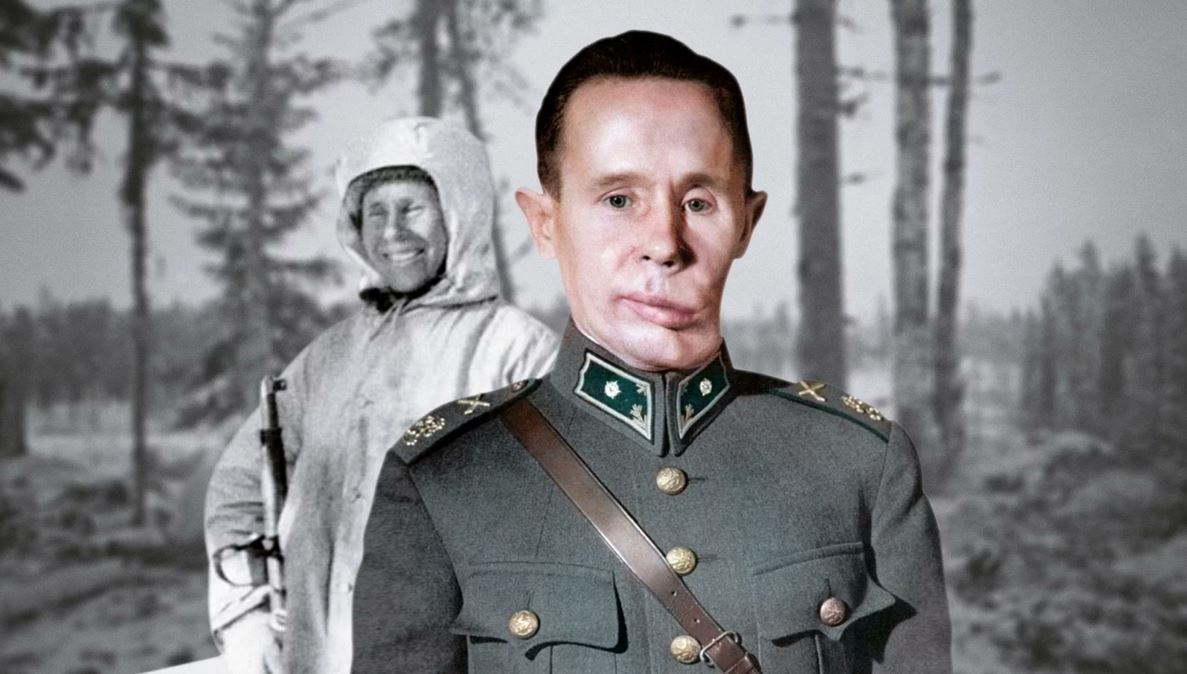
He had survived months like this.
Longer than most.
That alone was unusual.
March 6, 1940 — The Shot That Found Him
The Winter War was nearing its end, though no one at the front could feel it yet. Fighting remained intense, unpredictable, and often brutal at close range. Soviet forces, frustrated by invisible losses, had begun deploying counter-snipers and more aggressive search tactics.
Häyhä had already become a problem they wanted solved.
Not just a soldier.
A symbol.
That day, visibility was deceptive. The snow reflected light harshly, flattening depth, making distances harder to judge. The air was still—but not quiet. Somewhere beyond the trees, Soviet troops were advancing.
Häyhä adjusted slightly, tracking movement.
Then—
A flash.
Not from his rifle.
From somewhere else.
The bullet that hit him was not ordinary.
Accounts suggest it was an explosive or expanding round—designed to cause maximum damage on impact. When it struck his face, it did not simply wound him.
It detonated.
The impact shattered his jaw. Bone fragmented instantly. Tissue tore apart under the force. The lower half of his face was effectively destroyed in a fraction of a second.
There was no time to react.
No time to understand.
Just force. Light. Then—
Nothing.
He collapsed backward into the snow, blood spreading across the white surface in stark contrast, steam rising faintly in the freezing air.
Nearby Finnish soldiers rushed to him, but what they saw was almost unrecognizable.
“Is he alive?” one of them asked.
Another hesitated.
“I… I don’t know.”
His face was gone.
Or at least, it seemed that way.
But he was breathing.
Barely.
Between Life and Death
He was evacuated under extreme conditions. The journey itself was uncertain—roads were rough, transport limited, and time was slipping away.
At one point, according to later accounts, he was believed to be dead.
A soldier reportedly checked for signs of life, then moved on.
But Häyhä was not dead.
Not yet.
He was taken to a field hospital, then transferred again. Surgeons worked quickly, not to restore, but simply to keep him alive. The damage was catastrophic—jaw destroyed, severe blood loss, facial trauma that would require years to fully reconstruct.
He fell into a coma.
Days passed.
Then weeks.
The war continued without him.
Silence
In the hospital ward, machines were minimal. This was not modern intensive care. Survival depended on basic intervention, careful monitoring, and something less measurable—resilience.
Doctors were unsure.
Some believed he would not wake.
Others believed that if he did, he would not be the same man.
But time moved forward anyway.
March 13, 1940 — The War Ends
On the day the Winter War officially ended, something unexpected happened.
Häyhä opened his eyes.
It was not dramatic.
No sudden movement.
No clear awareness.
Just a slow return to consciousness.
A nurse noticed first.
“Doctor… he’s awake.”
The room changed instantly.
After days of uncertainty, after a wound that should have been fatal, the man who had become a legend on the battlefield… had survived.
The Long Recovery
But survival was only the beginning.
The damage to his face required extensive reconstruction. Surgeries followed—painful, complex, and uncertain in outcome. His jaw had to be rebuilt. Bone grafts. Alignment corrections. Relearning basic functions.
Speaking.
Eating.
Even breathing comfortably.
Each step took time.
Months turned into years.
Häyhä rarely spoke about the experience. Those who knew him later described him as quiet, reserved—not broken, but changed in a way that is difficult to measure.
He did not return to war.
He returned to life.
Before the Shot — The Making of “The White Death”
Long before that moment in March, Häyhä had already carved his place in history.
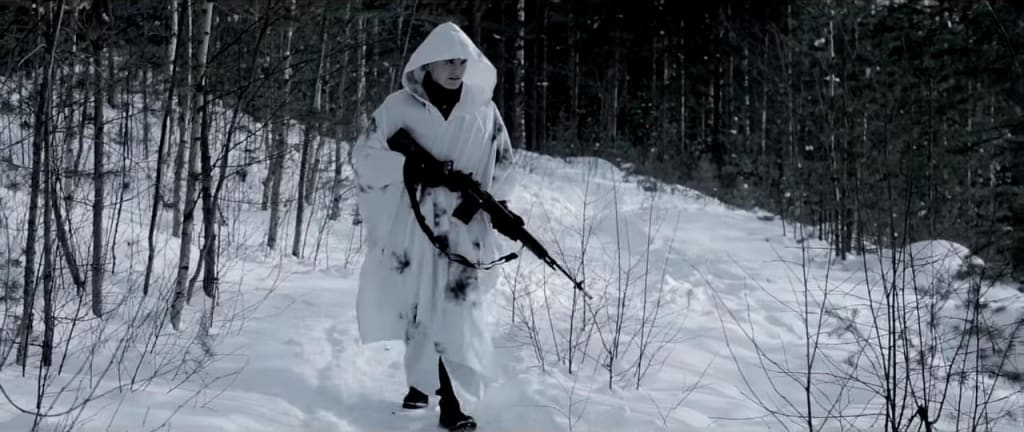
A farmer by background, he was familiar with the harsh Finnish winters, with hunting, with patience. Skills that, in war, became something else entirely.
He preferred simple equipment.
A standard rifle.
Iron sights—no scope.
Because scopes could reflect light.
Because they required raising the head slightly.
Because even the smallest detail could reveal position.
He minimized risk in ways that others overlooked.
He packed snow in front of his rifle to stabilize it.
He placed snow in his mouth while waiting, so his breath would not create visible vapor in the cold air.
He stayed still.
Sometimes for hours.
Targets appeared.
Then disappeared.
The Numbers
Over the course of the Winter War, Häyhä is credited with over 500 confirmed kills—making him one of the most effective snipers in history.
But the number alone does not explain the impact.
It was how he did it.
Quietly.
Consistently.
Without theatrics.
To Soviet troops, he became something more than a man.
A presence.
A threat that could not be easily seen or countered.
After the War
Häyhä lived for decades after the war.
He did not seek attention.
He did not build his identity around what had happened.
He returned to a quieter life—hunting, farming, living in relative isolation.
When asked about his record, he once gave a simple answer:
“I did what I was told to do.”
No exaggeration.
No pride.
Just a statement.
Final Reflection
The story of Simo Häyhä is often told through numbers, titles, and battlefield achievements.
But perhaps the most remarkable part is not how many he killed.
It is how he survived.
A single bullet—designed to destroy—nearly erased him.
And yet, he lived.
Not unchanged.
Not untouched.
But alive.
And in war, sometimes that is the most unlikely outcome of all.