Global supergroup BTS is once again at the center of international discussion—this time over questions surrounding their musical identity as they continue to expand their global reach.
On April 8 (local time), BBC published an in-depth article titled “BTS are losing their K-pop identity as they aim for a bigger global stage,” raising a provocative question: in striving to captivate worldwide audiences, is BTS gradually drifting away from what traditionally defines K-pop?

The report focuses heavily on the group’s latest full-length album, Arirang, which has sparked active debate among fans—particularly in South Korea. According to the article, some listeners believe the group may be overemphasizing elements of Korean heritage, while others feel the opposite—that BTS is leaning too far toward Western influences. This apparent contradiction reflects the complex balancing act the group is navigating at this stage of their career.
One key example highlighted is the album’s opening track, “Body to Body,” which incorporates motifs from Arirang, one of Korea’s most iconic traditional folk songs. The BBC noted that while some fans appreciate the cultural homage, others view it as overly symbolic or even forced. At the same time, the album’s title track, “SWIM,” is performed entirely in English, with no Korean lyrics—a choice that has further fueled debate.

According to the report, a segment of Korean fans has criticized the heavy reliance on English, arguing that BTS may be prioritizing accessibility in the Western market over their original musical identity. The BBC emphasized that critics see this as a strategic move aimed at maintaining global commercial success, even if it risks diluting the group’s roots in K-pop.
The article ultimately frames BTS as standing at a crossroads—“wavering between the old and the new, between Korea and the global stage, between artistic identity and commercial expectations.” It suggests that the group is navigating not only creative decisions but also the broader pressures that come with being one of the most influential acts in the world.
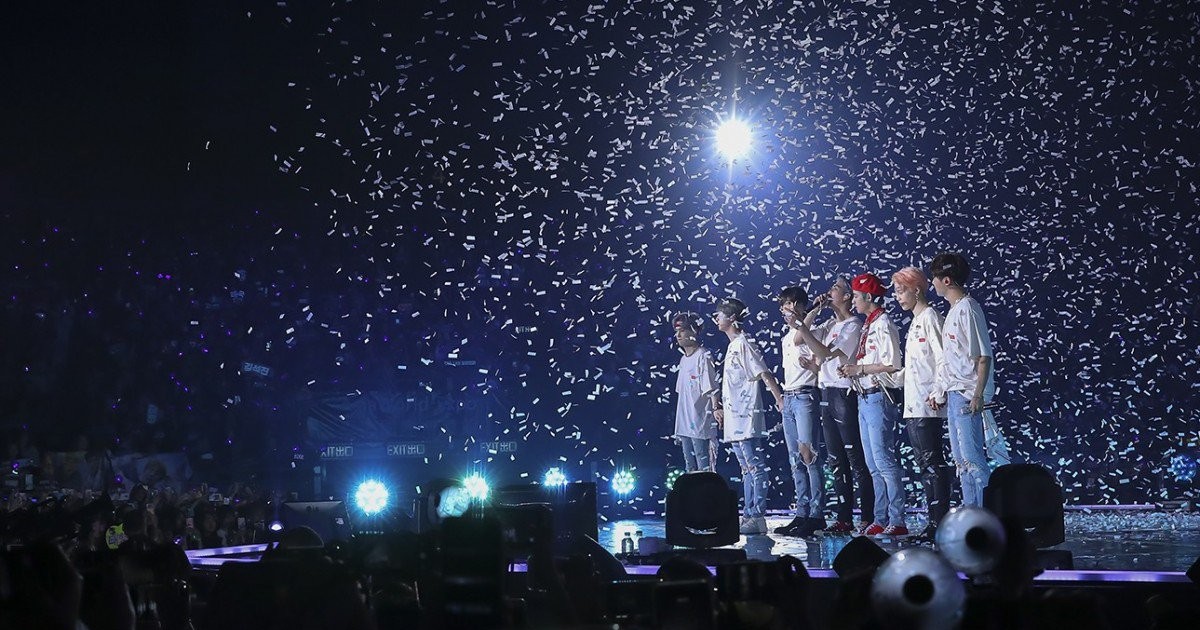
Despite these criticisms, the BBC was quick to acknowledge BTS’s unparalleled achievements. Their upcoming world tour, also titled “Arirang,” was described as “the largest in K-pop history,” underscoring their continued dominance on the global stage. The tour is set to begin at Goyang Stadium in South Korea before expanding into a massive international schedule.
Amid the ongoing debate, Bang Si-hyuk, chairman of HYBE, addressed the album’s direction in a recent interview with Billboard. He described the project as “BTS 2.0,” emphasizing that it should be seen not as a continuation of the past, but as a declaration of a new era. His remarks were widely interpreted as a response to concerns about the group’s evolving identity.

Bang also spoke about the inclusion of Arirang elements in “Body to Body,” acknowledging that the choice might initially feel excessive to some listeners. However, he expressed confidence in the artistic decision, stating that it ultimately became “the most powerful emotional link” within the album.
As the album’s executive producer, Bang did not shy away from discussing the immense pressure behind the project. He admitted that producing a BTS album carries a unique level of responsibility, not only creatively but also commercially. “It’s difficult to completely separate from real-world metrics,” he noted, highlighting the tension between artistic vision and measurable success in today’s music industry.
He further revealed that both he and the members of BTS share a renewed determination to transcend the traditional image of a boy band and establish themselves as true artists with lasting impact.
Looking ahead, BTS is preparing for an ambitious global tour that reflects their continued expansion. After launching in Goyang, the group will travel across Japan and major cities in Asia before embarking on a масштабный international leg. The tour is expected to include 85 shows across 34 cities, spanning North and South America, Europe, and beyond—with stops in countries such as the United States, Germany, France, Canada, Peru, Chile, and Thailand.
As BTS enters this new phase, the conversation around their identity seems likely to continue. Whether viewed as evolution or departure, one thing remains clear: the group is pushing boundaries—both musically and culturally—on a scale few artists have ever achieved.