Russian photographer Alexandra Kuzyk has recently faced a legal case that has drawn significant international attention due to its implications for freedom of expression and the LGBTQ+ community in Russia. Kuzyk was sentenced to 18 months of compulsory labor after being found guilty of producing illegal pornography for writing a gay fanfiction about the K-pop group Stray Kids. This case highlights the increasingly stringent laws in Russia that target LGBTQ+ content under the pretext of banning “LGBT propaganda.”

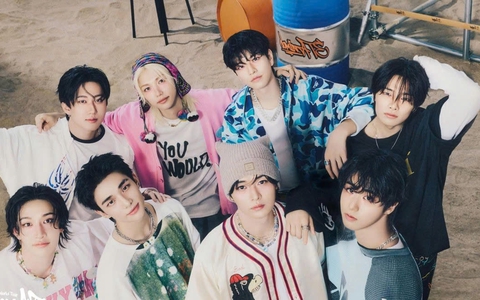
The incident began when a concerned woman discovered the fanfiction on her underage daughter’s device. The story, which had been published online in 2022, depicted a same-sex relationship between the members of Stray Kids, a popular K-pop group. After the fanfiction was reported, the LGBT health organization Parni+ confirmed that the piece was indeed a fan creation centered around Stray Kids.
During the trial, Kuzyk admitted to the charges and acknowledged that writing fanfiction was a longstanding hobby of hers. Despite her admission, the case raised significant concerns about the state’s growing crackdown on expressions of LGBTQ+ identities. Prosecutors had initially sought a harsher punishment, requesting a four-year prison sentence. However, the court ultimately decided on a less severe penalty of 18 months of compulsory labor. As part of the sentence, the Russian authorities will also withhold 10% of Kuzyk’s earnings.
This sentencing is part of a broader trend in Russia, where the government has been intensifying its efforts to combat what it deems as “LGBT propaganda.” In 2022, Russia expanded its laws to criminalize the promotion of LGBT rights, extending the scope to include all forms of media and communication, including internet content. This move has led to the blocking of various websites that host content deemed contrary to the government’s stance on LGBT issues. One notable example is the Russian-language manga platform MangaLIB, which was fined over €160,000 for hosting content considered to be “LGBT propaganda.” In addition to this, one of MangaLIB’s managers was personally fined €13,700 for violating the law.

Kuzyk’s case is emblematic of the state’s increasing surveillance of personal content and creative expression. While the creation of fanfiction is generally seen as a harmless hobby worldwide, it has become a target in Russia under the current administration’s crackdown on LGBTQ+ rights. The fact that the fanfiction was about a same-sex relationship in a popular K-pop group likely played a role in the intensity of the legal response.
The Russian government’s stance on LGBTQ+ issues has drawn significant criticism from human rights organizations and activists, both domestically and abroad. Critics argue that the laws are overly broad and have been used to suppress personal freedoms, particularly for LGBTQ+ individuals and allies. The case of Alexandra Kuzyk underscores the chilling effect these laws have on freedom of expression, with creators being penalized for engaging in seemingly harmless forms of artistic and personal expression.
The situation has raised questions about the future of creative communities in Russia, particularly those that engage with international fandoms, where LGBTQ+ themes are more commonly explored. It also highlights the intersection of state control, digital content, and freedom of speech in the modern age.
International observers are watching the case closely, as it could have broader implications for the global understanding of freedom of expression in authoritarian regimes. The outcome of this trial, along with the increasing enforcement of anti-LGBTQ+ laws in Russia, is likely to influence similar legal systems in other countries where similar cultural and political tensions exist.
As for Alexandra Kuzyk, the legal outcome may serve as a stark reminder of the risks faced by individuals who engage in creative endeavors that challenge state ideologies or promote values that are at odds with the official narrative. Whether or not her case will spark any significant political or cultural change within Russia remains to be seen, but it undeniably serves as an example of the increasing repression of artistic and personal freedoms under the guise of protecting societal values.