BTS has reached a new turning point in their Grammy journey, marking another significant moment in their ongoing global rise. Despite their massive international breakthrough and unprecedented success for a K-pop act in the Western music industry, the group has still not been able to cross the long-standing barrier of recognition from the Grammy Awards, an institution that has historically been criticized for overlooking idol groups and commercially dominant pop acts in favor of more traditional or critically favored genres. However, recent developments within the Recording Academy have introduced renewed optimism that the situation may gradually be shifting.

Over the years, BTS’s experience at the Grammys has often been compared to that of several globally successful boy bands from earlier decades. Groups such as the Backstreet Boys, NSYNC, and One Direction all achieved extraordinary commercial dominance, shaping global pop culture, topping charts, and selling tens of millions of albums worldwide. Despite their overwhelming popularity and cultural impact, these groups similarly struggled to translate commercial success into Grammy wins. In fact, some of them were never awarded a Grammy at all, and in certain cases, such as One Direction, they were never even nominated despite multiple chart-topping albums and a massive global fanbase. This shared pattern highlights a long-standing gap between mainstream popularity and recognition from the Recording Academy.
BTS has followed a similar path in many respects, although their achievements in the U.S. market have reached historic levels for an Asian act. The group has topped the Billboard Hot 100 multiple times with hit songs such as “Dynamite,” “Butter,” and “My Universe,” the latter being a collaboration with Coldplay. They have also sold out world tours across continents, broken streaming records, and become one of the most commercially influential music acts globally. Yet despite these accomplishments, the group has repeatedly fallen short at the Grammys, particularly in the category for Best Pop Duo/Group Performance, where they received nominations from 2021 onward but did not secure a win.
A key reason often discussed for this disconnect is the difference in how the Grammy Awards evaluate music compared to commercial success metrics. Winners are selected through votes by members of the Recording Academy, who assess entries based on artistic quality, vocal and instrumental performance, production value, and overall artistic contribution rather than chart performance or sales figures. This creates a situation in which highly popular mainstream acts can still be overlooked if their work is perceived as less aligned with traditional Grammy preferences or if they are competing against artists with strong critical acclaim in different genres.

Another factor frequently mentioned by industry observers is the historical bias that idol groups have faced within Western award systems. Boy bands, in particular, have often been categorized as youth-oriented entertainment acts with a strong female fanbase, which in earlier decades contributed to a perception that their music was less artistically serious. Although this perception has evolved over time, remnants of this bias are still believed to influence voting patterns in certain categories. For BTS, this challenge is compounded by the structural nature of K-pop itself. While the group has increasingly been involved in songwriting and production, the broader identity of being a “K-pop idol group” has sometimes led to them being viewed through a pre-existing lens that does not always align with Western industry standards of artistic recognition.
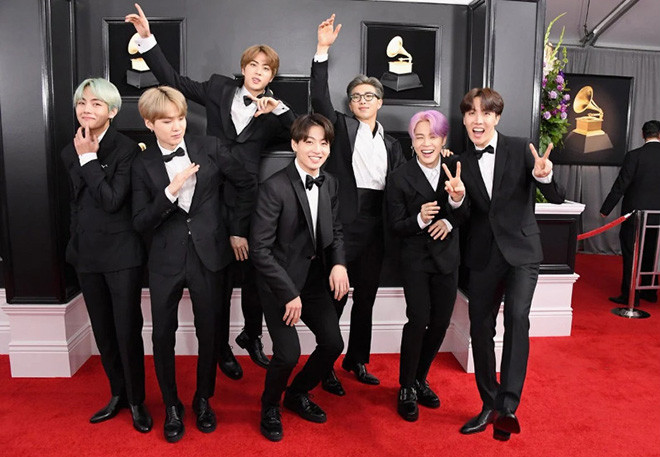
Despite these barriers, BTS has still made history within the Grammy ecosystem. They are among the first K-pop acts to consistently receive nominations in major categories, and they have also performed on the Grammy stage, a milestone that reflects their recognition at the highest level of the industry, even without securing a win. Their presence has helped bring K-pop into mainstream Western award conversations in a way that had not previously occurred.
Recently, the Recording Academy announced an expansion of Grammy categories beginning with the 2027 ceremony, including the introduction of a new award for “Best Asian Pop Performance.” This development has been widely interpreted as a response to the increasing global influence of Asian music markets and the growing international presence of artists from the region. For BTS, this change has generated renewed speculation about their potential participation and competitiveness in the new category, given their status as one of the most influential K-pop groups in the world.
However, the new category also comes with specific eligibility requirements. According to the announced guidelines, submissions must feature a clear use of Asian languages within the recording. This means that songs performed entirely in English may not qualify, while tracks that incorporate Korean or other Asian languages more prominently are more likely to meet the criteria. This requirement introduces a strategic consideration for artists like BTS, whose recent releases have often included English-language singles aimed at global markets.
Even with these conditions, the creation of a dedicated category for Asian pop is seen as an important step toward broader inclusivity within the Grammys. It reflects an acknowledgment of the global diversification of popular music and the need for award structures that better represent international trends. For BTS, this represents both an opportunity and a challenge: an opportunity because their global influence positions them as strong contenders, and a challenge because eligibility rules may shape the direction of their future musical releases if they choose to target this award.
Ultimately, while the Grammy Award itself remains an unfulfilled milestone in BTS’s career, their impact on global music culture is already firmly established. They have played a pivotal role in bringing K-pop into the mainstream of Western pop culture, breaking language barriers, and reshaping perceptions of what a global pop act can be. Even as they continue to pursue recognition from one of the most prestigious award institutions in the world, their legacy continues to grow independently of trophies or formal accolades.