In a rare and deeply personal conversation that pulled back the curtain on the global music industry, Bang Si-hyuk opened up about the emotional weight behind building one of the world’s most powerful entertainment empires, admitting that success on the international stage often comes with a heavy cost that few outside the business ever see.

Speaking during a 90-minute town hall at HYBE’s Yongsan headquarters, Bang joined forces with Sir Lucian Grainge, as the two industry giants reflected on their journeys, their philosophies, and the price of chasing global influence in music. The session, held on June 16, drew more than 200 employees in person, while staff from HYBE’s overseas branches in Japan, the United States, Latin America, and India tuned in online, underscoring just how far-reaching the company’s footprint has become.
Grainge’s visit to South Korea marked another chapter in the growing relationship between Universal Music Group and HYBE, two companies that now sit at the centre of the modern music economy. Their partnership stretches back years, beginning with early distribution deals tied to BTS’s Japanese releases, before expanding into a formal strategic alliance in 2021. Since then, the collaboration has widened into joint ventures, global distribution agreements, and artist development projects spanning multiple continents.
During the discussion, both executives spoke openly about their earliest memories of falling in love with music as teenagers, contrasting those innocent beginnings with the complex, high-pressure reality of running companies that now shape global pop culture. They also addressed how rapidly shifting technology and consumer habits have forced the industry to constantly reinvent itself, often at breakneck speed.
Grainge, whose company dominates more than 30% of the global recorded music market, emphasised that everything ultimately begins and ends with music itself. He described his leadership approach as being rooted in surrounding himself with strong talent and strong sound, saying that without music there is no industry, no culture, and no business worth building.

But it was Bang’s comments that struck a deeper emotional chord inside the room. The HYBE chairman, widely credited as the architect behind BTS’s global rise and HYBE’s transformation into one of the world’s most influential entertainment companies, spoke with unusual vulnerability about the loneliness that can accompany leadership at the highest level.
He admitted that while the outside world often sees glamour, awards, and global success, the reality behind the scenes is far more isolating. According to Bang, there are moments when the pressure of responsibility, expectation, and constant decision-making can feel overwhelming, even for someone at the top of the industry.
Yet he explained that what keeps him moving forward is a simple but powerful philosophy centred on human emotion and purpose. Bang said he believes companies in the music industry should exist to respond to the emotional needs of society, particularly for people who are quietly struggling with loneliness and hardship in their daily lives.
He described music as a lifeline for those individuals, a way of helping them endure difficult moments and rediscover a sense of strength and hope. For him, the purpose of HYBE is not just commercial success, but creating something that gives people comfort, meaning, and even reasons to keep going when life feels heavy.
Bang’s words painted a picture of an executive driven less by numbers and more by emotional responsibility. He said that even though the business side of music can sometimes cause people to forget why they entered the industry in the first place, the core mission should always remain tied to the emotional power of songs and storytelling.
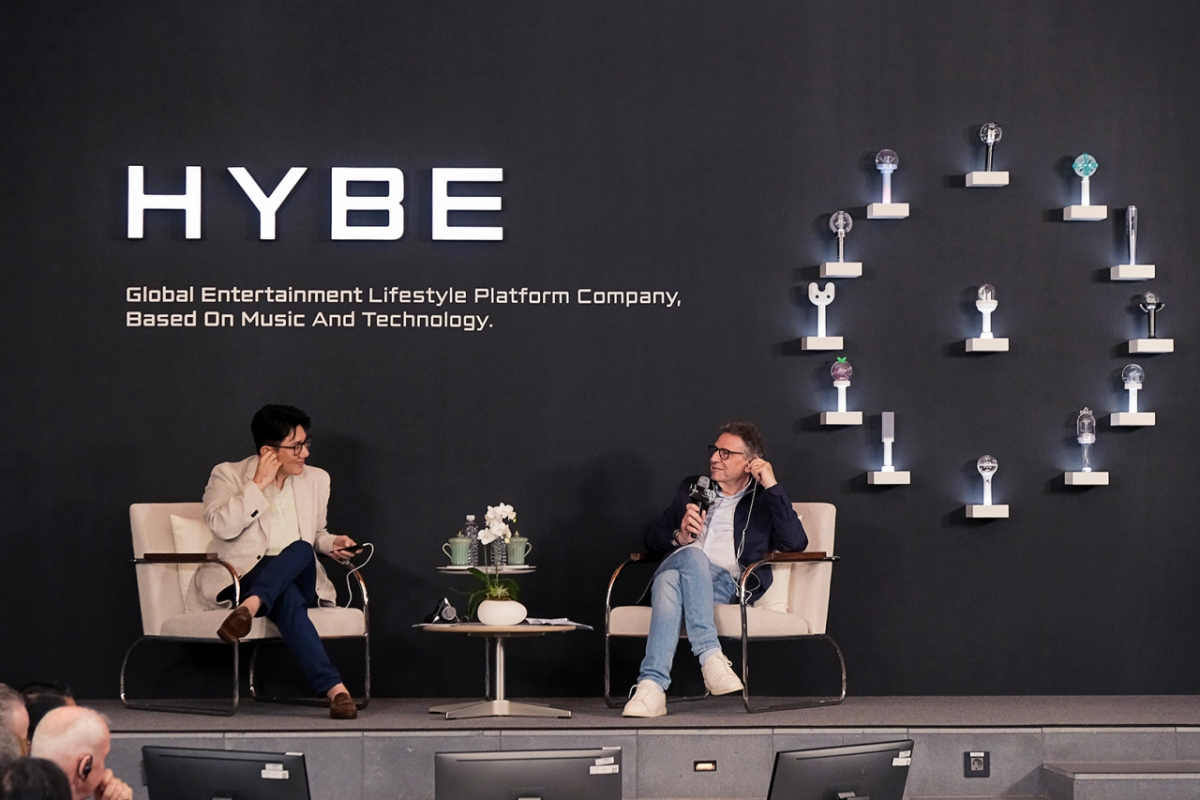
Grainge responded warmly to Bang’s remarks, praising him as a rare combination of creative thinker and strategic entrepreneur. He highlighted Bang’s ability to blend intuition with long-term vision, describing him as someone who consistently looks beyond immediate transactions and instead focuses on shaping the broader direction of the industry.
The UMG chief also stressed that their partnership is built not simply on business deals, but on shared strategic thinking about how to evolve the global music ecosystem. According to Grainge, both companies frequently exchange ideas on how to support artists and expand music’s reach across borders in ways that benefit the entire industry, not just individual corporations.
As the conversation continued, both leaders were asked what music personally means to them. Grainge described it as essential to life itself, comparing it to oxygen, something he turns to in difficult moments for emotional relief and grounding.
Bang echoed that sentiment even more intensely, stating that music is not just part of his life, but the very reason for it. He explained that even in periods of difficulty, music remains the force that helps him process challenges and keep moving forward, reinforcing his belief that the industry’s purpose goes far beyond entertainment.
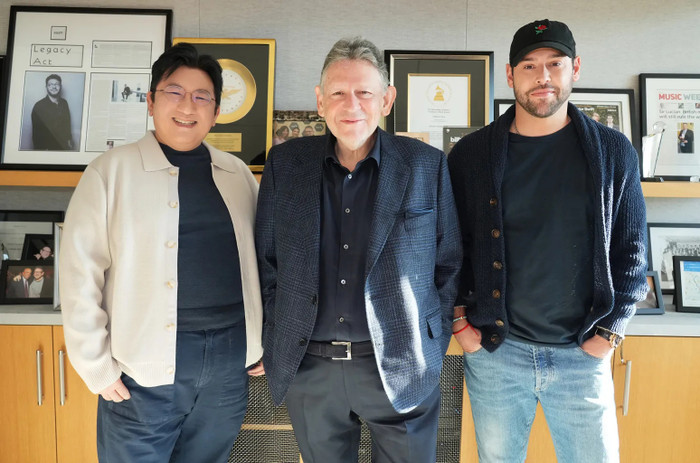
Towards the end of the session, both executives offered advice to younger employees and those entering the music business. Grainge urged people to stay motivated from within rather than being overly influenced by external opinions, encouraging persistence even when circumstances become challenging.
Bang added a reflective note, saying that people working in music sometimes become so focused on the demands of their jobs that they forget the emotional value of what they are actually creating. He expressed hope that the gathering had reminded everyone present of the deeper meaning behind their work, and he thanked Grainge for making the long journey to Seoul for the event.
In closing, the conversation left a clear impression of two leaders bound not only by business alignment but by a shared belief in music as something deeply human. Behind the billion-dollar deals, global expansions, and corporate strategies, both Bang and Grainge returned again and again to the same idea: that music is not just an industry, but an emotional force that connects people, heals struggles, and, for some, becomes the very reason to keep going.