Twelve years after the devastating 2014 Sewol ferry disaster, a tragedy that continues to leave a deep emotional scar on South Korea, public attention has once again been drawn to the long-term suffering experienced by survivors. The disaster, which occurred on April 16, 2014, when the ferry Sewol sank off the coast near Jindo while traveling from Incheon to Jeju, resulted in one of the country’s most heartbreaking maritime catastrophes. Out of 476 people on board, 172 survived while 304 died or remain missing. Even more than a decade later, the psychological and social consequences of that day are still unfolding.

Recent reports have brought renewed shock and grief following news of the sudden death of Sohee, one of the student survivors of the disaster. According to online posts shared on June 21, 2026 (Korean Standard Time), the news was first made public by Yoo Gyoung Geun, the former executive committee chairman of the Sewol Ferry Disaster Families Association. He shared the information through a post on Threads, titled “Why Do They Have To Live For Their Friends Too?”, a message that quickly spread across social media and sparked widespread mourning and reflection.
In his post, Yoo described that the survivor had endured significant pain in the years following the disaster. He emphasized that the suffering experienced by survivors is often long-lasting and deeply complex, shaped not only by the trauma of witnessing the sinking and losing friends, but also by the emotional burden carried afterward. His message was not only an announcement of grief but also a strong reminder of how society often misunderstands or unintentionally harms survivors through expectations placed upon them.
The post included a deeply emotional reflection on the way survivors are sometimes told that they “must live on for their friends who died.” While often said with good intentions, Yoo argued that such words can place an unbearable emotional weight on individuals who are already struggling with trauma and survivor’s guilt. He explained that the students who survived returned from the disaster after witnessing the deaths of their classmates, and that many of them have since lived with severe psychological distress. In some cases, they have faced social misunderstanding, isolation, and a sense that they are expected to carry responsibility simply because they survived.
He further stressed that telling survivors to live for those who were lost can become a form of secondary harm. In his words, this expectation may go beyond emotional pressure and become something deeply damaging, intensifying feelings of guilt and pain rather than helping the healing process. Yoo urged the public to instead allow survivors to live without imposed meaning or obligation tied to the tragedy, emphasizing that they should not be forced to carry symbolic responsibility for the dead. His message concluded with a plea for compassion, hoping that survivors could live ordinary lives without being burdened by expectations or judgment, and without being trapped in emotional suffering.
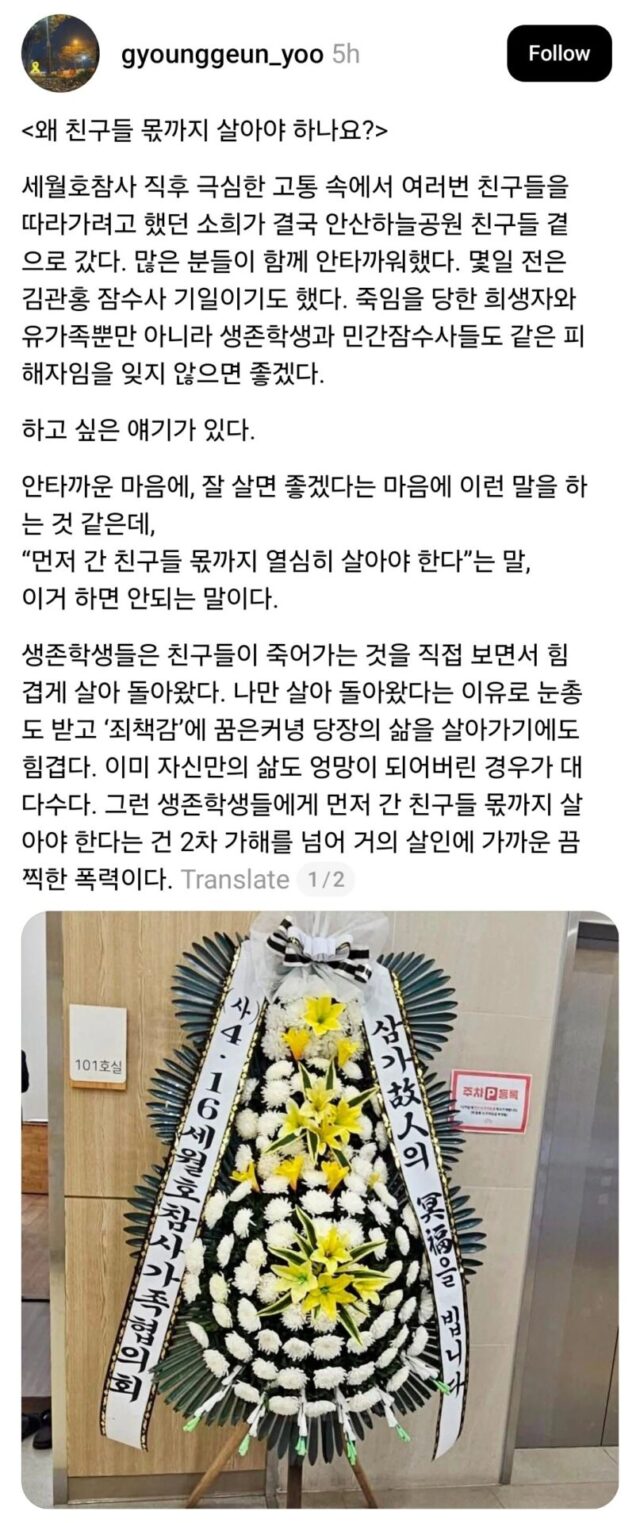
Following the post, many online users expressed sorrow and sympathy. Comments across social platforms reflected a shared sense of grief and helplessness, with many people writing messages such as “May they rest in peace,” and “It must have been so heartbreaking, I cannot imagine what they went through.” Others reflected on how survivors may have felt as though time stopped for them in 2014, and that they were never able to fully move forward with their lives. The collective response highlighted how the trauma of the Sewol ferry disaster continues to resonate deeply within public memory, even many years later.
Some commenters also pointed out that the suffering of survivors, bereaved families, and even rescue workers such as civilian divers is often overlooked. They emphasized that the disaster’s impact extends far beyond the initial sinking, affecting mental health, identity, and daily life for many individuals connected to the tragedy. The emotional burden carried by survivors has been described as invisible but persistent, shaping their lives in ways that are not always visible to the public.
The renewed attention has also drawn focus back to memorial spaces and the broader culture of remembrance surrounding the disaster. Sites such as Ansan Haneul Park have become symbolic places of mourning and reflection for many families and communities affected by the tragedy. These spaces serve not only as memorials for those who were lost but also as reminders of the survivors who continue to live with the emotional aftermath.
In reflecting on the broader implications of Yoo Gyoung Geun’s message, many observers have noted that public discourse around tragedy often overlooks the complexity of survival itself. While loss is visible and widely acknowledged, survival can carry its own form of suffering, particularly when it is accompanied by guilt, trauma, and societal expectations. The recent news has therefore reopened conversations about how communities should support survivors of mass tragedies, not only immediately after events occur but throughout the rest of their lives.
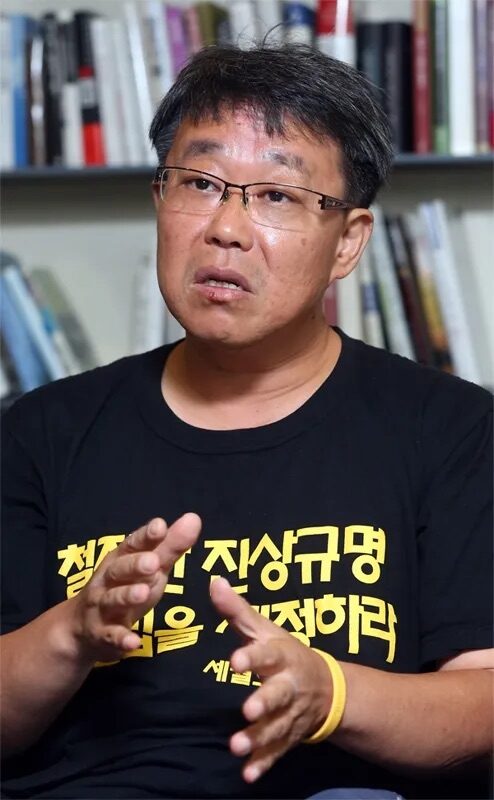
As discussions continue, the central message emerging from Yoo’s post remains focused on compassion and understanding. Rather than placing emotional burdens on survivors, he urged society to allow them to exist without imposed meaning tied to their trauma. The renewed grief surrounding Sohee’s reported passing has thus become not only a moment of mourning but also a reminder of the long and often unseen consequences of the Sewol ferry disaster, and the importance of recognizing survivors as individuals who need care, not symbolic responsibility.
In this way, the tragedy of 2014 is shown once again not as a closed chapter in history, but as an ongoing human story—one that continues to affect those who lived through it, and one that continues to call for empathy, awareness, and respect for the invisible struggles that remain.