The discussion surrounding IU’s acting performance in her latest drama Perfect Crown has recently become a heated topic across online communities. While IU has long been recognized as a successful singer-actress with several notable roles, her portrayal in this new project has sparked divided opinions, with a significant portion of viewers expressing disappointment and criticism.
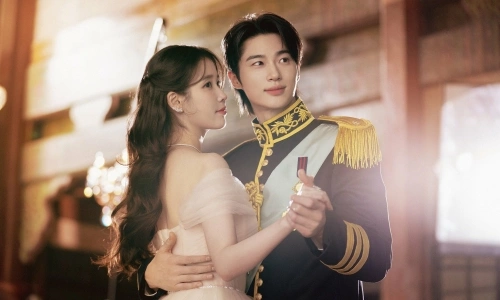
Many critics argue that IU’s acting in Perfect Crown feels repetitive and lacks emotional range. According to these viewers, her performance appears “monotonous,” relying heavily on familiar expressions and delivery styles that she has used in previous roles. In particular, audiences have drawn comparisons to her iconic performance in Hotel del Luna, suggesting that IU has not been able to fully detach herself from that character. Instead of presenting a fresh and distinct interpretation, they believe she seems trapped in the shadow of her past success, which ultimately weakens the impact of her current role.
Another point of criticism centers on her on-screen chemistry with co-star Byeon Woo-seok. Some viewers claim that the pairing lacks what is often referred to as “visual chemistry,” meaning that the two leads do not appear naturally compatible or convincing as a romantic couple. This perceived mismatch has, in the eyes of critics, made it harder for audiences to become emotionally invested in the story. In a genre where character relationships are crucial, this issue has further intensified dissatisfaction with the drama.
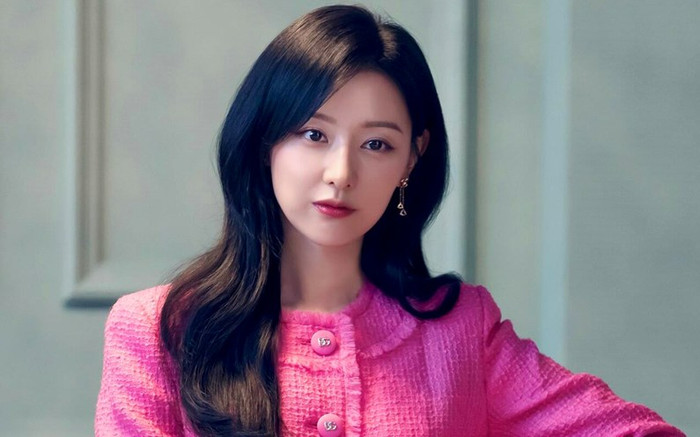
Amid the growing controversy, a wave of online discussions has emerged in which netizens propose alternative casting choices they believe could have elevated the drama’s overall quality and appeal. Names frequently mentioned include Kim Ji-won, Song Kang, Gong Seung-yeon, and Seo Kang-joon. Supporters of this hypothetical lineup argue that these actors possess strong acting abilities, fresh on-screen presence, and proven chemistry with co-stars, which could potentially make Perfect Crown more compelling and commercially successful.

However, the debate has not been one-sided. Beneath these critical posts, an intense clash of opinions has unfolded among netizens. On one side are IU’s supporters, who strongly defend her performance and reputation. They argue that the criticism is exaggerated and, in some cases, driven by anti-fans rather than objective evaluation. These fans emphasize IU’s growth as an actress over the years and point out that a single role should not define or diminish her overall career. They also highlight that acting styles can vary depending on the director’s vision and script, suggesting that the perceived shortcomings may not solely be IU’s responsibility.
On the other side, some viewers agree with the criticisms and maintain that IU’s performance in this particular drama is indeed underwhelming. They argue that as an experienced actress, she should be able to demonstrate greater versatility and bring more depth to her character. For them, the issue is not personal but rather a matter of professional standards, especially given the high expectations placed on a project featuring such well-known actors.
The situation reflects a broader pattern often seen in the entertainment industry, where popular figures face intense scrutiny with each new project. Success in a previous role can become both a blessing and a burden, as audiences expect continuous evolution while simultaneously comparing every performance to past achievements. In IU’s case, her memorable role in Hotel del Luna has set a particularly high benchmark, making it difficult for subsequent performances to be judged independently.
Ultimately, the controversy surrounding Perfect Crown highlights the subjective nature of acting and audience perception. While some viewers find IU’s performance lacking, others continue to appreciate her work and defend her artistic choices. The ongoing debate not only underscores her influence as a public figure but also demonstrates how deeply audiences engage with casting decisions and character portrayals in modern television dramas.