Bangchan, a member of the popular K-Pop group Stray Kids, recently opened up about the painful experiences he endured as a trainee, which left fans heartbroken and enraged. During a fan communication session on the occasion of his 15th anniversary with JYP Entertainment, Bangchan reflected on his early days in the company. He shared how he was initially taken aback by the cultural differences but then revealed something that shocked everyone: “I remember I got hit a lot.” Bangchan’s admission was not just about physical violence, but also about the emotional abuse he experienced, as he was often scolded for no apparent reason.
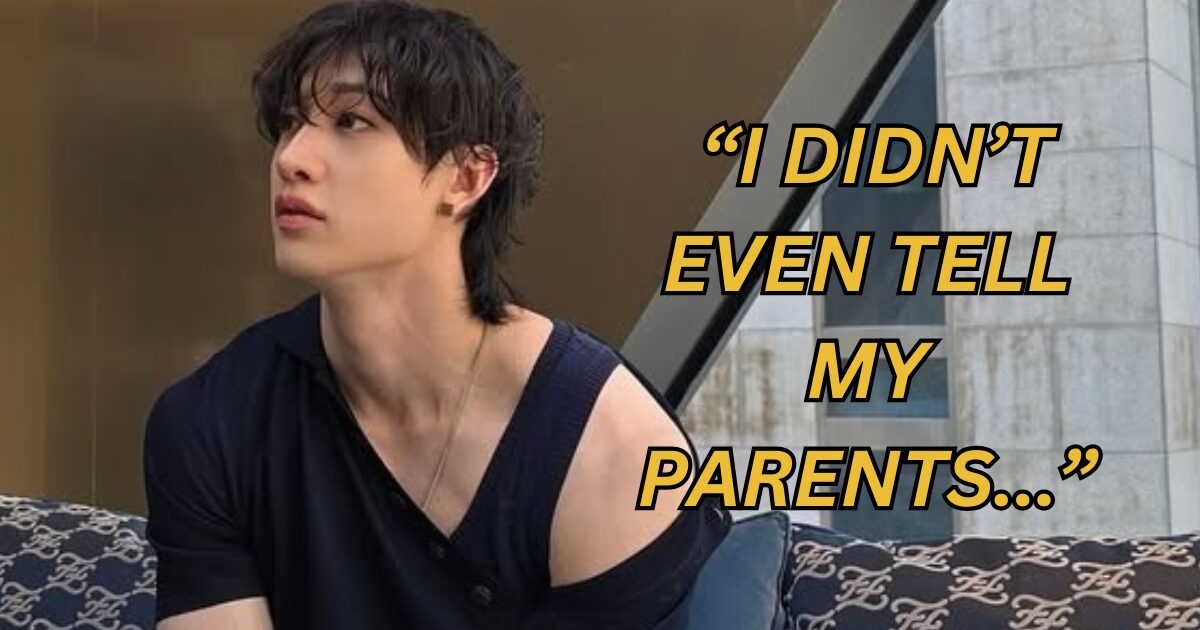
What struck a chord with many was his revelation that, during his trainee days, he never told his parents about the abuse he was going through. It wasn’t until much later that he finally opened up to them, a conversation that left his parents in tears. This deeply personal confession opened the floodgates of emotion and concern, not only among fans but also within the broader discussion about the culture of K-Pop training. The idea that such abuse could be so normalized in the industry left many reeling.
Fans were quick to voice their outrage at JYP Entertainment, the agency that had employed Bangchan during his formative years as a trainee. They expressed disbelief that such a young boy, far away from home and trying his hardest to succeed, could endure such mistreatment. Many fans felt that this abuse was far from being a “cultural difference” as it was often described by those in the industry, but rather clear signs of child exploitation and abuse. This was not just a harsh reality of the K-Pop industry; it was an alarming, systemic issue that fans felt needed to be addressed immediately.
Several fans took to social media, expressing their anger over the treatment Bangchan had to endure, especially at such a young age. One fan pointed out how heartbreaking it was that Bangchan, being a mere 13-year-old boy, was physically hit while being away from home in a foreign country, just trying to prove himself worthy of a debut. The idea that he had to endure such suffering in silence for so long seemed to resonate deeply with many fans, who expressed their fury at the entire situation.
The emotional and physical abuse that Bangchan endured is not isolated to his story. His revelation sheds light on a much larger, more troubling issue within the K-Pop industry — the culture of abuse masked as “training.” Many fans began questioning how an environment of exploitation and mistreatment could be accepted under the guise of helping young trainees succeed in their careers. For many, this was a stark reminder of how K-Pop agencies manipulate their artists into normalizing abusive behavior, leading them to feel like they owe everything to the company.
Bangchan’s story has sparked a much-needed conversation about how such behavior is systematically overlooked in K-Pop, particularly when it involves minors. The idea of training young children, often away from their families and in foreign countries, has led to a breeding ground for emotional, physical, and mental abuse. It’s become increasingly clear that this culture of mistreatment is far more common than most people realize.
As more fans began to process Bangchan’s confession, many noted that he had internalized the abuse to the point where he had normalized it as part of his training experience. His use of light-hearted laughter and attempts to downplay the severity of what he had gone through struck many as a sign of how deeply ingrained the manipulation had been. For years, Bangchan had defended the company despite his past, and some fans speculated that this was because he had been groomed into believing that he owed everything to JYP Entertainment.
This normalization of abuse has prompted a broader conversation about the systemic problems within the K-Pop industry. Fans have begun questioning how young artists are treated and how easily they are manipulated into thinking that mistreatment is a normal part of the business. There is growing concern that this kind of environment is not only harmful to the well-being of the idols but also to the mental and physical health of the fans who idolize them.

The confession of Bangchan has raised more questions about how K-Pop companies get away with serious crimes, including child abuse, under the guise of “training.” It has also highlighted how much work needs to be done to change the industry’s toxic culture. For many, the situation is no longer just about individual idols but about the entire system that perpetuates this abuse and manipulation.
While the conversation around K-Pop has often focused on the achievements and successes of its artists, Bangchan’s confession has shifted the narrative to address the darker side of the industry. As more fans come to terms with what happened to him, there is a growing call to hold K-Pop companies accountable for the mistreatment of their idols. The hope is that by shedding light on these injustices, the industry can evolve into a safer, healthier environment for future generations of artists.
Bangchan’s confession has exposed the harsh realities of the K-Pop industry, showing how young, vulnerable idols can fall victim to exploitation. It has sparked an essential discussion about the normalization of abuse and how the industry needs to change to protect the mental and physical well-being of its artists. This is not just an issue for fans to be concerned about, but a problem that needs to be addressed at every level of the industry.
