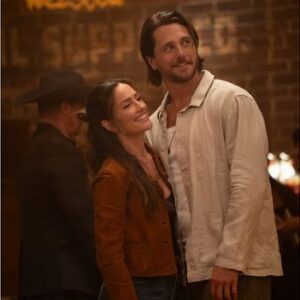
The recent episode of the K-Drama Perfect Crown, starring IU and Byeon Woo Seok, has sparked a wave of criticism due to notable historical inaccuracies, particularly in its depiction of Korea’s monarchy and royal regalia. The drama, set in a fictional modern-day South Korea that functions as a constitutional monarchy, has always been under close scrutiny from viewers for its portrayal of the royal family. While earlier deviations from historical accuracy were generally excused as artistic license necessary for storytelling, the latest episode featured two errors that ignited significant public backlash.
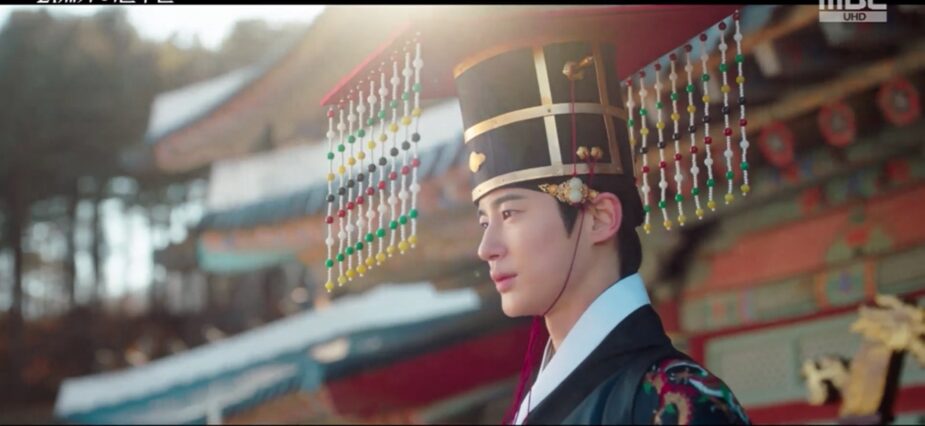
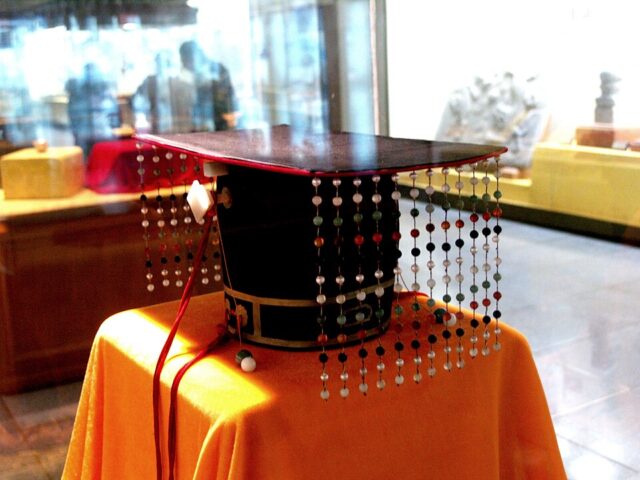
In episode 11, the character Yi Ahn, played by Byeon Woo Seok, ascends to the throne wearing a nine-beaded royal crown, known historically as the Goryeo Myeonryugwan. As he takes his position, his subjects chant “Cheonse,” a phrase meaning “may the King live a thousand years.” These seemingly small details, however, carry deep historical significance and were immediately noticed by Korean viewers. The problem lies in the fact that the nine-beaded crown is historically associated with the Joseon dynasty and, at that time, indicated Korea’s status as a tributary state to China. By contrast, Yi Ahn is depicted as the monarch of a fully sovereign Korea in the drama’s narrative. This mismatch meant that the crown chosen for the scene was symbolically inappropriate, as a sovereign Korean ruler would historically wear the twelve-beaded Sibyi Myeonryugwan, which symbolizes complete independence and authority of an autonomous nation.
Equally problematic was the use of the term “Cheonse” by Yi Ahn’s subjects. Historically, “Cheonse” was reserved for Korean monarchs while the term “Manse,” meaning “may the King live ten thousand years,” was used exclusively for the Emperor of China. The use of “Cheonse” in the context of a fully independent Korean state implied a subordinate or vassal-like relationship, which inadvertently undermined the sovereignty the drama intended to portray. Korean audiences were quick to highlight that both the choice of crown and the phrasing used in the coronation scene reflected a period when Korea’s monarchy was not independent, making the scene historically inconsistent and culturally insensitive.
The criticism quickly gained traction online, with viewers expressing concern that the show had inadvertently suggested that Korea remained a tributary state under Chinese influence, despite the nation’s historical independence. Social media discussions and forum posts analyzed the historical context, explaining the significance of the Sibyi Myeonryugwan versus the Goryeo Myeonryugwan and detailing the correct use of royal salutations. For many, these were not trivial costume or dialogue errors but symbolic misrepresentations that touched on national pride and historical integrity.
Faced with the backlash, the production team for Perfect Crown issued a formal apology. They acknowledged the errors, accepted the criticisms, and committed to correcting the inaccuracies in both audio and subtitles for the controversial scene. The announcement emphasized that the intent of the drama was never to misrepresent Korea’s history or sovereignty, but rather an oversight that arose during the production process. The team also noted that the series takes some creative liberties in blending historical and modern elements, but in this case, they recognized that the liberties taken had crossed a line into misrepresentation.
The incident serves as a reminder of the sensitivity surrounding historical narratives in media, particularly in countries with rich and complex histories like Korea. The choice of symbols, costumes, and terminology in historical or historically inspired dramas is not merely aesthetic; it carries deep cultural and political weight. Audiences are increasingly aware of these nuances, and creators are held accountable for accuracy and respect in representation.
While Perfect Crown continues to be a popular show, the controversy highlights the challenges faced by creators when depicting historical elements in a fictional setting. Fans and critics alike have engaged in discussions about the balance between artistic license and historical fidelity, emphasizing that entertainment can have cultural implications beyond the narrative. The adjustments promised by the production team aim to restore historical accuracy and respect for Korean sovereignty, while allowing viewers to continue enjoying the drama’s romantic and dramatic storylines.

In conclusion, the backlash against Perfect Crown underscores the importance of attention to historical detail, even in fictionalized contexts. The misrepresentation of the royal crown and the coronation chant may have been small errors in production, but they carried significant symbolic weight, leading to public outrage and necessitating a formal correction. By responding promptly and correcting the inaccuracies, the show’s producers have demonstrated a willingness to respect both historical facts and viewer expectations, ensuring that the portrayal of Korea’s monarchy aligns more closely with the nation’s proud heritage. This episode serves as both a cautionary tale and a learning opportunity for media producers working with historically inspired content, highlighting that even fictional stories are interpreted through the lens of real-world history and national identity.