In an industry that has long peddled airbrushed ideals, flawless skin, and unattainable standards, Tal Anderson is flipping the script. The 28-year-old actress, best known for her role as Becca King on Max’s hit medical drama *The Pitt*, recently shared a powerful message that has resonated far beyond Hollywood: “Accept that we are not perfect.” In a candid interview tied to her partnership with Clarins, Anderson declared that true beauty lies in embracing our imperfections rather than chasing an impossible ideal. Her words have sparked widespread conversation, leaving fans speechless, introspective, and inspired to rethink their own relationships with self-image.

Anderson’s philosophy isn’t just empty celebrity speak. As an autistic actress who has fought for authentic representation throughout her career, she embodies the very message she preaches. Playing Becca King—the autistic twin sister of ER doctor Mel King (Taylor Dearden)—Anderson brings raw authenticity to a character navigating high-support needs, family dynamics, and personal autonomy in the high-pressure world of a Pittsburgh trauma center. Her performance in Season 2, particularly storylines exploring Becca’s desire for independence and relationships, has drawn praise for its humanity and depth.
“Beauty is when you can see who someone really is, like their true self,” Anderson told PEOPLE. “Being human doesn’t mean being or looking perfect. It actually means embracing the fact that we aren’t perfect. When you do that, you’re able to connect with people, and I think that’s beautiful.”
This isn’t a fleeting soundbite. Anderson’s approach to beauty and self-acceptance stems from her lived experience as an autistic woman in an industry that often demands conformity. Diagnosed in preschool, she grew up in Cape Coral, Florida, after being born in New Orleans. She has spoken openly about challenges with social interaction and the pressure to fit in. Rather than hiding her neurodivergence, she has turned it into a cornerstone of her advocacy and art.
Her rise in Hollywood began with the Netflix series *Atypical*, where she played Sid, a role specifically developed with her input. That breakthrough led to roles in *As We See It*, *Magnum P.I.*, and now *The Pitt*, where her portrayal of Becca has become one of the show’s most celebrated elements. Fans and critics alike laud the realistic depiction of an autistic adult woman with high support needs—complete with pigtails, glasses, and unapologetic individuality.
But Anderson’s influence extends far beyond the screen. She is also a children’s book author whose *Oh, Tal!* series directly tackles themes of uniqueness and self-acceptance. The latest installment, *Oh, Tal! Not Like That*, released in April 2026, follows young Tal and her cat Winnie as they navigate school expectations that demand everyone do things “the right way.” Through vibrant illustrations by Michael Richey White and heartfelt storytelling drawn from her own life, Anderson encourages kids to embrace what makes them different. Proceeds support organizations helping neurodivergent children and adults.

This multi-hyphenate approach—actress, author, advocate, producer—fuels her philosophy. In a recent Clarins partnership, Anderson highlighted a minimalist skincare routine that prioritizes feeling good over perfection. She favors easy-to-apply products like Clarins Double Serum and Lip Comfort Oil, admitting her makeup skills are “limited” and that she often looks like her everyday self, just with a bit more sparkle. It’s this relatability that fans connect with most.
**The shocking part? This mantra is reshaping Hollywood’s beauty narrative from the inside out.**
In an era dominated by filters, fillers, and flawless Instagram feeds, Anderson’s message strikes at the heart of a larger cultural shift. Disability advocates note that neurodivergent and disabled individuals have long been excluded from traditional beauty standards. By centering authenticity, Anderson is proving that visibility and vulnerability can be powerful. Her work on *The Pitt* has sparked discussions about body autonomy for disabled people, with Season 2 storylines earning praise for treating Becca as a fully realized human with desires, boundaries, and agency.
Fans have flooded social media with stories of how Anderson’s words and roles have helped them. Parents of autistic children report reading her books aloud and seeing their kids light up with recognition. Young women share how her stance on imperfections has eased their own self-criticism. One viral post read: “Tal Anderson said accept we’re not perfect and suddenly I feel seen. No more hiding my quirks.”
**What is the secret behind Tal Anderson’s rise?**
She has turned what society might label “flaws” into her greatest strengths. Her autism, once a source of struggle, now informs nuanced performances and advocacy that resonate globally. Her mixed Korean and Italian-American heritage as an adoptee adds layers to her storytelling, including upcoming projects rooted in Korean folklore. She co-hosts the podcast *Hairy Yarns* with Kayla Cromer, produces films, and develops series that challenge norms.
Anderson approaches every role with the same principle she applies to beauty: authenticity over perfection. “I just like to see autistic characters portrayed as individual people,” she has said, rejecting stereotypes in favor of human stories. This mindset has not only earned her awards recognition but also opened doors for more inclusive casting and writing in Hollywood.
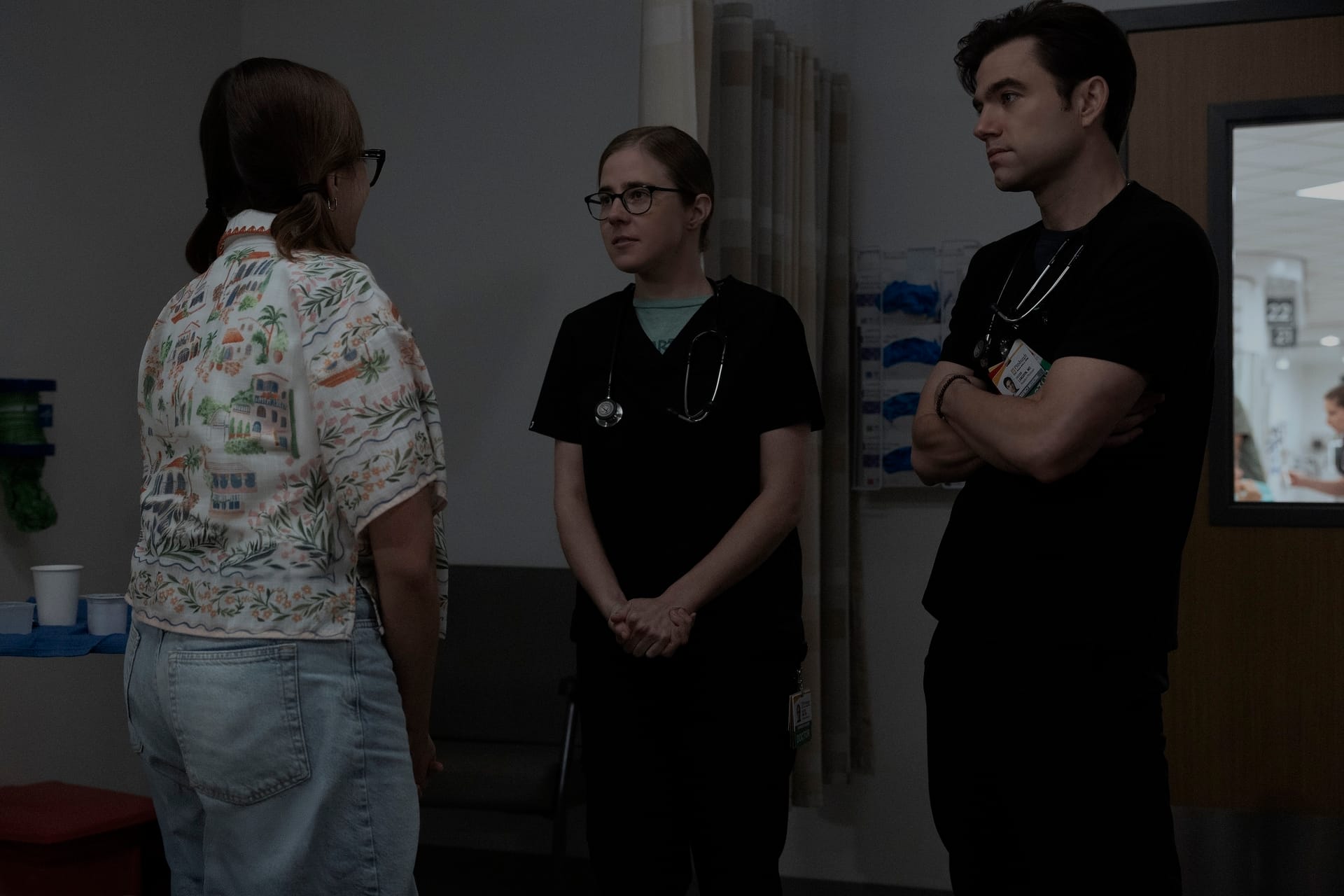
Her collaboration with Taylor Dearden on *The Pitt* exemplifies this. The on-screen sisters’ dynamic—rooted in love, protectiveness, and respect for autonomy—mirrors real conversations about neurodivergence in families. Anderson has expressed gratitude for the fan support surrounding Becca’s storylines, noting it boosts her confidence and validates the importance of authentic representation.
As *The Pitt* continues its successful run, with Season 3 on the horizon, Anderson hints at bigger things for Becca, including potential high-stakes medical drama. Off-screen, she balances acting with writing, producing, and advocacy. Her next children’s book and various scripted projects promise to carry forward the message of embracing uniqueness.
Tal Anderson’s statement—“Accept that we are not perfect”—is more than inspirational. It’s a call to action in a world quick to judge. By living it through her roles, books, and public platform, she is not only shining brighter but inviting everyone else to do the same. In celebrating flaws, she reveals a deeper truth: our imperfections are what make us beautifully, undeniably human.
Her superpower? Turning difference into connection. And in doing so, she’s changing how we define beauty—one authentic moment at a time.