As quickly as The Pitt returned to the world earlier this year, another full day at Pittsburgh Trauma Medical Center has passed. The Season 2 finale of The Pitt just aired last Thursday, and while it’s been confirmed that it will serve as a send-off for Dr. Samira Mohan (Supriya Ganesh), it’s unclear what the future holds for other characters, like Dr. Baran Al-Hashimi (Sepideh Moafi). Dr. Robby (Noah Wyle) makes it clear at the end of Season 2 that he isn’t comfortable with Dr. Al-Hashimi continuing to see patients while she’s still having seizures, but she pushes back against him. Still, there’s no clear answer when the dust settles whether she’ll be back in Season 3 and potentially beyond.

Perri Nemiroff recently had a chat with Moafi for the latest episode of Collider Ladies Night, and she asked about the contrast in leadership between Dr. Robby, who has proven to be more callous, and Dr. Al-Hashimi, who has a much more personal, empathetic touch. This is something Moafi envisioned for Dr. Al-Hashimi, and part of why she feels the ultimate showdown between Dr. Al-Hashimi and Dr. Robby is more disrespectful, considering they’re on the same level:
“She, in general, has shown herself throughout the shift as she leads with questions and is empathy-driven, hasn’t allowed her background of horrific experiences, both personally and in her work, to calcify her or to make her more callous towards her life or her practice or her colleagues. And I say this without judgment, or lacking as much judgment as possible, because I think Dr. Robby does overstep. It’s this very sort of traditional, domineering, competitive, there’s-only-room-for-one.”
She continued, citing how differently the interaction might have gone if it had been Dana (Katherine LaNasa) to discover her condition, “I think that you cast a show, you cast the right people so they can thrive in what they do and make the whole thing better, and I think the hospital’s the same thing. If Dana did that and she came to me, I would trust in Dana’s judgment. I’m not her superior. You know what I mean? So, it’s not up to me to scold her or tell her what she did was right or wrong.” That’s what makes Dr. Al-Hashimi different than Robby, because she “trusts that if she’s working under my watch or if we’re working under the same watch, then she has the experience, the wisdom, and the knowledge to do what’s best for that patient.”
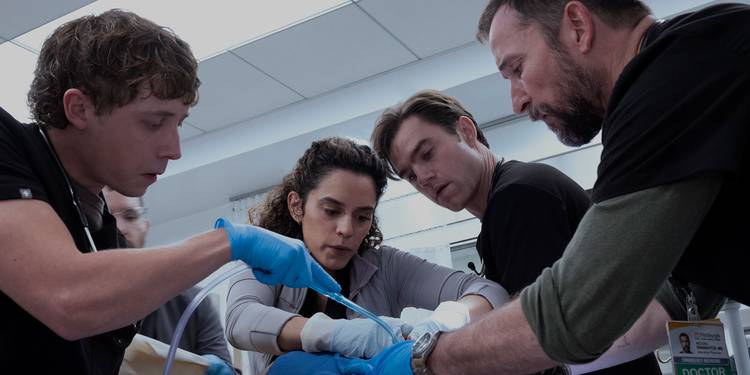
Dr. Al-Hashimi and Dr. Robby Have Been Butting Heads All Season
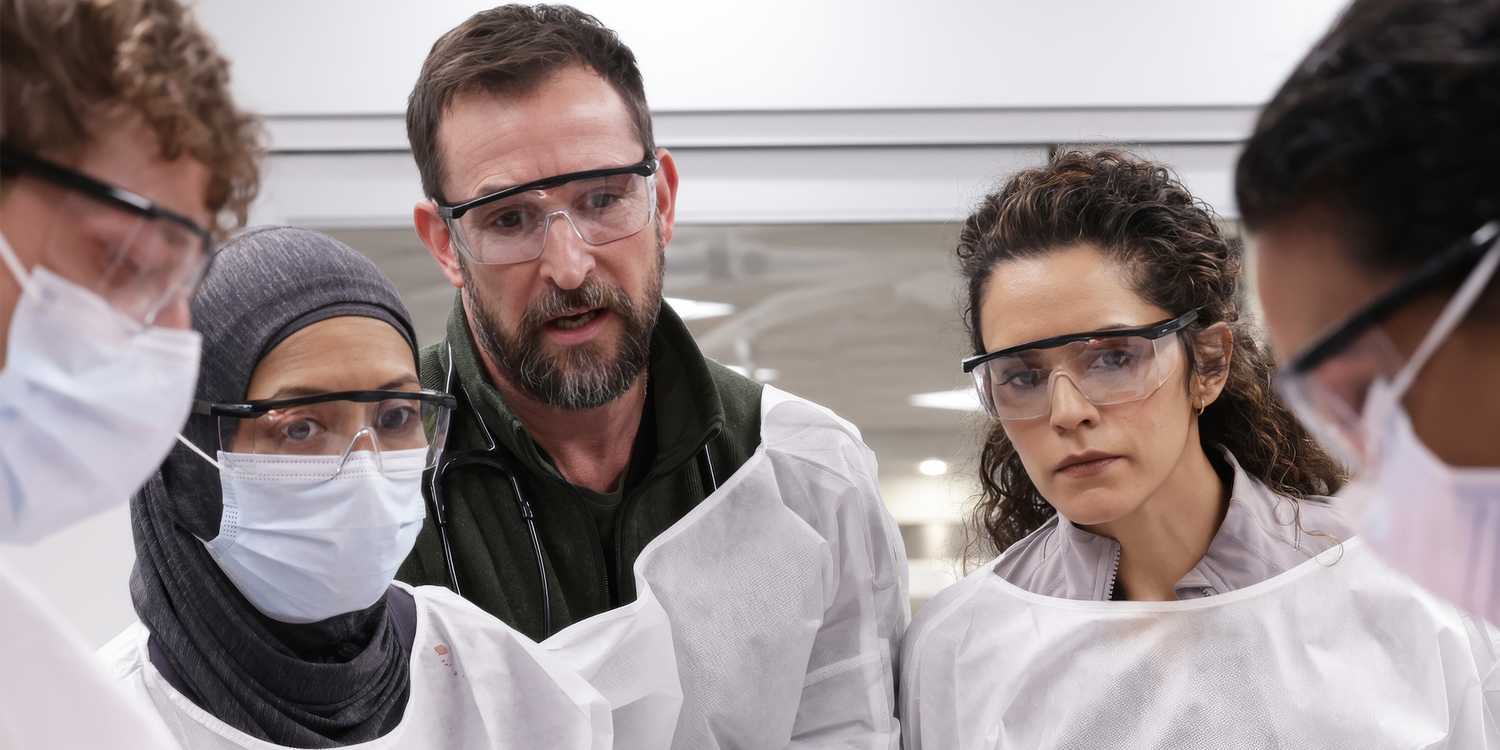
Moafi also spoke about the rift between Dr. Robby and Dr. Al-Hashimi, which seemed to be somewhat on the mend heading into the final few episodes after getting off to a rocky start. Dr. Robby was never going to take well to having to work with his replacement all day, though. Moafi explained:
“It leaves room for people to judge and then reflect, and be like, ‘Why did I judge?’ I haven’t seen all 15 episodes, but from what I have seen, and being on the receiving end of some of this conversation around Dr. Al-Hashimi has been really interesting. I don’t take any of it personally. In the beginning, of course, it was set up for her to disrupt the rhythm of this established hospital, and Dr. Robby is America’s golden boy, or the world’s, really, golden boy, so anyone who comes in his path is going to be scrutinized to a certain degree.”
Moafi admits that she’s still “disturbed that we’re still in this place of just being so ruthless with women,” But for Moafi, the actor, not Dr. Al-Hashimi, the character, she “loves it.” Continuing, “I love instigating some kind of conversation and dialectic. People, have at it! You know what I mean? Talk to each other, converse, whether it’s online or in person, and disagree and agree.” It did force Moafi to reflect, though, and in her reflection, she realized, “if this were a dude, they probably wouldn’t be as hard on her in the beginning. But now there’s been a turning point.”