Jonathan Roumie’s journey to becoming one of the most recognizable portrayals of Jesus in modern television is not just a story about acting—it is a story about faith, struggle, and transformation. Before The Chosen entered his life, Roumie was facing a reality that many aspiring actors know all too well: uncertainty, financial instability, and a growing sense of personal doubt. According to his own reflections, there was a time when his bank account was nearly empty, his career direction unclear, and his emotional state weighed down by frustration and fear.
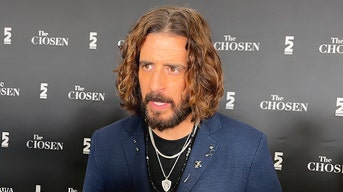
In those moments of difficulty, Roumie reached what he described as a turning point. Rather than continuing to fight for control over his circumstances, he chose to surrender. He spoke about getting on his knees and praying, asking God to take over his life completely. It was not a moment of certainty, but one of release—a decision to stop forcing outcomes and instead trust in something greater. As one observer later noted, “Sometimes the most powerful change begins when you admit you can’t do it alone.”
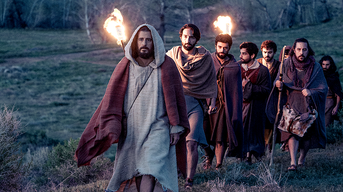
Just a few months after this moment of surrender, Roumie was cast as Jesus in The Chosen, a role that would not only define his career but also reshape his identity. What initially appeared to be a professional breakthrough soon became something far deeper. The series itself, centered on the life and teachings of Christ, demanded more than technical performance. It required emotional vulnerability and, in Roumie’s case, a profound spiritual engagement.
The most intense phase of this journey came during the filming of the crucifixion scenes for the upcoming season. Roumie described the experience as the hardest he had ever endured—physically, emotionally, and spiritually. The preparation alone involved deep prayer, with Roumie asking to understand, even in a small way, the suffering that Jesus endured. What followed was a series of events on set that he interpreted as both challenging and meaningful.
During filming, Roumie suffered multiple injuries, including damage to his shoulder and head, which caused lasting physical effects. Rather than seeing these setbacks as purely negative, he chose to frame them as part of a larger purpose. He spoke about offering his pain as a form of sacrifice, hoping it could carry meaning beyond the performance itself. “If this suffering can help others,” he suggested, “then it has value.”
The emotional toll extended beyond Roumie alone. He described the entire cast as becoming deeply bonded through the intensity of the scenes, comparing the experience to a kind of shared trauma. This collective experience created a unique atmosphere on set—one where the line between acting and reality often felt blurred. For many involved, it was not just another production, but a moment of personal and spiritual confrontation.
What makes Roumie’s story particularly compelling is how it reframes success. In a culture often focused on fame and recognition, his narrative centers instead on transformation. The role of Jesus did not simply elevate his career; it altered how he sees himself and the world around him. He has spoken about how his understanding of faith deepened, how his perspective on suffering changed, and how his connection to the message of love and compassion became more personal than ever before.
Public reaction to his story has been a mixture of surprise and admiration. Some viewers are moved by the sincerity of his experience, seeing it as evidence of genuine faith in an industry often perceived as superficial. “You don’t hear stories like this in Hollywood very often,” one fan commented. “It feels real, and that’s why it resonates.” Others approach it with a more cautious perspective, acknowledging the emotional power of the narrative while recognizing that personal interpretation plays a significant role.
Regardless of perspective, it is clear that Roumie’s experience has had a lasting impact. He himself admits that he is still processing what he went through, particularly as he approaches religious seasons like Easter with a new level of awareness. The role has not ended when the cameras stopped rolling—it continues to shape his thoughts, his faith, and his sense of purpose.
Ultimately, Jonathan Roumie’s journey is not just about portraying a historical or religious figure. It is about what happens when a role becomes a catalyst for change. From financial struggle and personal uncertainty to global recognition and spiritual growth, his story reflects a transformation that goes beyond career success. Whether one views it as coincidence, faith, or something in between, it is a reminder that sometimes, the most unexpected opportunities can lead to the most profound changes.