When Episode 4 (“Rose”) of Heated Rivalry aired, most viewers were focused on the charged glances across the dance floor. In the now-viral club scene, Ilya Rozanov and Shane Hollander move through a crowd of bodies and flashing lights, each dancing with someone else, yet clearly tethered to one another. The tension is suffocating. Neither man can openly acknowledge what simmers between them, but neither can look away. Then the music swells — a cover of “All the Things She Said” — and the moment shifts from compelling to unforgettable.
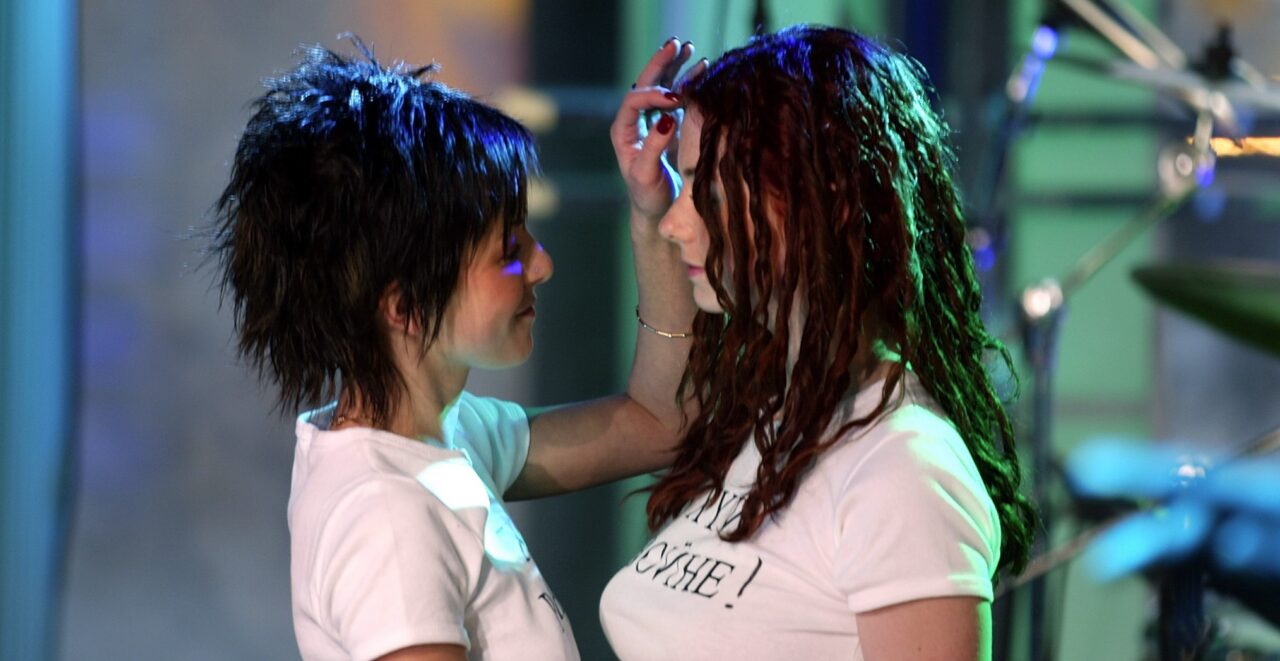
At first, the song choice felt like a nostalgic nod. The early-2000s hit by Russian pop duo t.A.T.u. was once unavoidable on radio and MTV. For many millennials, it carries the weight of adolescence — messy feelings, secret crushes, late-night music video marathons. “The second I heard those opening notes, I was transported back to middle school,” one viewer wrote online. “It hit me before I even understood why.” That immediate emotional recognition is precisely what makes the scene land so powerfully.
But the inclusion of the track was not just about nostalgia. It was layered, intentional, and quietly provocative.
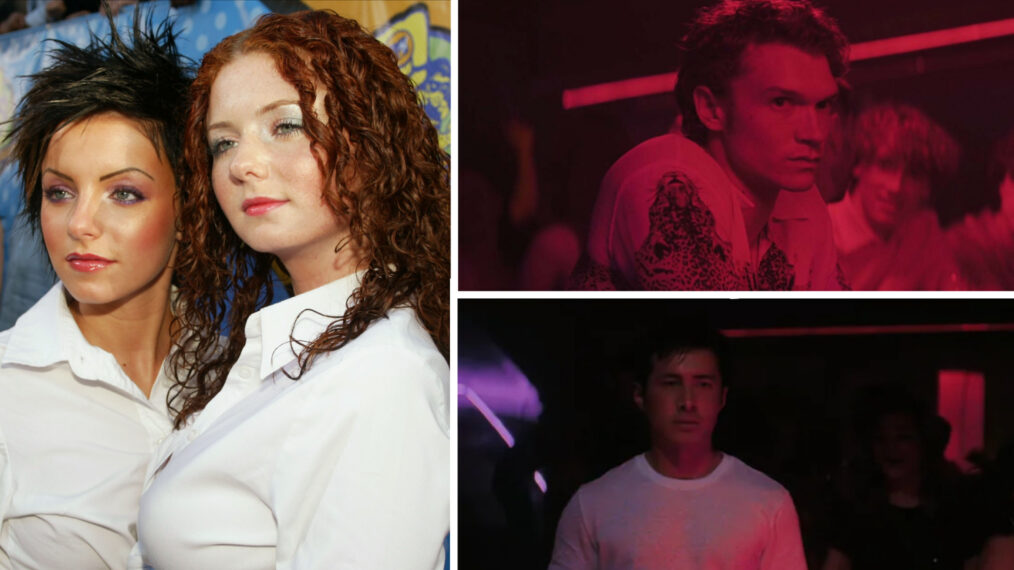
The original 2002 release of “All the Things She Said” was a global phenomenon. Marketed around the image of two teenage girls in school uniforms sharing forbidden kisses in the rain, the song played with queer desire in a way that was both alluring and controversial. Yet the duo behind it did not identify as queer. The lesbian persona was largely a construction of producer Ivan Shapovalov, designed to generate buzz and capitalize on taboo imagery. For many LGBTQ+ fans, the reveal that the relationship was staged felt like betrayal. What seemed like representation turned out to be marketing.
That complicated legacy makes the song’s appearance in Heated Rivalry far more than a catchy backdrop.
In Episode 4, Rozanov and Hollander are trapped between desire and denial. They exist in a hyper-masculine sports culture where vulnerability can be weaponized and queerness remains largely invisible. Their love is real — but it must remain hidden. The irony is striking: a song once criticized for commodifying queer imagery now underscores a relationship that is authentic yet forced into secrecy. “It’s almost like the show is reclaiming it,” one fan suggested on social media. “Turning something manufactured into something honest.”
The creative team has hinted that the decision was deliberate. The cover version used in the episode softens the bombast of the original, leaning into longing rather than shock value. Instead of sensationalism, the music amplifies the ache in the room. The lyrics — “All the things she said, running through my head” — become less about spectacle and more about obsession, fear, and internal conflict. In that dimly lit club, the song mirrors what the characters cannot say aloud.
Some viewers admitted they initially questioned the choice. Given the later controversies surrounding members of t.A.T.u., including public statements that alienated parts of the LGBTQ+ community, the track carries baggage. But that discomfort may be part of the point. Heated Rivalry has never shied away from examining contradictions. The series explores what it means to navigate identity in spaces that simultaneously exploit and suppress it. Using a song with a fraught history deepens that conversation rather than avoiding it.
“It’s genius, actually,” another audience member commented. “The song was once about pretending. This story is about not being allowed to be real.” That reading reframes the scene entirely. What could have been a simple throwback becomes commentary — on pop culture, on performance, and on the blurred line between image and truth.
The show’s broader appeal has always rested on its emotional authenticity. Produced initially by Canadian streamer Crave before being picked up by HBO Max, the series benefited from creative freedom that allowed for risks like this. It does not spoon-feed meaning. It trusts viewers to sit with complexity. The dance floor sequence exemplifies that trust. No grand declarations are made. No dramatic confrontations erupt. Instead, there are looks — loaded, fragile, almost desperate — set against a song that once symbolized something very different.
The resurgence of “All the Things She Said” on streaming platforms and social media following the episode proves the gamble paid off. Fans have flooded timelines with edits of the scene, layering commentary about longing and repression. Younger viewers, unfamiliar with the song’s origins, have begun digging into its backstory. In doing so, they encounter a piece of early-2000s pop culture that was both groundbreaking and exploitative. That tension mirrors the show’s own themes.
Perhaps the brilliance lies in how seamlessly the layers fit together. On the surface, it is simply a well-scored scene. Beneath that, it is a meditation on memory, commodification, and reclamation. It acknowledges the messy history of queer representation in mainstream media while presenting a love story grounded in sincerity.
Not everyone caught the significance immediately. Some just felt the emotional punch. Others later realized why it lingered. “I couldn’t stop thinking about that scene,” one viewer shared. “When I read about the song’s history, it made the whole thing even richer.”
That is the quiet power of thoughtful storytelling. A single musical cue can transform a moment into something cultural, something reflective, something bigger than itself. What sounded like a nostalgic club anthem becomes a layered statement about authenticity in a world that often prefers illusion.
And once you see it that way, the scene is no longer just memorable. It is masterfully intentional.