For most of The Chosen, Dallas Jenkins and Jonathan Roumie have apparently shared a remarkably similar understanding of how Jesus should be portrayed. But when the series reached one of the most consequential moments in its entire story — the crucifixion — that creative harmony faced its strongest test yet.
The disagreement was not primarily about theology. It centered on something that might initially seem smaller: tone. Yet the issue became serious enough for Roumie to tell Jenkins, “I’ve never been this uncomfortable,” leading to hours of discussion and ultimately changes to the Season 6 material.
According to an article published by Crosswalk, Jenkins revealed the behind-the-scenes disagreement during a two-hour appearance on Alex J. O’Connor’s Within Reason podcast. O’Connor, a self-described agnostic and fan of the series, discussed everything from the origins of The Chosen to its interpretation of Scripture and creative choices.

What emerged was an unusual example of an actor pushing back strongly enough to help reshape one of the series’ most important sequences.
A Show That Somehow Crossed Denominational Lines
Before discussing the disagreement, Jenkins reflected on something he still finds surprising: the extraordinarily broad religious audience The Chosen has attracted.
“It’s partly a mystery to me as to why the show has resonated so strongly with so many different Christian traditions,” Jenkins admitted.
That reach apparently extends beyond Christianity. Jenkins said the show is “becoming popular in Israel,” even among people who do not believe in Jesus, partly because viewers there are impressed by “the Jewishness of the show.”

Jenkins believes the explanation may lie in what The Chosen chooses to emphasize.
Rather than building the series around denominational differences, it focuses on Jesus and His story. Jenkins noted that “the majority of Christian traditions agree on the historicity” of Christ.
That ability to move across denominational boundaries becomes particularly relevant when considering what happened during Season 6.
Jenkins is an evangelical Protestant. Roumie is Catholic.
Those differences normally have not prevented them from agreeing creatively. Jenkins emphasized that serious conflicts are rare and said Roumie had never reached the point of simply refusing to deliver dialogue as written.
Season 6 came closer than anything before it.
The Crucifixion Changed the Conversation
“In Season 6, the crucifixion, we had the most of that that we’ve ever had,” Jenkins revealed.
The problem concerned dialogue spoken by Jesus from the cross.
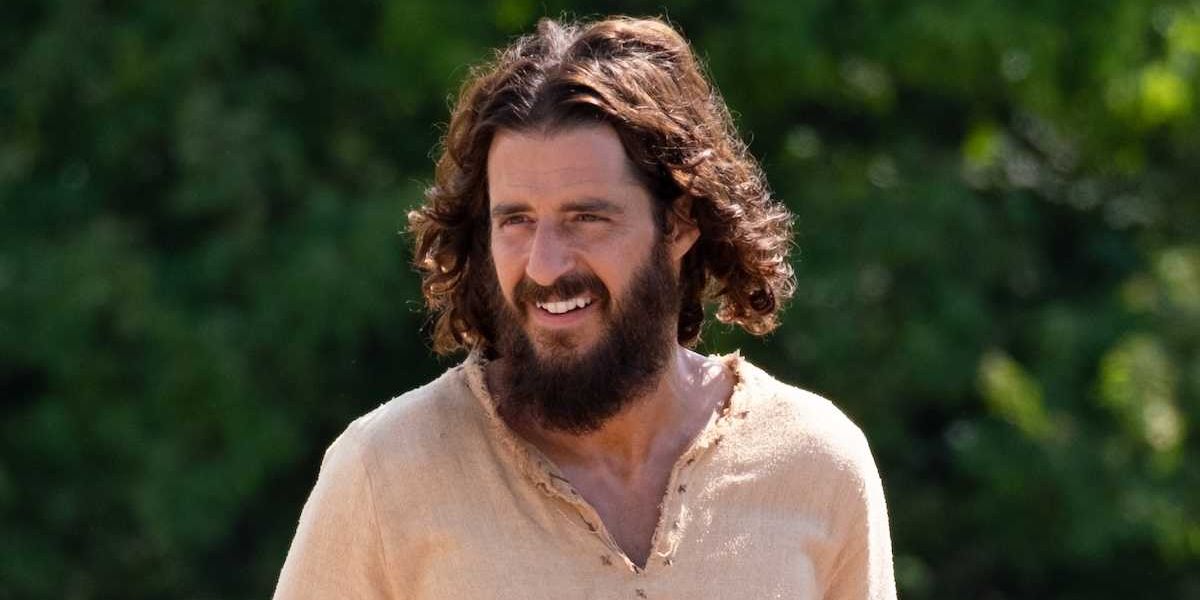
Jenkins and his co-writers had experimented with multiple approaches. Some dialogue was written in what Jenkins described as a somewhat casual manner. In one instance, Jesus notices another character and makes a “light-hearted reference.”
For Roumie, that crossed an important creative boundary.
Jenkins stressed that the dispute was not a theological one. Roumie’s concern was whether someone experiencing the extraordinary physical suffering of crucifixion would plausibly speak in a casual or light-hearted way.
Jonathan was “extremely uncomfortable” with that idea.
This was not merely a performer requesting different wording. Roumie was questioning whether the tone itself undermined the gravity of the moment he was being asked to portray.
And another important voice shared his concerns.
The Catholic Advisor Raised the Same Problem
The production sought feedback from David Guffey, the series’ Catholic advisor and a priest of the Congregation of Holy Cross in Santa Monica, California.
Guffey also expressed reservations.
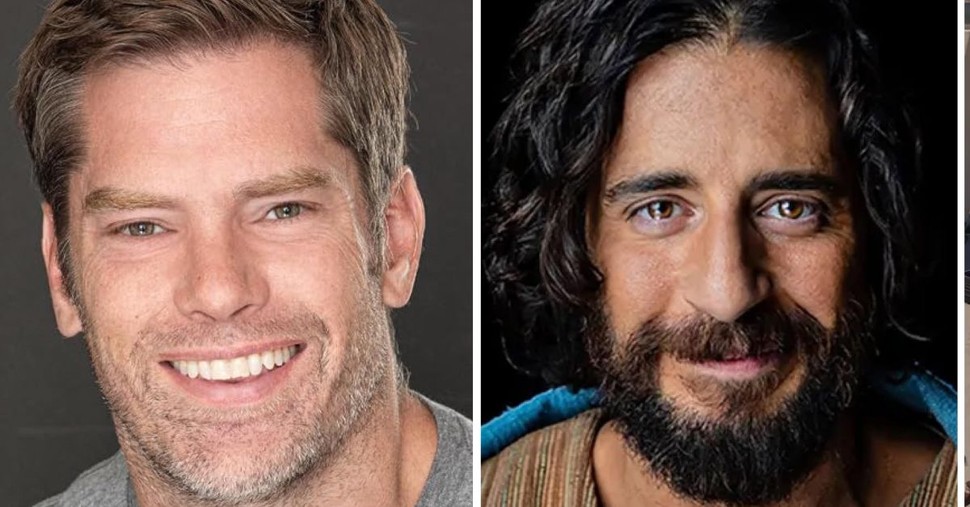
Jenkins summarized the concern this way:
“This is not reverent enough, and we believe [not] accurate enough to capture what we believe is a very, very key part, if not the key part, of His passion, of His crucifixion.”
That criticism shifted the discussion beyond whether one actor personally liked the dialogue.
The question was now whether the original material properly reflected the seriousness, suffering and reverence associated with the crucifixion itself.
Roumie then became more outspoken than Jenkins had ever seen him during their work together.
“This is the first he actually said to me — he goes, ‘I’ve never been this uncomfortable,’” Jenkins recalled.
What followed was not a quick correction.
They spent hours going back and forth.
Jenkins Didn’t Simply Defend His Original Version
Perhaps the most revealing part of the story is what happened next.
Jenkins was willing to reconsider the material.
He explained that some of it was already something he had considered trimming. Part of the purpose of writing it had been to discover how it actually felt once they reached the scene.
“I just wanted to see how this felt, but let’s cut it, let’s trim it down,” Jenkins recalled.
The dialogue was subsequently reduced and adjusted.
Eventually, they reached a version both Jenkins and Roumie could accept.
“And so we finally got to a place where we were both comfortable.”
The disagreement therefore had a tangible consequence. The crucifixion audiences eventually see will not be exactly what Jenkins and his co-writers initially conceived.
Roumie’s discomfort helped change it.
A Disagreement Without a Falling-Out
That distinction is important because Jenkins did not present the incident as evidence of a damaged relationship.
“For the most part, we were in lockstep,” he said of their overall approach to portraying Jesus.
Season 6 simply brought them to unusually sensitive material.
The stakes are also higher than usual. Season 6 launches on Prime Video on November 15, 2026, and focuses on the crucifixion. The season finale depicting the crucifixion is scheduled for a theatrical release in March 2027.
That means the disputed material belongs to what could become one of the most closely scrutinized sequences The Chosen has ever produced.
There is also an interesting irony in the story.
Jenkins says part of The Chosen’s success comes from its ability to focus on Jesus rather than denominational divisions. Yet one of the strongest creative disagreements behind Season 6 involved a Protestant creator, a Catholic actor and concerns shared by a Catholic advisor.
Instead of allowing those differences to become a fracture, the disagreement became part of the creative process.
Roumie challenged the tone. Guffey reinforced the concern. Jenkins listened, trimmed the material and found a compromise.
When viewers eventually watch Jesus on the cross, they may never know exactly which lines disappeared or how different the original version was. But they will be watching a scene shaped by the rare moment when Jonathan Roumie decided that simply performing what had been written was not enough.
For perhaps the most important scene of Season 6, the actor playing Jesus pushed back — and Dallas Jenkins decided the show should change with him.