Fans of The Pitt have found themselves revisiting the Season 2 finale with a completely different perspective after a major revelation from the production team confirmed that a crucial scene involving Dr. Al-Hashimi was cut. What was once seen as a slightly disjointed and emotionally restrained ending is now being reconsidered as something far more incomplete—missing a key piece that could have changed how audiences understood the character entirely.
The deleted scene, which has since been described by actress Sepideh Moafi, offers a much deeper look into Al-Hashimi’s emotional state following her traumatic experience during a shift. In the aired version, viewers saw her struggle with seizures and make questionable decisions, including attempting to drive herself home despite clear risks. However, without additional context, some audiences were left confused by her actions, interpreting them as irrational or inconsistent.

According to Moafi, the removed scene filled in those emotional gaps. In it, Al-Hashimi calls her ex-husband, asking him to take care of their son while she tries to maintain composure. The conversation, though brief, reveals a woman on the verge of breaking down—someone who desperately needs support but cannot bring herself to admit it. She masks her vulnerability, insisting she is fine, even as she struggles to hold back tears. It is a moment of quiet devastation, one that humanizes her in a way the final cut did not fully achieve.
For many viewers, learning about this scene has sparked frustration. “That would have explained everything,” one fan wrote online. “Instead, we were left guessing why she made those choices.” The sentiment has been echoed across social media, where discussions about the finale have resurfaced with renewed intensity. Some argue that the omission weakened the storyline, while others feel it deprived the audience of a powerful emotional payoff.
The impact of the cut goes beyond a single scene—it affects how the entire arc of Dr. Al-Hashimi is perceived. Throughout Season 2, her character grapples with both professional pressure and personal health challenges. The seizures she experiences are not just plot devices; they represent a deeper conflict between her identity as a capable doctor and her fear of losing control. Without the deleted scene, that internal struggle remains only partially visible.
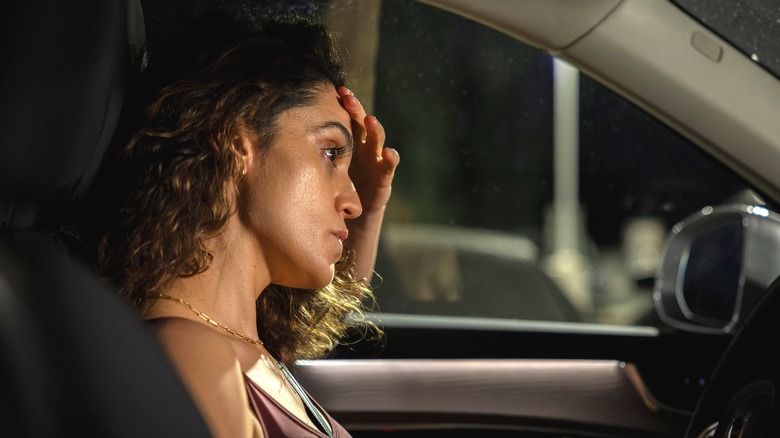
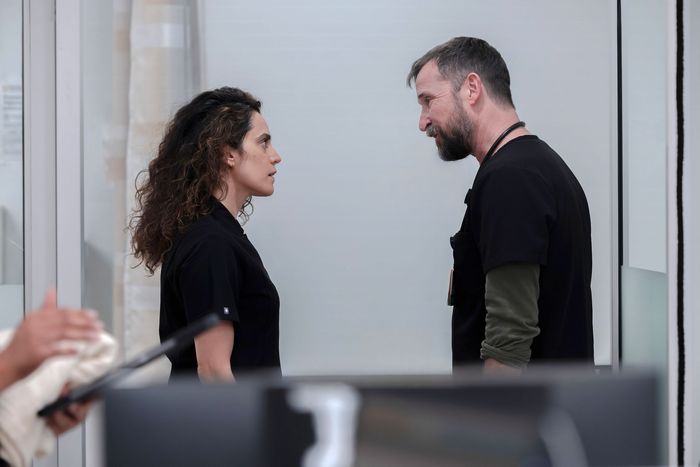
Moafi herself has hinted that the scene also clarifies why Al-Hashimi initially gets into the car despite knowing she shouldn’t. It is not simply poor judgment, but an act of defiance shaped by emotional strain and a heated confrontation with Dr. Robby. That nuance—her mix of frustration, vulnerability, and denial—adds layers to a character who might otherwise seem inconsistent. By removing the scene, the show arguably lost a chance to present a more complete portrait.
Interestingly, the storyline itself has been praised for its realism. The depiction of a doctor managing a serious health condition while continuing to work reflects real challenges within the medical field. Some professionals have noted that situations like this are not as rare as viewers might assume, adding another layer of authenticity to the narrative. The deleted scene, in this context, would have reinforced that realism by showing the emotional toll such circumstances can take.
Not everyone, however, is critical of the decision to cut the scene. Some viewers have suggested that time constraints or pacing considerations may have played a role, arguing that difficult editorial choices are part of television production. “Every show has to leave something on the cutting room floor,” one commenter noted. “We just don’t always hear about it.” Still, even those who understand the reasoning often admit that this particular omission feels significant.
The conversation has also reignited broader discussions about how much of a story should be left implied versus explicitly shown. While subtlety can be powerful, it relies on audiences having enough context to interpret what they see. In this case, many feel that the balance may have tipped too far toward ambiguity, leaving key emotional beats underdeveloped.
As fans continue to process the revelation, there is a growing sense of what might have been. The idea that a single scene could reshape the entire perception of a character highlights just how delicate storytelling can be. It also underscores the importance of emotional continuity, especially in a series that prides itself on realism and depth.
Looking ahead, the response may influence how future seasons approach similar decisions. With Dr. Al-Hashimi’s story far from over, there is still an opportunity to explore the complexities that were only partially revealed in Season 2. For now, though, the focus remains on what was lost—and the lingering feeling that audiences were denied a moment that could have made all the difference.