BTS members RM and J-Hope are facing another wave of criticism after a seemingly carefree video from Toronto reignited the controversy surrounding their recent appearance at a Chris Brown concert. What might normally have been an ordinary travel or behind-the-scenes moment has instead become another flashpoint for a divided ARMY, with some fans questioning whether the two idols understand why their association with Brown has generated such intense criticism.
The latest controversy began on August 20, when J-Hope posted a TikTok featuring himself and RM aboard a boat in Toronto. The two appeared relaxed, smiling and dancing to Justin Bieber’s “Beauty And A Beat” while preparing for BTS’ upcoming ARIRANG World Tour shows in the Canadian city. On the surface, there was nothing unusual about the clip. Yet its timing immediately became controversial because it appeared only days after the pair had been heavily criticized for attending Chris Brown’s concert in Toronto.
For critics, the issue was not simply that RM and J-Hope attended a concert.
It was the public nature of their association with Brown.
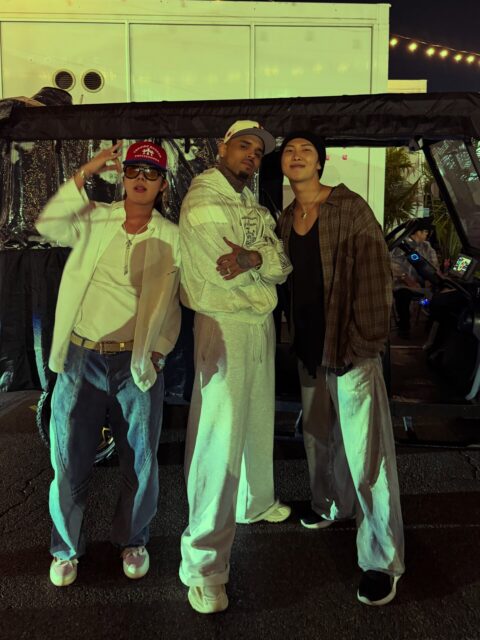
On August 12, RM and J-Hope attended the Toronto concert featuring Chris Brown and Usher. J-Hope subsequently shared footage from the event, including moments of himself and RM enjoying Brown’s performance. Brown later posted a backstage photograph showing himself with the two BTS members. The combination of the concert attendance, enthusiastic footage and photo created a much stronger public impression than a private decision to listen to an artist’s music would have done.
That distinction has become central to the backlash.

Critics argue that RM and J-Hope are entitled to listen to whatever music they choose privately, but once they publicly associate themselves with a controversial artist, their decision becomes open to public scrutiny.
Brown’s history is well documented. In 2009, he pleaded guilty to felony assault involving his then-girlfriend Rihanna. More recently, in July 2026, Brown pleaded guilty in the United Kingdom to affray connected to a 2023 London nightclub attack and is awaiting sentencing.
For some fans, that history makes the BTS members’ public interaction with Brown particularly difficult to reconcile with the values they associate with BTS.
The criticism has consequently moved beyond the simple question of whether RM and J-Hope “like Chris Brown.”
It has become a debate about accountability, consistency and celebrity responsibility.
Some fans have argued that BTS have spent years cultivating an image associated with empathy, self-reflection and social consciousness. RM in particular has frequently been viewed by fans as a thoughtful public figure whose words carry considerable influence.
That makes his silence particularly noticeable to critics.
The situation became even more complicated after The Pixel Project, an organization focused on ending violence against women, indefinitely suspended RM from its honor roll of male role models following the controversy. The organization had previously highlighted him as an example of an imperfect but positive male role model. It also said it would review a 2025 Father’s Day article that had featured him.
That development dramatically elevated the dispute.
What began as a fandom argument over a concert appearance was suddenly connected to an organization whose central mission involves violence against women.
For critics, that transformed the question from “Was it a bad celebrity choice?” into “Does this public association contradict the values RM has previously represented?”
The answer is not necessarily straightforward.
Attending a concert or appearing in a photograph with an artist does not automatically establish endorsement of everything that artist has ever done. That distinction has been emphasized by some fans and observers who defend RM and J-Hope, arguing that celebrities can appreciate someone’s music without endorsing their personal history.
That argument is legitimate.
But it does not eliminate the criticism.

There is a difference between legal guilt by association and public judgment of a decision.
Nobody needs to prove that RM or J-Hope personally endorse Brown’s past behavior in order to question the wisdom of publicly celebrating a performance by someone with such a controversial history.
In fact, that is arguably the strongest criticism of the BTS members.
The issue may not be what they believe privately.
It may be whether they understood how their actions would be perceived publicly.
For artists of BTS’ scale, context matters.
RM and J-Hope are not ordinary concertgoers.
They are two members of one of the most influential music groups in the world.
Their photographs can reach millions of people within minutes.
Their social-media posts can become international headlines.
Their association with another celebrity can influence how fans perceive that person.
That means seemingly casual decisions carry consequences that ordinary fans do not face.
The TikTok posted on August 20 therefore became controversial because it appeared to some observers to show the members moving forward without acknowledging the criticism surrounding them.
One viral reaction reportedly called for the group’s public-relations team to be fired, reflecting the frustration among critics who believe the timing of the post was particularly poor.
The argument is understandable from a communications perspective.
If an artist is facing an active controversy involving violence against women, posting a carefree video immediately afterward can create the impression that the controversy is being ignored.
Of course, there is another possible explanation.
RM and J-Hope may simply have decided not to allow online criticism to dictate their daily lives.
The video was not a statement about Chris Brown.
It was a lighthearted clip featuring two friends enjoying music while in Toronto.
The fact that audiences interpreted it through the lens of the existing controversy may say as much about the current level of scrutiny surrounding BTS as it does about the intentions behind the video.

That is precisely why this situation is so difficult.
Intent and impact are not always the same thing.
RM and J-Hope may not have intended to communicate support for Brown’s personal conduct.
But the public impact of their appearance was nevertheless significant.
This distinction has become increasingly important as BTS’ global profile has expanded.
The members are now older, more established and more individually visible than they were during their early career. Their solo activities, collaborations and personal choices receive international attention independent of the group.
That increased freedom also comes with increased responsibility.
The current controversy is therefore unlikely to disappear simply because the members continue their tour.
In fact, their ARIRANG World Tour may make the issue even more visible.
Thousands of fans will gather in Toronto to see BTS perform. International media will be watching. Every interaction, comment and social-media post will potentially be interpreted through the controversy.
And because the dispute has divided ARMY itself, the audience reaction could be complicated.
Some fans remain deeply disappointed.
Others believe the criticism has become excessive.
Some are demanding accountability.
Others are defending the members’ personal autonomy.
Still others are attempting to separate the music from Brown’s personal history.
This division is important because it demonstrates that there is no single “ARMY opinion” on the issue.
The fandom is enormous and politically, culturally and socially diverse.
It is therefore inaccurate to suggest that all BTS fans support RM and J-Hope unconditionally—or that all fans have turned against them.
Both reactions exist simultaneously.
There has also been speculation that musicians who previously worked with BTS have distanced themselves from RM and J-Hope following the controversy. Some reports claimed Zara Larsson and Megan Thee Stallion unfollowed the members, but those claims should be treated cautiously. In Larsson’s case, ARMYs pointed out that she did not appear to have followed the individual members in the first place, while she continued following BTS’ official account.
That is an important example of how quickly online narratives can become exaggerated.
Once a controversy begins, social-media users start searching for clues everywhere.
An unfollow becomes a statement.
A like becomes evidence.
A deleted post becomes suspicious.
A new photograph becomes symbolic.
The result can be a feedback loop in which speculation becomes indistinguishable from established fact.
The same caution should apply to claims about RM and J-Hope’s personal beliefs.
There is currently no evidence demonstrating that either member supports Brown’s history of violence or agrees with his alleged misconduct.
There is evidence that they attended his concert.
There is evidence that J-Hope publicly shared footage from the event.
There is evidence that Brown posted a photograph with them.
Those actions can reasonably be criticized.
But assigning a specific ideological belief to the BTS members requires evidence that has not been established.
That distinction is particularly important when the conversation involves accusations of supporting violence against women.
Criticism should focus on documented behavior.
Otherwise, the debate risks becoming a character-assassination exercise rather than a meaningful discussion about accountability.
Nevertheless, the controversy has exposed an uncomfortable contradiction for BTS’ public image.
For years, the group has been associated with messages about self-worth, emotional openness and personal growth. RM, as leader, has often been one of the members most closely associated with thoughtful public commentary.
When a public action appears inconsistent with those values, fans naturally ask questions.
That does not mean BTS have permanently abandoned those principles.
It means their audience expects their actions to be consistent with them.
And that expectation can be both a burden and a consequence of enormous influence.
The most damaging aspect of the controversy may therefore be the absence of a clear explanation.
If RM and J-Hope genuinely viewed the concert simply as a musical experience, a brief acknowledgment could potentially clarify their position.
If they believe that attending Brown’s concert does not constitute an endorsement of his personal conduct, they could say so.
If they regret the public nature of the interaction, acknowledging that could also help.
Silence, however, leaves an enormous interpretive vacuum.
Fans fill that vacuum themselves.
Critics assume indifference.
Supporters assume unfair treatment.
News outlets amplify the conflict.
And the controversy continues.
That is why the latest TikTok matters despite having nothing directly to do with Chris Brown.
It became another piece of evidence in a much larger narrative.
For supporters, it may simply show RM and J-Hope enjoying themselves during a busy tour.
For critics, it represents another example of the members behaving as though nothing happened.
Both interpretations are possible.
But only the members know what they intended.
What can be assessed objectively is the public consequence.
Their association with Brown has triggered significant backlash, attracted criticism from an organization focused on violence against women, divided their fandom and generated international media coverage.
That is not an insignificant reaction.
At the same time, the controversy should not become an excuse to strip RM and J-Hope of all nuance.
They are human beings capable of making questionable decisions without every questionable decision defining their entire character.
A celebrity can make a poor judgment.
A fan can be disappointed.
An apology can happen.
A relationship can change.
And a controversy can eventually end.
The key question now is whether RM and J-Hope choose to address the issue or simply allow it to fade.
If they remain silent, the debate may continue throughout the tour.
If they speak, their words will be scrutinized intensely—but they would at least have an opportunity to explain their perspective.
For BTS, the stakes are larger than one concert.
The group is entering a new era in which every member has greater individual visibility and greater freedom to make personal choices. That freedom is important, but so is recognizing that global influence changes the consequences of those choices.
RM and J-Hope did not create Chris Brown’s controversial history, and attending his concert does not by itself prove that they endorse it. But their public decision to attend, celebrate the performance and appear with Brown has created a legitimate conversation about judgment, accountability and the responsibilities that come with being global role models. The latest Toronto video may have been intended as nothing more than a carefree moment between two BTS members. Instead, it became another reminder that for artists of their scale, even the most casual choices can carry a much larger meaning.