BTS’s ARIRANG World Tour stops at Sun Bowl Stadium in El Paso, Texas, on May 2 and 3, 2026, drew massive crowds and widespread praise for their emotional performances. However, the events also triggered significant online debate over visible security measures, particularly the presence of Homeland Security Investigations (HSI) agents and snipers positioned on rooftops. While these protocols are standard for large-scale U.S. events, their prominent implementation at the venue left some fans—especially international attendees and those from nearby Mexico—feeling uneasy and sparking discussions about safety versus intimidation.
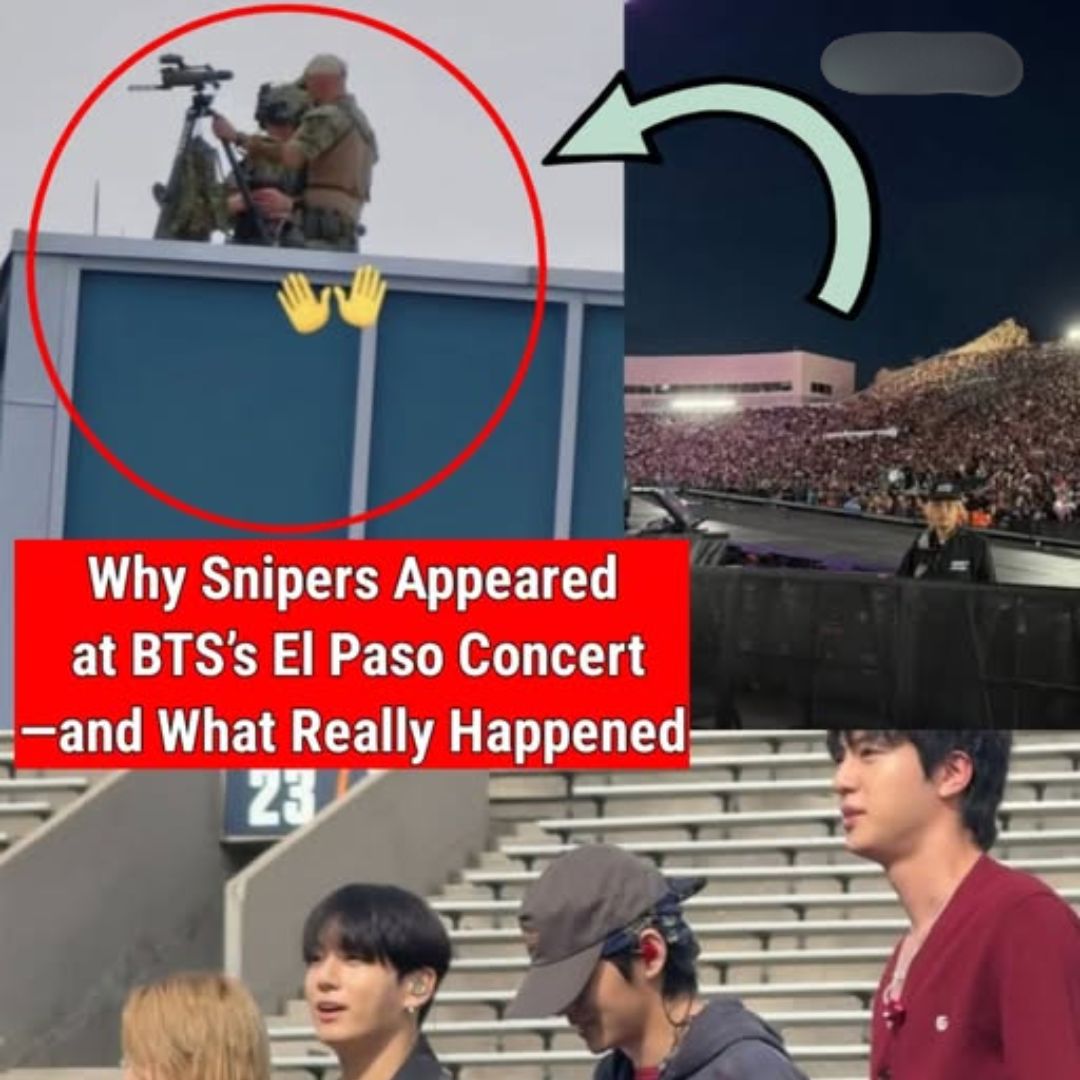
During the second night, sharp-eyed ARMY spotted armed personnel on elevated positions overlooking the stage. Videos circulated rapidly on social media, showing figures scanning the crowd through scopes. Some fans even claimed to notice Suga glancing toward them mid-performance. The sight of snipers at a pop concert understandably caused alarm. For many, especially first-time concertgoers or visitors from regions with different security norms, the imagery evoked tension rather than reassurance. International fans crossing the U.S.-Mexico border expressed particular discomfort, with some voicing fears on platforms like TikTok and Instagram that the heavy presence made the atmosphere feel militarized.
Homeland Security Investigations agents were also reportedly active both inside and outside the venue, assisting with crowd management, entry lines, and overall coordination. This involvement fueled speculation and misinformation, including unfounded claims that ICE agents were present. Clarifications from security experts emphasized that HSI frequently supports major public events—such as the Super Bowl, Olympics, or other high-profile gatherings—focusing on threat assessment, intelligence, and logistical support rather than immigration enforcement in this context.

Security professionals and local residents quickly explained that such measures represent standard protocol for events of this magnitude. Sun Bowl Stadium, with its open layout nestled against the Franklin Mountains and capacity for over 50,000 attendees, presents unique challenges. Elevated observation posts allow teams to monitor large areas for potential threats, unauthorized access, or crowd surges. The venue’s geography made these positions more noticeable than at enclosed arenas, amplifying their visibility and contributing to the sense of unease among some fans.

Many ARMY defended the measures, noting that BTS’s global stature and past security incidents justify robust protection. The group has faced threats and intense fan attention throughout their career, making layered security essential for performer and audience safety. Supporters highlighted that visible deterrence helps prevent issues like the object-throwing during soundcheck, hotel stalking, and unauthorized entries reported around the El Paso shows. In a post-military service era, where BTS draws record-breaking international crowds, enhanced protocols reflect responsible event planning rather than overreaction.

Critics within the fandom, however, argued that the optics could have been handled more sensitively. Some international fans described feeling watched or unwelcome, particularly those traveling from Mexico amid heightened border awareness. The combination of snipers, visible federal agents, long entry lines with AI scanners, and strict clear-bag policies created a cumulative atmosphere that felt more like a high-security summit than a celebratory concert for certain attendees. Discussions on social media revealed a divide: while most understood the necessity, others wished for less overt displays that might preserve the joyful concert vibe.
Local authorities and UTEP (the University of Texas at El Paso) had prepared extensively. Warnings against climbing surrounding mountains for unauthorized views, coordinated traffic plans, and additional personnel deployment reflected proactive crowd management. Border officials issued travel advisories anticipating delays due to the influx of fans, underscoring the event’s scale. These steps, while necessary, contributed to the perception of an unusually heavy security footprint.
Ultimately, the controversy reveals broader tensions in managing global superstar events in an era of heightened awareness around public safety. For most attendees, the concerts delivered unforgettable memories, with powerful performances outweighing logistical hiccups. The visible security, though startling to some, likely contributed to the overall smooth execution without major incidents. As BTS continues the ARIRANG tour, organizers in future cities may draw lessons from El Paso—balancing robust protection with efforts to maintain a welcoming, fan-friendly environment.
The El Paso experience serves as a reminder that large-scale K-pop concerts operate at the intersection of entertainment, logistics, and security realities. While the sight of snipers and federal agents initially unsettled portions of the audience, it also demonstrated the serious commitment to safeguarding one of the world’s biggest musical acts and their devoted supporters. For the vast majority of ARMY, the focus remained on celebrating BTS’s return, even as the conversation around concert security continues to evolve.