The new biopic Michael has captivated audiences since its release on April 24, offering a powerful portrayal of the King of Pop’s life and career. One of the most striking elements of the production has been the performance of Jaafar Jackson, who steps into the shoes of his late uncle with remarkable authenticity. Costume designer Marci Rodgers, who worked closely with the cast throughout filming, has shared how profoundly moved she was by Jaafar’s embodiment of Michael Jackson.

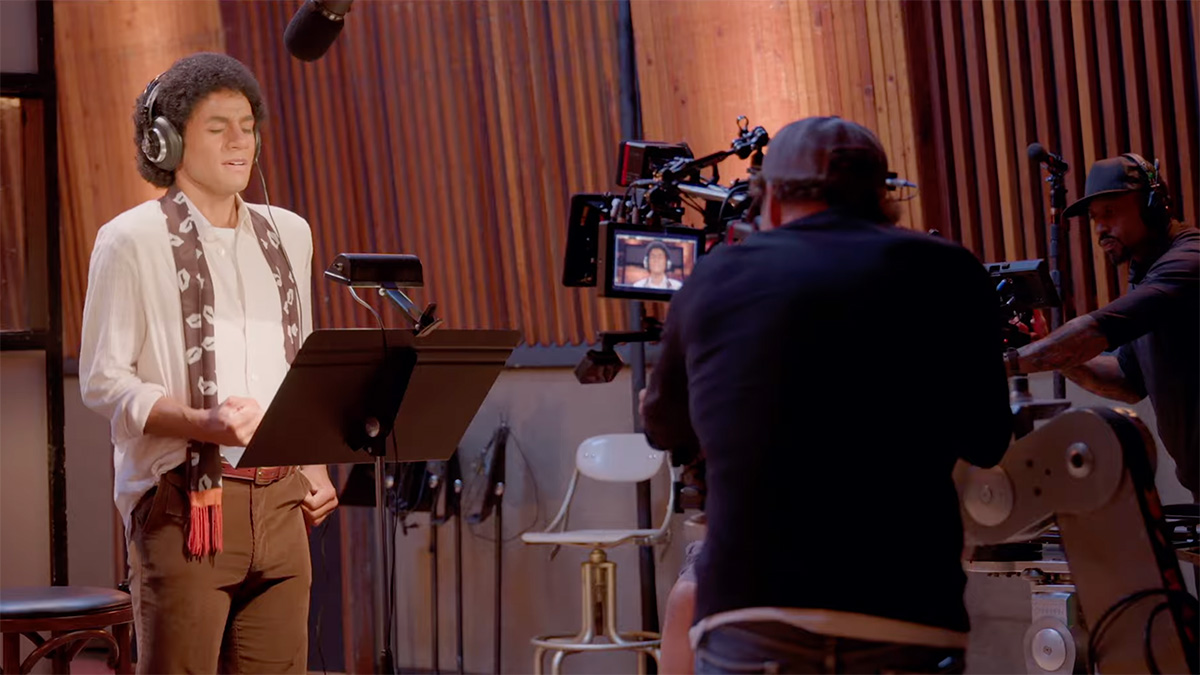
In an exclusive interview with PEOPLE, Rodgers described moments when it felt as though Michael himself was present on set. “Michael came through him,” she revealed. “A few times.” For Rodgers, it went beyond mere acting or imitation. Jaafar did not simply transform into the iconic performer — in her eyes, he truly became Michael, especially during the musical sequences. She watched in awe as the 29-year-old actor delivered renditions of classic hits such as “Thriller,” “Beat It,” and “Bad,” complete with the mannerisms, energy, and presence that defined his uncle.
This deep connection was not limited to the costume team. Members of the Jackson family have echoed similar sentiments, describing Jaafar’s portrayal as both emotionally overwhelming and eerily accurate. Prince Jackson, Michael’s son and one of the film’s executive producers, spoke openly about the experience. He called witnessing Jaafar in the role “one of the greatest experiences of my life.” Having grown up alongside Jaafar at the family’s Hayvenhurst estate, Prince was struck by the transformation once he saw his cousin in full hair, makeup, and costume. The resemblance brought back memories so vividly that Prince needed a moment to compose himself. “I really just wanted to give him a hug in that moment,” he recalled, “but I had to tell him, ‘Jaafar, I’m proud of you, you’re going to do great,’ before stepping outside for some air.”
Jaafar’s uncle Jackie Jackson also became emotional when discussing the film. At the premiere, he shared through tears how deeply Jaafar had captured Michael on screen. “He became Michael,” Jackie said, “and it brought tears to my eyes. He’s incredible.” These heartfelt reactions from those who knew Michael best have meant the world to Jaafar. After his initial screen test, he received individual calls from each of his uncles. Their emotional responses left him in tears as well, viewing their praise as the highest possible compliment. He has also highlighted the pride of his grandmother, Katherine Jackson, who has been overwhelmingly supportive throughout the process.
Rodgers’ perspective adds another layer to these family accounts. As the costume designer responsible for recreating Michael’s legendary looks, she collaborated intimately with Jaafar to ensure every detail — from sequined gloves to military-style jackets — felt authentic. The process allowed her to observe Jaafar’s dedication up close. What began as careful preparation evolved into something more profound during the performance scenes. The way Jaafar moved, sang, and inhabited the character created an almost spiritual atmosphere on set, making it feel as though Michael’s essence had returned.
The film, directed by Antoine Fuqua and written by John Logan, spans Michael Jackson’s journey from his early days with the Jackson 5 in the 1960s through to the end of the Victory Tour in 1988. It explores both his extraordinary talent and the complexities of his personal life, all with the blessing and involvement of many family members. This close collaboration has contributed significantly to the film’s emotional depth and visual accuracy.

Beyond Jaafar’s central performance, the cast features Juliano Krue Valdi as a young Michael, Colman Domingo portraying Joe Jackson, Nia Long as Katherine Jackson, Miles Teller as lawyer John Branca, Laura Harrier as producer Suzanne de Passe, and Mike Myers as CBS Records executive Walter Yetnikoff. Together, they bring to life a comprehensive portrait of one of music’s most influential figures, who passed away in 2009 at the age of 50.
For Rodgers, the experience of working on Michael has been uniquely rewarding. Creating costumes that mirrored Michael’s iconic style required extensive research and attention to detail, but seeing them come alive through Jaafar elevated the entire project. The moments when “Michael came through” were not planned or forced — they emerged naturally from Jaafar’s commitment and talent. These instances reinforced the film’s goal of honouring Michael’s legacy while introducing his story to new generations.
Jaafar himself has spoken about the pressure and privilege of taking on such a monumental role. Growing up surrounded by his family’s musical heritage, he approached the character with deep respect and thorough preparation. The positive feedback from relatives who shared Michael’s life has provided him with reassurance and motivation. Their emotional responses confirm that his performance resonates on a personal level that goes far beyond technical accuracy.

Since opening in theatres, Michael has performed strongly at the box office, drawing both longtime fans and newcomers curious about the King of Pop’s extraordinary career. The film’s success reflects not only public interest in Michael Jackson but also the power of Jaafar’s portrayal to bridge past and present. Through careful costume work, dedicated performances, and family involvement, the production has created something that feels both celebratory and authentic.
Marci Rodgers’ insights offer a valuable glimpse behind the scenes. Her description of Michael “coming through” Jaafar captures the almost mystical quality that many on set experienced. In an industry where biopics often struggle to capture the essence of their subjects, this film appears to have achieved something special. It stands as a testament to the enduring impact of Michael Jackson’s artistry and the talent of a new generation carrying that legacy forward.
As audiences continue to discover or revisit Michael’s story through this cinematic tribute, the words of those who worked closely with Jaafar serve as a powerful reminder: sometimes the line between performer and legend becomes beautifully blurred, allowing a beloved icon to shine once more.