When a single costume from a blockbuster movie captures the imagination of fans worldwide, it becomes more than just clothing—it turns into a cultural phenomenon. That’s exactly what happened with the fox sweater worn by Ryan Gosling’s Ryland Grace in Project Hail Mary. And while you can’t buy it ready-made just yet, one devoted knitter has shown that with patience, determination, and a few clever tweaks, you can create your very own piece of cinematic fashion history.

Knitting for cosplay has long been an art form, distinct from simply buying or sewing a costume. From Althea Crome’s intricate mini-sweaters for Coraline to the infamous “Handsome Chris” sweater from Knives Out, fiber artists often spend months reverse-engineering hand-knits to make them screen-accurate. For Harmony Leiker, a passionate reproduction knitter, the release of Project Hail Mary presented the perfect challenge: recreate the now-iconic fox sweater from the film before anyone else could.
“I love knitting things from film and television. My big magnum opus is I did the Oaken sweater from Frozen, which I designed the chart for,” Leiker told Inverse. “I also happened to really love Project Hail Mary. I read the book about a year ago, and I absolutely loved it. So when the first trailer dropped in October 2025, I immediately clocked this sweater because I had seen the pattern previously.”
Without hesitation, she decided to take a leap of faith. “Immediately I went, ‘I’m going to take a gamble that this is going to be a big deal, and I’m going to take a gamble that this movie’s going to be good, and I’m going to take a gamble that it’s seen in a fair amount of the movie. I’m just going to gamble on all of it, and I’m just going to go ahead and make the sweater.’” By the film’s release, Leiker had a fully finished garment to wear to her local theater, proudly debuting her labor of love.
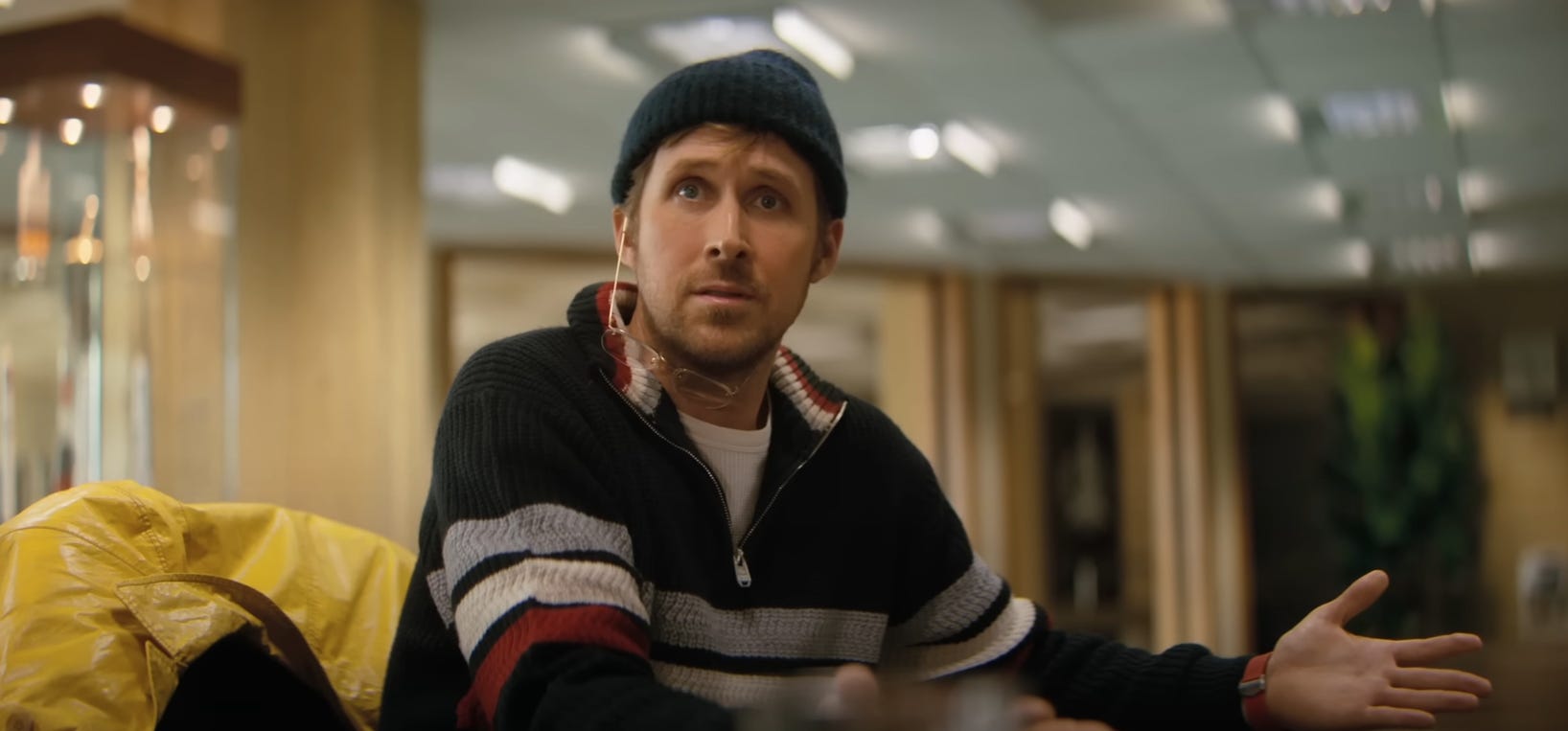
For fans who don’t knit, the sweater isn’t commercially available yet. But the good news is that with some guidance, anyone willing to pick up needles can make one themselves. Leiker’s journey provides a roadmap for the ambitious DIYer.
Leiker traced the sweater back to a 1950s “Wolf Cardigan” pattern from Mary Maxim, adjusting the colors so that the wolves on the front and back resemble foxes instead. While the original vintage pattern is affordable and simple to obtain, replicating the movie’s version proved more complicated. Compared to the film, the original design’s animals appeared more intimidating and had smaller eyes. Leiker initially followed the vintage instructions and planned to tweak the design later, finally refining it after a post from Project Hail Mary costume designer Glyn Dillon confirmed the on-screen details.
The decision to switch wolves to foxes actually came from Gosling himself. Dillon explained that while staying in London, Gosling had noticed the city’s urban fox population. “A lot of Londoners consider them pests, but I’m more inclined to agree with Ryan; they’re special, and it’s always a bit magical when you spot one crossing your path at night,” Dillon shared. “So he asked if we could change the wolves to foxes. We were extremely tight on time, but this was also a chance to change the faces and the bloodred footprints.”
Mary Maxim has since released a “Project Hail Mary” kit version of the cardigan, complete with materials for $90, though it’s currently sold out. For those unwilling to wait, the original vintage pattern still offers a viable, hands-on option.

Leiker emphasizes that the sweater’s construction isn’t technically difficult, but it is time-intensive. “It is pieced. So you do have to sew all of the pieces together at the end, so it’s not knit in one,” she explains. Unlike contemporary sweaters often knit from the top down, this design requires multiple panels and precise stitching, including a zipper—a daunting challenge for even seasoned knitters.
Another complication is the vintage instructions, which are often sparse. “Vintage patterns are very sparse. It’s literally just, like, ‘Sew it together.’ There’s just a picture of the different pieces of the sweater,” Leiker notes. She recommends yarn with “a bit of tooth” to make handling and colorwork easier.
Despite the complexity, Leiker encourages beginners to take the plunge. “I’m a person who takes on projects that are beyond my capabilities, and I jump right in and just figure them out. I started with a hat and then immediately did a sweater. It’s not the easiest thing in the world. So I’d say this is a very dedicated beginner project. A very ambitious beginner project.”
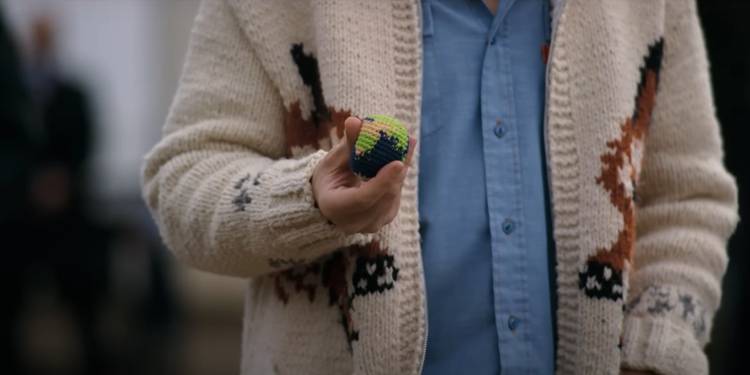
The most challenging aspect of the build is the colorwork, which combines stranded knitting, where yarn is held behind stitches, and intarsia, where yarn is carried to specific sections. Thankfully, attentive fans have already shared detailed charts online, making it easier to achieve screen-accuracy without straining your eyes over blurry screenshots.
Knitting has never been more accessible. Tutorials abound on YouTube, communities flourish on Reddit, and support is abundant among fellow crafters. For anyone willing to try, the fox sweater might not just be a costume—it could be an entry point into a lifelong hobby.
With Project Hail Mary now playing in theaters, the fox sweater has transcended its role as a costume piece, becoming a symbol of fandom, creativity, and the meticulous craftsmanship that bridges cinema and craft. Harmony Leiker’s journey demonstrates that with passion, patience, and a pair of needles, fans can transform a fleeting on-screen moment into a tangible, wearable marvel—and in doing so, she accidentally reveals the secret magic of turning film into fiber.