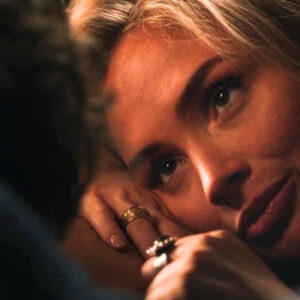
The controversy becomes easier to understand when looking at what Carter had already experienced. He arrived in Beth and Rip’s world as a vulnerable orphan who had lost his father and effectively had nowhere else to go. Beth eventually took responsibility for him, and their relationship gradually developed beyond the simple arrangement of an adult protecting a troubled child. Carter began seeing Beth as someone who could provide the emotional security he had lost with his mother. From his perspective, calling her “mama” was not an attempt to erase his biological mother. It was an innocent way of naming the new emotional role Beth had started occupying in his life. That is precisely why her response felt so devastating to audiences who had watched their bond develop.
Carter’s timing also made the scene particularly heartbreaking because Beth initially responded almost instinctively. When he greeted her with “Morning, mama,” Beth briefly answered warmly before stopping herself. That tiny hesitation suggested that some part of her actually wanted to accept the relationship he was offering. Then her emotional defenses immediately returned, and she insisted that Carter could not call her that because it was not true. The contrast between those two reactions exposed the internal battle happening inside Beth. She was capable of tenderness toward Carter, but the word “mother” touched a wound that was far deeper than the boy could understand. In a matter of seconds, the scene transformed from a sweet family moment into a reminder of everything Beth had spent years refusing to confront.
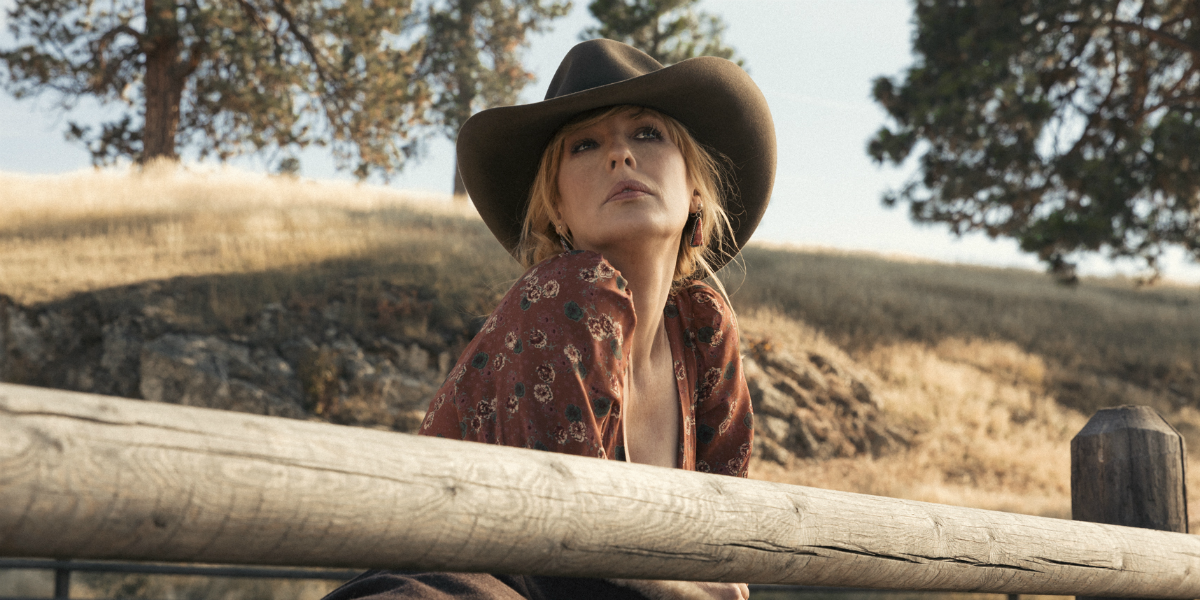
Kelly Reilly understood why audiences reacted so strongly, even though she did not believe Beth had acted out of character. She later joked that “America went after” her because viewers were so angry about what Beth said to Carter. Reilly emphasized that the behavior belonged to Beth rather than herself, but she also admitted that she understood why people wanted Beth to respond differently. The actress even said she wished Beth could allow herself to become a mother figure to Carter. However, Reilly argued that Beth could not honestly promise a grieving child that she was his new mother after knowing him for such a short period. From that perspective, Beth’s cruelty was connected to her refusal to give Carter a comforting lie simply because it would make everyone feel better.
That explanation makes sense on a psychological level, but it does not automatically make Beth’s behavior kind or appropriate. Carter was not asking for a legal adoption or demanding that Beth erase his biological mother from his memory. He was looking for reassurance from the woman who had already become one of the safest people in his life. Beth could have explained that she could never replace his mother while still acknowledging that she loved and protected him. Instead, she chose language that deliberately reinforced Carter’s loneliness. Telling an already traumatized child that he does not get another mother is not merely setting a boundary. It is weaponizing his deepest loss at precisely the moment when he is vulnerable enough to reach out. That is why the scene can be psychologically understandable while still being morally brutal.
:max_bytes(150000):strip_icc()/Yellowstone_1-cc39373b9dc34b6186b8abd4b9fb2099.jpg)
The key to understanding Beth is that motherhood is not an uncomplicated concept for her. Her own relationship with her mother, Evelyn Dutton, was deeply traumatic and ultimately became central to the person Beth grew into. As a child, Beth was involved in the horse-riding accident that led to her mother’s death, and Evelyn’s final words left Beth carrying enormous guilt. Beth therefore associates motherhood not simply with love and protection but also with judgment, pain, responsibility, and loss. The idea of becoming a mother herself is further complicated by the fact that she cannot have children because of what happened to her when she was younger. That history makes Carter’s innocent use of “mama” emotionally explosive because the word touches almost every unresolved wound in her life.
There is also a devastating connection between Beth’s trauma and her relationship with Jamie Dutton. Beth’s hatred toward Jamie is partly rooted in the decision that resulted in her being sterilized, something that permanently changed her ability to have children. That history means the possibility of motherhood carries a mixture of grief and rage that Beth has never fully processed. Carter unknowingly walks directly into that emotional minefield when he treats Beth like a mother. To him, the word represents comfort and belonging. To Beth, it represents a life she believes was taken from her. The tragedy is that Carter has no way of knowing how much pain his innocent affection is activating.
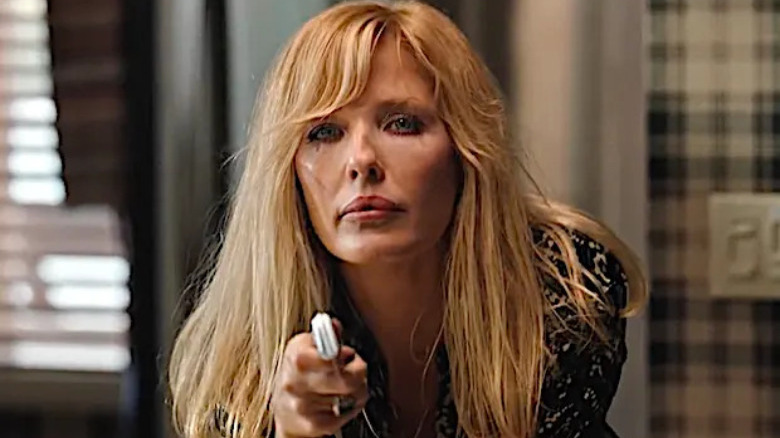
Kelly Reilly’s defense therefore becomes more convincing when Beth is viewed as a damaged person rather than a conventional maternal figure. Reilly has explained that Beth possesses enormous maternal instincts, but they do not appear in the soft, conventional way audiences might expect from a mother. Beth protects people through aggression, loyalty, intimidation, and sometimes violence. She does not naturally express affection through gentle reassurance. Her version of love is often closer to standing between someone she cares about and the rest of the world with a weapon in her hand. That does not make every action she takes acceptable, but it does make her behavior internally consistent. As Reilly put it, this is not Disney, and Beth was never designed to become a perfectly nurturing television mother.
That distinction is important because Yellowstone has always resisted giving its characters the emotional resolutions audiences expect. The show repeatedly introduces moments where viewers believe a character might finally heal, only to pull them back toward their established patterns. Carter seemed like an opportunity for Beth to break that cycle and discover a different form of love. Instead, the “mama” scene demonstrated how deeply embedded her trauma remained. Fans wanted Beth to embrace the boy because it would have represented emotional growth. Taylor Sheridan and Kelly Reilly instead chose to show that growth could not happen simply because the audience wanted it. The result was much less comforting, but arguably much more consistent with the character.
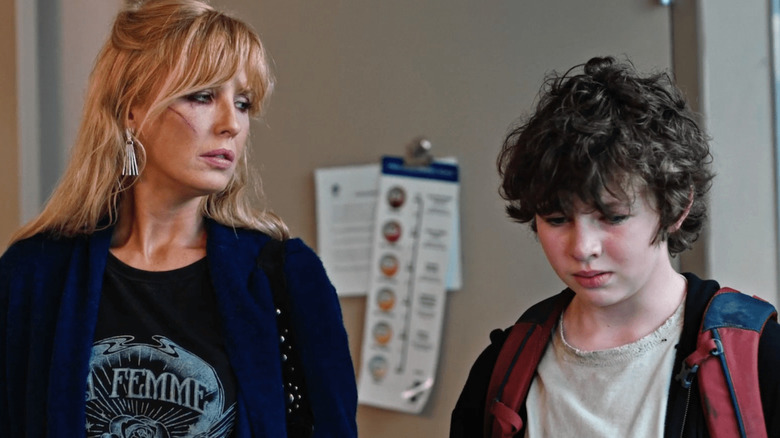
Reilly also emphasized that Carter had only recently entered Beth’s life when the scene occurred. From Beth’s perspective, suddenly declaring herself his mother would have been emotionally dishonest. Carter had lost his mother, and Beth knew that she could not simply step into that exact role and replace someone he had loved. Reilly saw Beth’s refusal as a form of honesty, even if it was delivered with extraordinary cruelty. In that interpretation, Beth was trying to tell Carter that she could be his friend and protector without pretending to be something she was not. The problem is that the truth does not have to be delivered in the most damaging way possible. Beth could have preserved the same boundary without making Carter feel as though his desire for another maternal figure was shameful.
That contradiction is exactly what makes the scene so effective. Beth is technically correct that she cannot replace Carter’s mother, but she is emotionally wrong in the way she handles his vulnerability. A child does not need an adult to literally replace a deceased parent in order to develop a new attachment. Carter could have understood that Beth was not his biological mother while still being allowed to love her like one. In fact, healthy caregiving often depends on acknowledging that a new relationship does not erase an old one. Beth’s inability to make that distinction reflects her own trauma more than Carter’s needs. The scene therefore becomes less about whether Carter was wrong to call her “mama” and more about whether Beth was capable of accepting the love he was offering.
The most painful detail may be Beth’s final statement that crying does not help. That line reveals just how deeply her own survival philosophy has shaped her treatment of Carter. Beth has spent years learning that vulnerability can be exploited and that emotional pain must be converted into anger or action. She therefore believes she is teaching Carter resilience by refusing to comfort him. Yet Carter is not asking for permission to remain weak; he is simply grieving. By telling him that crying is useless, Beth unintentionally passes her own emotional damage down to the next generation. Instead of teaching Carter how to process pain, she risks teaching him to suppress it. That is a dangerous lesson for a boy already surrounded by a culture where toughness is frequently confused with emotional health.
At the same time, the scene reveals why Beth ultimately becomes such a compelling character. She is capable of enormous loyalty and fierce protection, but she is also capable of hurting people she genuinely cares about. Her instincts are often maternal, yet her trauma prevents her from expressing those instincts in conventional ways. Carter brings out the part of Beth that wants to protect a child, while the word “mother” activates the part of her that still feels betrayed by her own past. The two versions of Beth collide in that barn. The result is a scene where the audience can understand her pain without necessarily forgiving her behavior.
Finn Little’s Carter also deserves attention because the emotional power of the moment depends on how vulnerable he appears. Reilly has spoken about how difficult it was to be cruel to Little during emotionally intense scenes because his natural demeanor was so different from Carter’s suffering. She described being deeply affected by seeing his eyes fill with tears while she delivered Beth’s harsh words. That contrast between the actor and the character made the scene emotionally difficult even for the performers. Once the cameras stopped, Little could return to being playful and carefree, while Reilly was left carrying the emotional weight of what Beth had just done. That behind-the-scenes reality reinforces how carefully constructed the cruelty was.
The audience reaction ultimately proves that Beth’s relationship with Carter had become more meaningful than either character fully acknowledged. If Carter had simply been another ranch employee or stranger, his use of “mama” would not have carried the same emotional force. The fact that viewers became furious at Beth demonstrates that they had already accepted the idea that she was becoming his family. They wanted her to receive the emotional reward that seemed to be waiting for her after years of pain. Instead, Yellowstone reminded them that Beth does not get an easy redemption simply because she has found someone to love. Her trauma follows her into every relationship, including the ones that could potentially heal her.
In the end, Kelly Reilly’s defense of Beth is persuasive precisely because it does not claim that the character was gentle or universally right. Reilly argues that Beth’s response was truthful to who she was, and that matters in a series built around morally complicated characters. Beth could not suddenly become a soft, conventional mother simply because Carter needed one. Her refusal was cruel, but it also exposed the emotional scars that had shaped her entire identity. The tragedy is that Carter needed reassurance while Beth needed to protect herself from the meaning of the word “mother.” Their needs collided, and Carter was the one who walked away wounded.
The “mama” moment therefore remains one of Yellowstone’s most debated scenes because there is no completely comfortable interpretation of it. Beth was right that she could never replace Carter’s mother, but she was wrong to make an innocent child feel that his need for another source of love was unacceptable. Carter was right to see Beth as someone who had begun caring for him like family, even if he did not fully understand the emotional baggage attached to that role. Kelly Reilly’s performance works because she allows audiences to see both Beth’s cruelty and the enormous pain underneath it. The scene ultimately suggests that Beth’s greatest obstacle is not her lack of maternal instinct but her inability to believe that she deserves to experience motherhood without losing herself. And that is why the moment hurts so much: Carter was asking Beth to become his mother, while Beth was still struggling to survive being her own mother’s daughter.