Taylor Sheridan has built a reputation for turning real landscapes into characters of their own. From the sprawling ranches of Yellowstone to the rugged wilderness surrounding The Madison, his productions rarely treat location as mere background scenery. Now, as The Madison expands its story beyond Montana, Sheridan is once again using an unexpected filming strategy to recreate New York City — and the behind-the-scenes decision offers an intriguing glimpse into how one of television’s busiest creators builds his worlds.
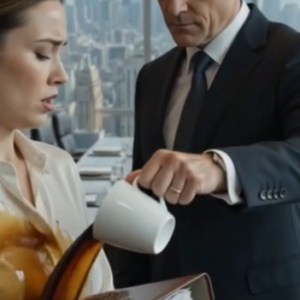
At first glance, the headline sounds straightforward: Sheridan’s The Madison is filming scenes set in New York. But the reality is much more interesting. Rather than shooting those sequences entirely in New York City, the production has previously transformed locations in North Texas to stand in for Manhattan. Downtown Dallas, in particular, was dressed to resemble New York for scenes in the series, creating the illusion of a completely different city without requiring the production to relocate its entire operation to the East Coast.
That decision makes sense when viewed through Sheridan’s broader filmmaking philosophy.
The creator has never been particularly interested in making his productions easy on himself or his crews. Sheridan has openly admitted that he tends to choose difficult, sometimes brutally demanding filming locations. Speaking at the New York City premiere of The Madison in March 2026, he described his productions as involving “really inhospitable places” and said making this particular project was emotionally taxing because of its themes of grief, family separation and reconciliation.
Yet The Madison requires something very different from the landscapes audiences normally associate with Sheridan.
The series begins with the Clyburn family, a New York City family whose lives are radically changed by tragedy. After the death of Preston Clyburn, played by Kurt Russell, the family relocates to Montana’s Madison River Valley. The story consequently moves between two very different worlds: the crowded, sophisticated energy of Manhattan and the vast, isolated landscape of Montana.
That contrast is not simply geographical.
It is the emotional foundation of the series.
New York represents the life the Clyburn family once knew — urban, fast-moving and deeply connected to the identity they had built before tragedy shattered their lives. Montana, by comparison, becomes a place of displacement and transformation. The family is physically removed from everything familiar, forcing its members to confront grief in an environment where there is nowhere to hide from one another.
This is one reason the New York sequences matter so much.
If Montana is the place where the Clyburns are forced to rebuild themselves, New York represents the life they lost.
Rather than treating those scenes as simple flashbacks or transitional material, Sheridan uses the two settings to create a visual divide between two versions of the same family. The audience is effectively watching people exist between two identities, with neither location completely feeling like home anymore.
And that makes the decision to recreate New York in Texas particularly fascinating.
For viewers, the goal is obvious: they should believe they are looking at Manhattan. For the production team, however, the challenge is much more technical. Streets, buildings, traffic patterns, architecture and background details all have to work together convincingly enough that the audience forgets they are actually watching a scene filmed thousands of miles away.
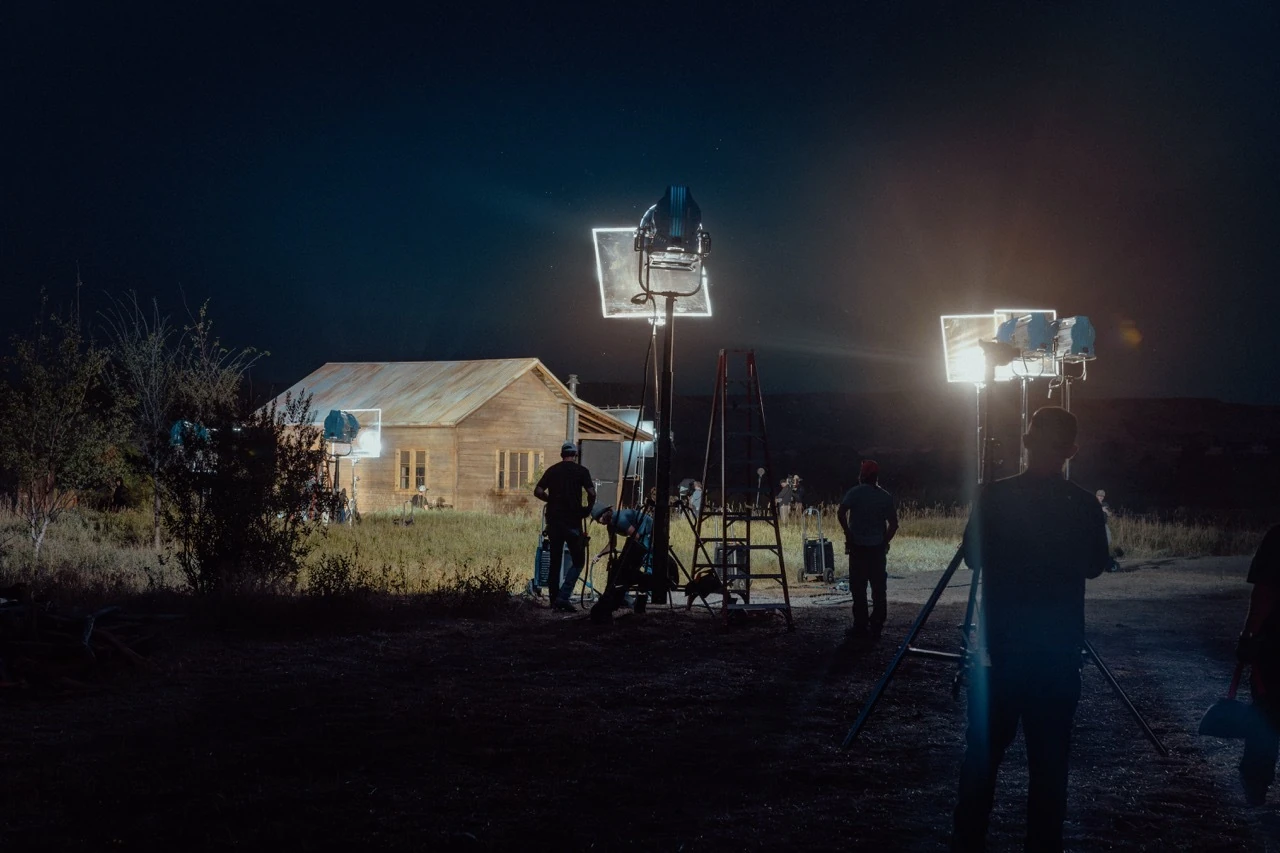
North Texas has increasingly become a practical production hub for exactly this kind of work. Dallas and Fort Worth offer a mixture of modern architecture, historic buildings, wide streets and production infrastructure that can be modified to represent other American cities. The Madison took advantage of that flexibility during its production. Scenes set in New York were filmed in Dallas, while production later moved through Fort Worth.
The result is an interesting example of television geography: the characters are in New York, the actors are in Texas, and the audience is expected to believe both things simultaneously.
That illusion is especially important for Sheridan because The Madison is not simply another Western-style drama.
In fact, Paramount+ has clarified that the series is not actually a Yellowstone spinoff, despite its early development being connected to the Yellowstone franchise. It ultimately became a standalone drama centered on the Clyburn family and its emotional journey.
That distinction matters because it changes how audiences should approach the show.
Sheridan is taking the storytelling instincts that made Yellowstone successful — complicated families, powerful personalities, beautiful landscapes and emotionally charged conflict — and applying them to a much more intimate story about grief.
Michelle Pfeiffer leads the series as Stacy Clyburn, while Kurt Russell plays Preston Clyburn. The ensemble also includes Patrick J. Adams, Beau Garrett, Matthew Fox and Amiah Miller.
The casting itself reinforces the idea that The Madison is designed as an ensemble drama rather than a conventional one-person showcase.
Pfeiffer, in particular, has spoken positively about working in ensemble projects. Her recent career has increasingly moved toward television productions that allow multiple characters and relationships to develop simultaneously. The Madison gives her exactly that opportunity, placing Stacy at the center of a family story in which grief affects every member differently.
And that may be one of Sheridan’s biggest strengths here.
He is not simply asking, “What happens after a tragedy?”
He is asking, “What does a tragedy do to an entire family?”
Those are very different questions.
A conventional drama might focus almost entirely on the person who dies or the person most visibly affected. The Madison appears more interested in the emotional debris left behind. Every family member has a different relationship with the past, and moving to Montana does not magically erase what happened in New York.
Instead, physical relocation becomes a metaphor.
You can leave a city.
You cannot necessarily leave your grief behind.
That theme also explains why Sheridan’s choice of locations is so important. Montana and New York are not interchangeable environments. They create radically different emotional temperatures. One offers space, silence and isolation; the other represents movement, density and the overwhelming presence of other people.
The Clyburns are therefore caught between two extremes.
They have escaped one environment without necessarily escaping themselves.

And Sheridan seems to understand that visual contrast can communicate that conflict without requiring characters to constantly explain their emotions.
The production history also demonstrates just how ambitious The Madison has become.
The first season was filmed primarily in Montana, while scenes representing New York were shot in North Texas. Production on the second season began in September 2025 and wrapped later that year. The series had already been renewed for another season before its first season premiered, underscoring Paramount’s confidence in Sheridan’s latest project.
More recently, the series was renewed for a third season, meaning The Madison has developed into something much larger than a one-season experiment.
That early expansion is significant.
Sheridan is already juggling an enormous television slate, with projects including Landman, Lioness, Mayor of Kingstown, Tulsa King and multiple Yellowstone-related productions. Entertainment Weekly described his current development slate as containing a remarkable number of television and film projects.
Yet The Madison occupies a different space within that ecosystem.
It does not depend on cowboys, ranch warfare or criminal empires to generate tension. Its conflict is fundamentally human. Families fracture. People make mistakes. Grief changes relationships. And sometimes the biggest battles happen in quiet rooms rather than on horseback.

That may explain why Sheridan has described the project as particularly emotionally demanding.
There is nowhere to hide behind spectacle when the central conflict is grief.
The landscapes can be enormous, but the story is ultimately about people.
And that may be the real reason the New York filming decision matters. Sheridan is building two worlds that must feel authentic enough to represent two different emotional states. Whether the audience sees Montana’s mountains or a Texas street dressed as Manhattan, the location has to reinforce what the characters are experiencing.
That is the trick.
Good television can make viewers forget where something was actually filmed.
Great television makes them forget that they are watching a production at all.
For The Madison, the transformation of Dallas into New York is therefore more than a behind-the-scenes curiosity. It is part of the larger machinery Sheridan is using to tell a story about displacement, identity and grief.
The characters may physically move from Manhattan to Montana, but emotionally, they are still trying to understand what happened before they left.
And that tension — between the place you came from and the place where you are forced to start over — could ultimately become one of the defining ideas of The Madison.
Taylor Sheridan has spent years making landscapes feel enormous.
With The Madison, he appears to be doing something more difficult: using those landscapes to show how enormous grief can feel.
And whether the “New York” on screen is actually Manhattan or a carefully transformed street in Texas may matter far less than one thing — whether the audience believes the characters themselves are still trapped somewhere between the two.