Riley Green is discovering that stepping in front of a television camera as himself is one thing, but becoming someone else is an entirely different challenge. The country star recently reflected on his first acting experience in Marshals, the Yellowstone spinoff starring Luke Grimes as Kayce Dutton, and admitted that the role pushed him well outside his comfort zone. Green portrayed Garrett, a former Navy SEAL and old military friend of Kayce who is struggling with severe PTSD after their experiences in the service. What makes the story more interesting is that Green is no longer treating the project as a one-time experiment. He has now confirmed that he is looking at other acting opportunities, suggesting that his appearance in the Yellowstone universe could become the beginning of a second career.
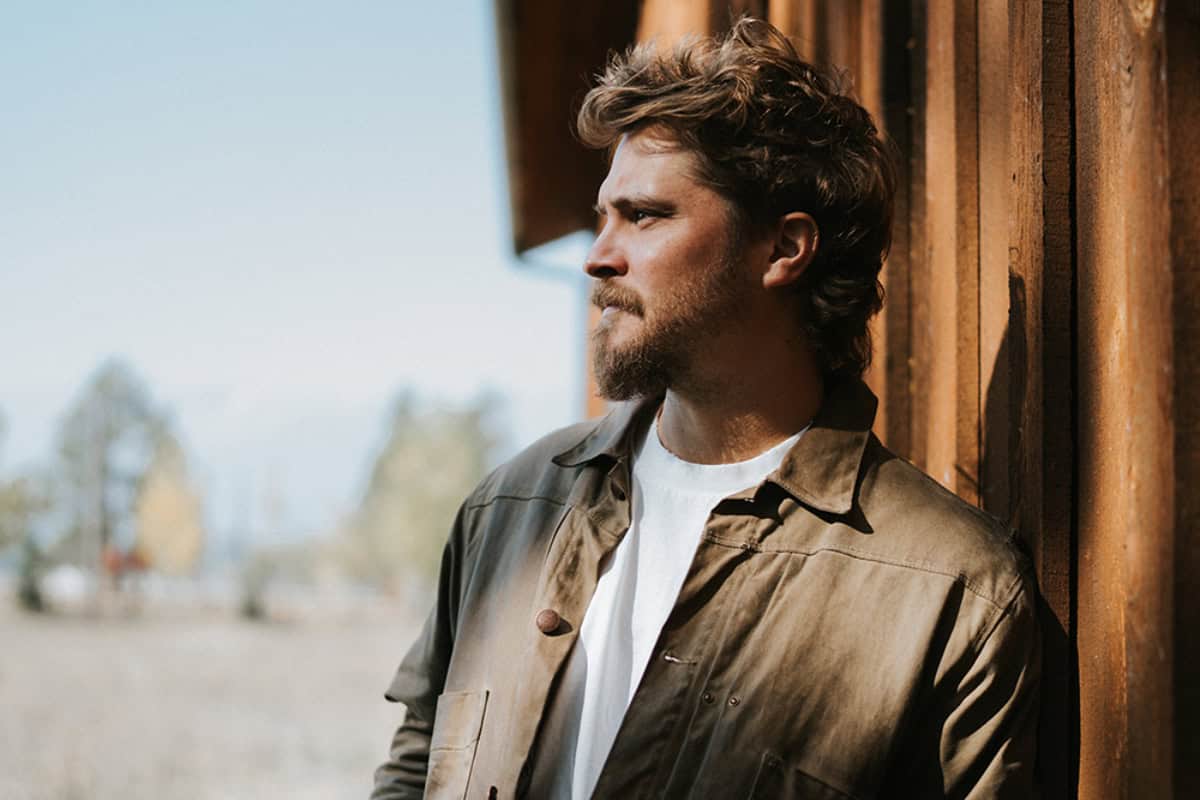
Green’s transition into acting was made considerably easier by his friendship with Luke Grimes. The two had already developed a relationship through music after Grimes began exploring country music and spending time in Nashville, eventually writing songs together. According to Green, the opportunity to audition for Marshals emerged naturally from those conversations rather than through a traditional Hollywood campaign to turn a country singer into an actor. Grimes mentioned the show to him, Green expressed interest, and only a couple of months later he traveled to audition for the role. He eventually got the part and returned to Utah to film while simultaneously maintaining his demanding touring schedule. That personal connection gave Green an unusually comfortable entry point into an industry where he otherwise had very little experience.
The role itself was carefully chosen to give Green room to grow without immediately forcing him into something completely unfamiliar. Garrett is a former Navy SEAL who served alongside Kayce and Cal, and his military experiences left him dealing with serious psychological consequences. He arrives carrying emotional baggage that makes it difficult for him to reconnect with ordinary life, while Kayce attempts to help his old friend adjust and find some stability. Green has explained that he wanted his first acting role to be something he could gradually ease into rather than a character completely disconnected from his own background. That decision was important because his public identity is already strongly associated with country music, Alabama and a rugged Southern image that naturally fits the world of Marshals. The challenge was therefore not becoming someone completely unrecognizable, but learning how to transform familiar elements into a believable fictional character.
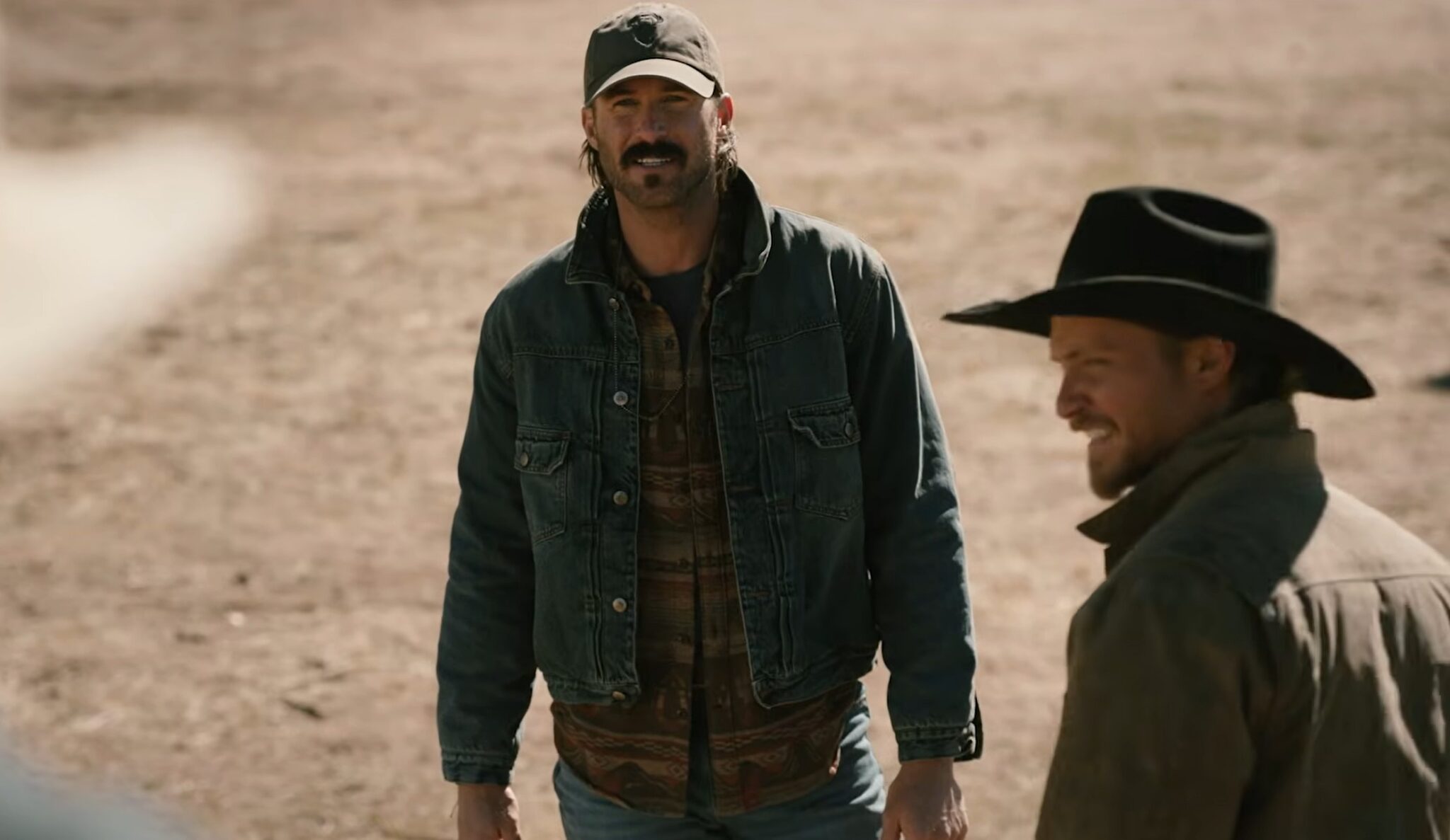
Even with that advantage, Green discovered that acting demanded something music does not. He explained that when he performs a song, he is still ultimately performing as Riley Green, even when he is conveying emotions that may not match his actual mood. Acting requires the opposite process: he has to step away from his own identity and convince viewers that they are watching Garrett rather than a famous country singer playing a role. That distinction became one of the biggest lessons of the Marshals experience. Green said he felt pressure to get the character right because audiences already knew who he was before he appeared on screen. His challenge was therefore not merely remembering dialogue or hitting marks, but stripping away the recognizable “Riley Green” persona enough for Garrett to exist independently.
The military aspect of Garrett’s character also required Green to do more preparation than he might have expected. Because Garrett is a former Navy SEAL dealing with PTSD, Green had access to Navy SEALs who were working around the production and used the opportunity to ask questions about military life and behavior. Rather than simply relying on stereotypes about soldiers or veterans, he wanted to understand how someone with Garrett’s experiences might actually move, react and interact with other people. Green has said that he enjoyed the process of trying to get inside the character and figure out what this person would realistically do. That attention to detail is significant because a role involving PTSD can easily become exaggerated or superficial if an actor relies only on dramatic clichés. His willingness to learn suggests that Green approached the opportunity with considerably more seriousness than a conventional celebrity cameo.
Ironically, one of Green’s biggest frustrations with the experience came from the very schedule that allowed him to take the role in the first place. He was touring heavily while filming Marshals, flying back and forth to Utah while continuing to perform several shows each week. Because of that schedule, he sometimes received scripts close to the day he was supposed to film, meaning he did not always have enough time to develop Garrett’s history in the way he would have preferred. Green later admitted that when he watched the finished episodes, he noticed things he might have approached differently if he had understood more of the character’s backstory beforehand. He even said that he wished he could have spent an entire month living inside the character’s world rather than constantly switching between touring and filming. For a first-time actor, that self-criticism may actually be one of the strongest indications that Green is serious about improving.
His experience also reveals why Yellowstone creator Taylor Sheridan’s television universe continues to attract musicians. The franchise has developed a long history of integrating country music into its storytelling, using songs not merely as background but as part of the identity of its characters and locations. Green specifically praised the Yellowstone shows and their spinoffs for creating opportunities for musicians to reach audiences who may never have encountered their music otherwise. For him, appearing in Marshals was therefore a natural crossover between two worlds that already share a strong cultural connection. Country music and the Western television aesthetic appeal to overlapping audiences, making the transition less artificial than it might have been in another genre. That cultural compatibility could make Green especially attractive to future filmmakers looking for performers who can bring genuine country credibility to a role.

There is also evidence that Green’s presence on camera was stronger than might be expected from a first-time actor. His performance as Garrett was convincing enough to generate interest in what he might do next, while his established musical persona gave the character an authenticity that could have been difficult for a traditional actor to reproduce. Garrett is not simply a generic cowboy or musician; he is a troubled veteran trying to find his place after military service. Green’s own familiarity with Southern culture and country music helped him inhabit that environment naturally. At the same time, his willingness to admit where he felt inexperienced prevents the performance from looking like an attempt to pretend he has already mastered acting. Instead, it suggests an artist who sees the first role as training for something bigger.
The most revealing part of Green’s latest comments is his confirmation that he is already considering other roles. He has said that he could see himself doing considerably more acting and that he has actually been looking at opportunities beyond Marshals. That does not necessarily mean he intends to abandon music; his comments suggest almost the opposite. Green appears to view acting as another creative outlet that can coexist with his career as a country musician. He has even identified the kinds of projects that interest him, including a Field of Dreams-style movie and a Western, with the possibility of working alongside country legend Tim McGraw being an especially appealing idea. Given McGraw’s own history in 1883, such a project would create an obvious bridge between Green’s musical identity and the Sheridan-style Western world.
A Western would also make strategic sense as Green’s next step. The singer already possesses the physical presence, accent, musical background and cultural familiarity that casting directors often look for when creating modern Western characters. But the danger would be allowing him to become typecast as “Riley Green in cowboy clothes.” His next role will need to demonstrate that he can create a character rather than simply reproduce the personality audiences already associate with him. This is where the lessons from Marshals become important. Green now understands that acting requires him to disappear into another identity, and his next project could give him the opportunity to prove that Garrett was not simply a variation of himself.
The relationship with Grimes could also continue to benefit Green even if Garrett does not return in a major capacity. The two musicians have already demonstrated that their friendship extends beyond the screen, and Grimes was instrumental in opening the door to Green’s first acting opportunity. Their connection reflects the increasingly fluid relationship between country music and television, particularly within the Yellowstone universe. Grimes himself has developed a music career alongside his acting, while Green is now moving in the opposite direction by taking his first serious steps from music into acting. Their friendship therefore represents more than a behind-the-scenes anecdote; it is part of the reason this crossover feels organic rather than manufactured.
For Marshals, Green’s appearance also demonstrates the franchise’s ability to expand its world through unexpected performers. The series has already established itself as a continuation of Kayce Dutton’s story, with Grimes leading the show as a former Navy SEAL who becomes a U.S. Marshal. Green’s Garrett fit naturally into that military history because he could plausibly be one of Kayce’s old comrades. His character also brought another layer to the show’s musical identity, allowing Green to perform while still contributing to the drama. That combination made the casting more than a simple celebrity cameo. It created a character who could potentially exist independently of Green’s fame, even if the actor’s real-world identity initially attracted viewers.
There is one important caveat for fans hoping to see more of Garrett. Green’s latest comments are primarily about his interest in acting generally, not a confirmation that he will return to Marshals for Season 2. The available reporting indicates that he appeared in only a limited portion of the first season, while the series itself has already been renewed for a second season. Season 2 is scheduled to premiere on CBS on October 4, 2026, but Green has not confirmed a return as Garrett. That means fans should separate two different possibilities: Green expanding his acting career and Garrett becoming a recurring Marshals character. The first appears increasingly likely; the second remains uncertain.
Ultimately, Riley Green’s Marshals experiment may prove to be far more important than a country singer making a guest appearance on a popular television show. It gave him an opportunity to discover that acting challenged him in ways music could not, while also revealing that he genuinely enjoyed the process. More importantly, his comments show that he is already thinking beyond the first role and looking for ways to improve rather than simply cashing in on his celebrity. His biggest lesson may be that authenticity in acting does not mean simply being himself; it means understanding a character deeply enough that the audience stops seeing the musician behind the performance. If Green can carry that lesson into his next role, Marshals may eventually be remembered not as his one unexpected television appearance, but as the moment Riley Green began building a second career on screen