The first season of Marshals concluded with a major twist that was clearly intended to shock viewers and set up future drama. However, the revelation of the season’s primary antagonist instead highlighted one of the show’s most significant shortcomings: its inability to maintain a clear sense of direction. While the series has delivered solid action and compelling performances, particularly from Luke Grimes as Kayce Dutton, its scattered storytelling ultimately undermined what should have been a powerful dramatic payoff.
In the season finale, titled “Wolves at the Door,” it is revealed that Tom Weaver, the seemingly helpful owner of the neighboring Weaver Ranch, has been orchestrating much of the violence directed at Kayce and his family. Played by veteran actor Chris Mulkey, Weaver initially appeared as a supportive figure — a calmer, more reasonable counterpart to the late John Dutton. He offered assistance after Kayce’s property came under attack and even extended a kind gesture by inviting Kayce’s son Tate on a fishing trip to Texas. This invitation, however, turns out to be far more sinister than it seems.

The twist exposes Weaver’s true intentions: he wants to expand his ranch by acquiring Kayce’s land through any means necessary. By taking Tate to Texas, he gains significant leverage over Kayce. The episode also confirms Weaver’s involvement in an assassination attempt on Broken Rock chairman Thomas Rainwater, further cementing his role as the season’s hidden villain. While the reveal provides some closure to certain plot threads, it falls surprisingly flat due to the limited screen time Weaver has received throughout the season.

Weaver only appears in four out of the thirteen episodes. His character is introduced relatively late and then disappears for long stretches while the show focuses on weekly procedural cases. This lack of consistent presence makes it difficult for audiences to feel the emotional weight of his betrayal. In contrast, stronger antagonists in similar series are built up gradually, allowing viewers to develop genuine investment before their true nature is exposed.

This problem reflects a broader issue with Marshals. From the beginning, the series has struggled to define its identity. It attempts to function simultaneously as a crime procedural, a family drama, a political commentary on Native American reservations, and a continuation of the Yellowstone universe. These competing elements often pull the narrative in too many directions, preventing any single storyline from developing sufficient depth. Important subplots, such as the introduction and rapid conclusion of the Clegg family rivalry, are resolved too quickly, only for new threads to emerge without proper foundation.
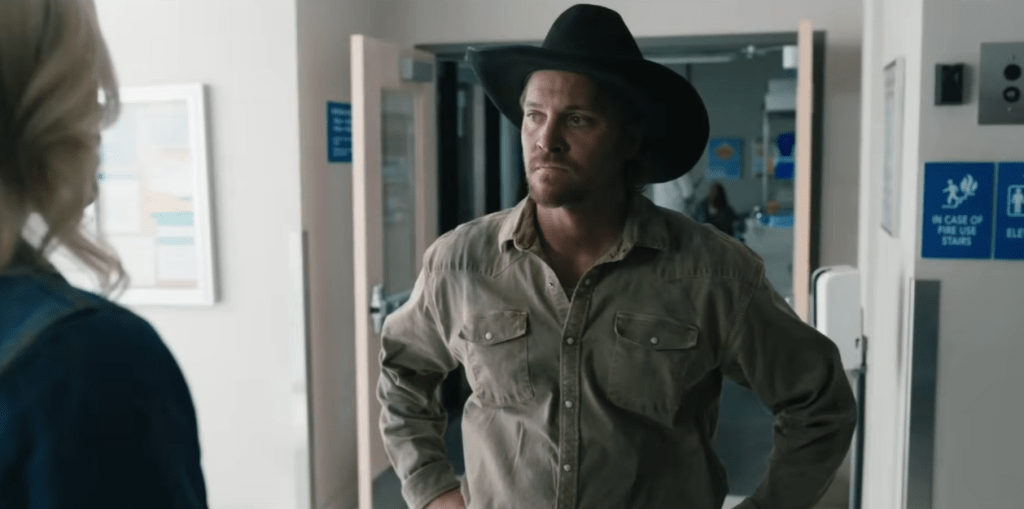
The procedural format, with its emphasis on standalone weekly cases, has also limited the show’s ability to build meaningful long-term tension. While some episodes deliver strong action sequences, the frequent shifts between different tones and themes make it challenging for viewers to become fully immersed in the overarching narrative. Even the military trauma storyline involving Kayce’s former Navy SEAL teammates feels rushed and underdeveloped.
This scattered approach stands in notable contrast to Dutton Ranch, the other major Yellowstone spin-off. That series has taken its time developing characters and relationships, creating a more cohesive and emotionally engaging experience. In Marshals, the rushed pacing and overcrowded plot leave the Weaver reveal feeling more like a convenient plot device than a genuinely surprising character moment.
Despite these structural weaknesses, the season finale still offers some strengths. The action sequences are well-executed, and the performances remain solid across the board. Luke Grimes continues to bring quiet intensity to Kayce, while supporting players like Gil Birmingham as Thomas Rainwater add gravitas to the proceedings. The decision to send Tate to Texas also cleverly opens the door for potential crossovers with Beth and Rip in Dutton Ranch, which could inject fresh energy into future seasons.
Looking ahead to season two, Marshals has an opportunity to address its early shortcomings. With the villain now clearly established, the writers can focus more intently on the consequences of Weaver’s actions and how they affect Kayce’s family and professional life. Streamlining the narrative and reducing the number of competing subplots would allow for stronger character development and more impactful storytelling.
The first season of Marshals has demonstrated both the potential and the challenges of expanding the Yellowstone universe. While it has introduced interesting new characters and maintained some of the franchise’s signature intensity, its biggest failure lies in its lack of focus. The shocking villain reveal in the finale serves as a clear example of how stronger narrative discipline could have elevated the entire season.
As the series moves forward, fans will be hoping that the creative team learns from these early missteps. With the foundation now laid, season two has the potential to deliver a more confident and cohesive story. Whether Marshals can overcome its structural issues and fully embrace its place within the Sheridan universe remains to be seen, but the pieces are now in position for a more focused and compelling continuation.