A fresh report out of South Korea has pushed HYBE chairman Bang Si Hyuk back into the center of a growing storm, but this time the controversy is no longer limited to the allegations hanging over him. It is now spreading outward, touching police procedure, diplomatic protocol, and even BTS’s global business operations.

According to multiple Korean media reports summarized by Allkpop and other outlets, the U.S. Embassy in Seoul reportedly asked South Korea’s National Police Agency to cooperate in allowing Bang to travel to the United States, even though he is currently subject to a travel ban tied to an ongoing police investigation. The request is said to have included not only Bang, but also HYBE CEO Lee Jae Sang and executive Kim Hyun Jung. The stated reasons reportedly involved attending events tied to the 250th anniversary of U.S. Independence Day on July 4 and handling matters connected to BTS’s U.S. tour activities.

That is the part turning heads. A travel ban is not a minor inconvenience that can simply be brushed aside with a letter. Reports say Bang has been barred from leaving the country while police investigate accusations that he misled investors ahead of HYBE’s 2019 public listing and secured roughly 190 billion won in illicit gains. Police have reportedly summoned him for questioning five times, and Korean outlets say the case is now approaching a final legal review stage, with a decision expected on whether to seek an arrest warrant or refer the matter without detention.
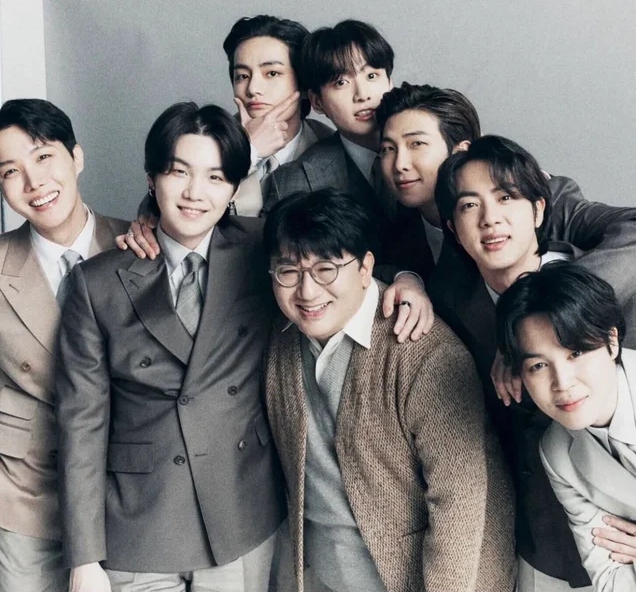
What has made this latest development so explosive is not just the substance of the request, but the way it was reportedly made. The Korea Times summary cited by Allkpop says critics inside or around law enforcement described the move as unusual because it allegedly bypassed the standard diplomatic route and directly singled out individuals already under travel restrictions. Reports say diplomatic cooperation of this kind would normally be coordinated through official channels such as South Korea’s Foreign Ministry, yet this request was allegedly delivered directly to the acting commissioner general of the National Police Agency and was even described as having been preceded by a phone call and followed by in-person delivery of the letter. That has led to criticism that the move may amount to a breach of diplomatic norms.

The deeper tension is obvious. If the request is treated seriously, it is effectively asking investigators to help open the door for a suspect under travel restrictions to leave the country. Reports note that lifting such a restriction is not a casual administrative choice. It generally requires a formal process involving South Korea’s Ministry of Justice after a request from investigative authorities. In other words, this is not just about whether Bang wants to board a plane. It is about whether a police investigation should make room for a high-profile overseas trip at a moment when the legal stakes appear to be rising.
That alone would have been enough to trigger backlash. But another detail has made the situation even more politically and publicly sensitive. Reports cited by Allkpop say police are especially wary because one of the alleged key accomplices in the case reportedly traveled to the United States last year and has not returned. That has fueled concern that allowing Bang to travel could create opportunities for contact that investigators would find deeply problematic. It also helps explain why some reports describe both police sentiment and public reaction as strongly resistant to the idea of granting the request.
The BTS angle has only intensified the interest. Mentioning BTS in connection with the request instantly transforms what could have remained a dry financial-crime story into something much larger in the public imagination. BTS is not just HYBE’s biggest act; the group is one of the most commercially powerful names in Korean entertainment. So once reports began saying the embassy cited BTS-related U.S. business needs and support for the group’s tour as part of the justification, the story took on an added layer of spectacle. Suddenly, the question was no longer just whether Bang might travel. It became whether one of the biggest entertainment companies in the world was trying to solve a legal bottleneck through extraordinary international intervention.
At the center of all this is a striking contrast between image and reality. On one side is the polished global machine of HYBE, BTS, international schedules, diplomatic celebrations, and cross-border business coordination. On the other is a criminal investigation involving allegations of investor deception, illicit gains, repeated police questioning, and a travel ban serious enough that prosecutors or police may soon need to decide how aggressively to proceed. The collision of those two worlds is what makes the story feel so combustible.
For now, the key word in this story remains “reportedly.” I was able to access the Allkpop article and corroborating reports from Korea JoongAng Daily, The Korea Times search result, Maeil Business, and Biz Chosun, but not the underlying Naver article directly. Across those reports, however, the core claims are broadly consistent: the U.S. Embassy in Seoul is said to have requested cooperation regarding overseas travel for Bang and other HYBE executives, the request cited July 4 events and BTS-related U.S. business, and the move has drawn criticism because Bang remains under investigation and under a travel ban.
What happens next may matter far beyond Bang himself. If the request goes nowhere, it still leaves behind a trail of controversy about how far influence, urgency, or celebrity-adjacent power can stretch in the middle of an active investigation. If it gains traction, the backlash could become even fiercer, because it would raise the question many critics are already circling: whether ordinary legal restraints are being tested, bent, or challenged when the people involved are powerful enough.
In that sense, this is no longer just a story about Bang Si Hyuk. It is becoming a story about the uncomfortable point where diplomacy, celebrity business, criminal scrutiny, and public distrust all crash into one another at once.