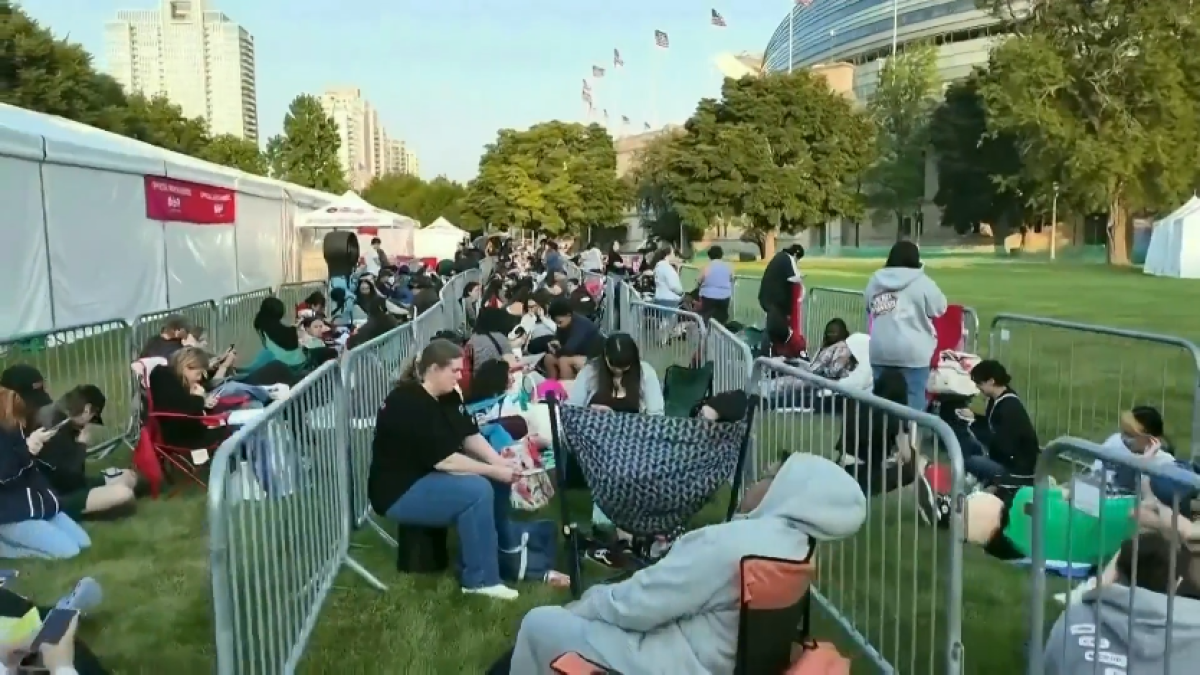
BTS has officially turned Chicago into one of the biggest stops of its long-awaited return, with tens of thousands of fans filling Soldier Field for the group’s first concerts in the city in seven years. The two-night appearance on the ARIRANG World Tour represents far more than another stadium booking because it marks the reunion of all seven members after years of military service and professional separation. More than 60,000 ARMY members entered Soldier Field for the opening Chicago show, with stadium officials even opening the gates earlier than planned because of the enormous crowd. Fans arrived from across the United States and beyond, carrying Army Bombs, handmade gifts, photographs, banners, and personal memories that reflected how deeply BTS has become connected to their lives. For many attendees, this was not simply their first BTS concert in several years but their first opportunity ever to see all seven members performing together. The scale of the Chicago response demonstrates that the group’s absence did not weaken its cultural influence; if anything, the long wait appears to have intensified the emotional impact of its return.
The seven-year gap since BTS last performed in Chicago is one of the most important details behind the atmosphere surrounding the concerts. The group’s previous Chicago appearance came in 2019, before the COVID-19 pandemic disrupted the entertainment industry and before all seven members eventually entered South Korea’s mandatory military service system. That sequence of events created an unusually long period in which fans could not experience BTS together in the traditional concert environment. Instead of gradually fading from public attention, BTS remained culturally visible through individual activities, music, online content, and the enormous community created around ARMY. The result is that the ARIRANG tour arrives with the emotional weight of a reunion rather than simply the excitement of a new album cycle. Chicago therefore becomes a symbolic checkpoint showing what happened to BTS while the members were away: their audience did not disappear, and the demand for their collective return became even stronger.
What makes the Chicago story especially powerful is the diversity of people who traveled to Soldier Field for the concerts. CBS Chicago reported fans arriving from places as far away as Oregon, while others traveled from neighboring states simply to experience the reunion in person. One family even described how a relative with a broken hand had postponed surgery so she could attend, illustrating the extraordinary emotional priority the concert held for some fans. Such stories can sound extreme when viewed purely through the lens of celebrity fandom, but they make more sense when BTS is understood as a source of emotional connection rather than only entertainment. Several fans explained that the group had helped them through difficult periods, including social anxiety and other moments when they felt isolated. The concert therefore became a physical gathering of people who had already formed an emotional community online, transforming Soldier Field into a place where thousands of individual stories temporarily became one collective experience.

That community aspect may be the most important reason BTS continues to generate such enormous enthusiasm after years away from group touring. ARMY is not simply an audience that consumes music and then goes home; fans have developed their own traditions, including exchanging handmade keychains, bracelets, stickers, photographs, and other small gifts. Before the concert, fans gathered at Buckingham Fountain to trade these items and meet people who shared the same connection to BTS. The behavior reveals how the fandom has developed a social structure that can exist independently of the group’s physical presence. Fans are not waiting passively for BTS to provide an experience; they actively create experiences for one another before, during, and after concerts. That explains why even ARMY members without tickets can still participate in the excitement surrounding a tour stop, because the community itself has become part of what makes BTS fandom meaningful.
The age range of the Chicago crowd also challenges the stereotype that K-pop audiences are primarily teenagers or young adults. CBS Chicago highlighted Joyce Donaldson, a 78-year-old fan who traveled from Ohio for the concert and explained that she would not actually feel alone despite attending with only one ticket. Her comment captures something fundamental about ARMY: once fans enter the same physical space, the usual boundaries of age and background can become less important. Another striking example was 9½-year-old Rosie Velazquez, who described BTS as being like seven uncles and said attending the concert felt like one of the happiest moments of her life. These stories place BTS fandom at two completely different ends of the age spectrum while revealing the same emotional core. The group’s appeal has therefore evolved beyond a conventional pop demographic into something closer to a multigenerational cultural community.
The concert’s timing also gives the ARIRANG era a very different emotional meaning from BTS’s previous world tours. Before the hiatus, fans generally expected that another BTS tour would eventually arrive because the members were actively promoting together and touring remained part of their normal career cycle. After the pandemic and military service changed that rhythm, the future became much less predictable. Each member’s individual schedule created new questions about when all seven could realistically reunite for a major global tour. ARIRANG answers those questions with an enormous stadium production that makes the reunion impossible to miss. The Chicago shows therefore function as proof that BTS is not simply returning for a nostalgic one-off appearance but is actively rebuilding itself as a seven-member global act.
The production itself is another reason the Chicago concerts feel like an event rather than an ordinary reunion show. K-pop reporter and Billboard columnist Jeff Benjamin pointed to the massive LED screens and elaborate visual effects as major elements audiences can expect from the tour. That scale is important because BTS has always understood that stadium concerts need to operate on multiple levels at once, combining music, choreography, visual storytelling, technology, and direct interaction with fans. A stadium audience of more than 60,000 cannot rely entirely on intimate stage moments, so the production must create a shared visual language that reaches every section of the venue. The enormous screens effectively turn the concert into a cinematic experience, allowing fans far from the stage to remain emotionally connected to what is happening. This combination of spectacle and intimacy is one of the reasons BTS has been able to translate its fandom from smaller venues into some of the largest stadiums in the world.
Yet the most interesting explanation for BTS’s longevity may have less to do with production and more to do with the themes embedded in its music. Benjamin pointed out that BTS helped challenge expectations surrounding what a successful boy band could look and sound like, while the group has repeatedly addressed subjects including mental health, social issues, identity, and personal growth. Those themes allowed fans to interpret BTS songs through their own experiences rather than treating the music as disposable pop entertainment. When a fan says that BTS helped them through social anxiety or difficult periods, that connection is more powerful than a simple statement that they enjoy a particular song. It means the music has become associated with memories, emotional survival, and personal development. After a four-year group hiatus, those associations do not disappear; they become part of the emotional reason fans are willing to wait years for another collective performance.
Chicago itself has also embraced the return in a way that shows how BTS has moved beyond being merely a touring act. Illinois Governor JB Pritzker declared August 27 and 28 “BTS Days,” recognizing the group’s cultural impact and the significance of its two Soldier Field performances. Around the concerts, Chicago hosted ARMY meetups, restaurant promotions, exhibitions, and other fan-centered activities that effectively transformed the entire weekend into a BTS-themed celebration. The economic and cultural ripple effect extends beyond the stadium because fans eat at local restaurants, stay in hotels, travel through the city, and participate in events organized around the concerts. In that sense, BTS functions less like a visiting musical act and more like a temporary cultural festival that activates an entire city. The official recognition from the state further reinforces the idea that the group’s influence is now significant enough to receive attention from institutions outside the entertainment industry.

The emotional significance of Chicago also becomes clearer when the reunion is viewed from the perspective of the members themselves. Seven years is a long time in pop culture, and both BTS and its audience have changed considerably since the group’s last Chicago appearance. Many younger fans attending ARIRANG may have discovered BTS during or after the pandemic and have never experienced the seven members together in a stadium. Older ARMY members, meanwhile, are returning to a concert environment that carries memories from an earlier stage of their lives. That creates two different emotional narratives inside the same crowd: some fans are finally seeing something they waited years for, while others are experiencing BTS together for the very first time. The ability of one concert to satisfy both groups demonstrates why the ARIRANG tour has such extraordinary symbolic power.
Ultimately, BTS’s Chicago return proves that the group’s hiatus did not weaken the bond between the seven members and their global audience. Instead, the years apart appear to have transformed a normal concert into a reunion event filled with personal stories, community rituals, nostalgia, and overwhelming anticipation. More than 60,000 fans at Soldier Field were not simply there to hear songs; they were celebrating the return of a part of their lives that had been temporarily put on hold. From the 78-year-old ARMY traveling from Ohio to the young fan hoping BTS might sign her cast, the Chicago crowd demonstrated just how broad and deeply personal the group’s influence has become. The ARIRANG World Tour is therefore not merely proving that BTS can still sell stadiums after years away; it is proving that the emotional infrastructure built around BTS has survived the longest interruption in the group’s history. As the seven members continue their global comeback, Chicago stands as one of the clearest examples yet that BTS has not returned to reclaim its old position—they have returned to a fandom that was waiting for them the entire time.