In a film built on science, isolation, and the vast silence of space, one of the most surprising creative decisions in Project Hail Mary isn’t what audiences see—it’s what they hear. Hidden behind the mechanics of a spaceship is a voice that could have easily been generated by artificial intelligence. Instead, the filmmakers made a choice that quietly challenges the very technology shaping Hollywood today.
That voice belongs to Priya Kansara.

Though she never appears on screen, Kansara plays “Mary,” the onboard computer of the Hail Mary spacecraft, acting opposite Ryan Gosling’s lone astronaut, Ryland Grace. And in an era increasingly dominated by automation and synthetic voices, her casting is more than a performance—it’s a statement.
Speaking about the role, Kansara acknowledged the growing unease among creatives as artificial intelligence continues to expand its reach. She described the current moment as deeply uncertain for artists, particularly as technology begins replacing roles once held by humans. Against that backdrop, she emphasized how meaningful it was that directors Phil Lord and Christopher Miller chose a human performer rather than relying on AI-generated voice work.
For Kansara, the decision signaled something rare: a production that prioritized artistry and collaboration over convenience or cost-cutting. But what makes Mary especially intriguing is that she isn’t designed to sound like a cutting-edge, hyper-intelligent system. Quite the opposite.
Instead of portraying a sleek, all-knowing AI, the filmmakers intentionally shaped Mary as something far less polished—what Kansara describes as “unintelligent artificial intelligence.” The idea was to create a system that feels functional but limited, as if it had been hastily assembled rather than meticulously engineered.
That creative direction influenced every aspect of her performance. Mary isn’t overly empathetic, nor is she particularly insightful. She doesn’t anticipate needs or provide elegant solutions. In fact, part of her charm lies in her awkwardness—her inability to fully meet the expectations audiences might associate with futuristic AI. This deliberate imperfection gives the character a surprising authenticity.
To achieve that effect, the production leaned heavily into improvisation. Kansara revealed that many of her interactions were shaped on set, evolving organically through collaboration with Gosling and the directing team. Some takes reportedly stretched on for extended periods, allowing the actors to experiment and discover the rhythm of their dynamic. That process transformed Mary from a purely functional presence into something more dynamic—a subtle but essential counterpart to Gosling’s performance.
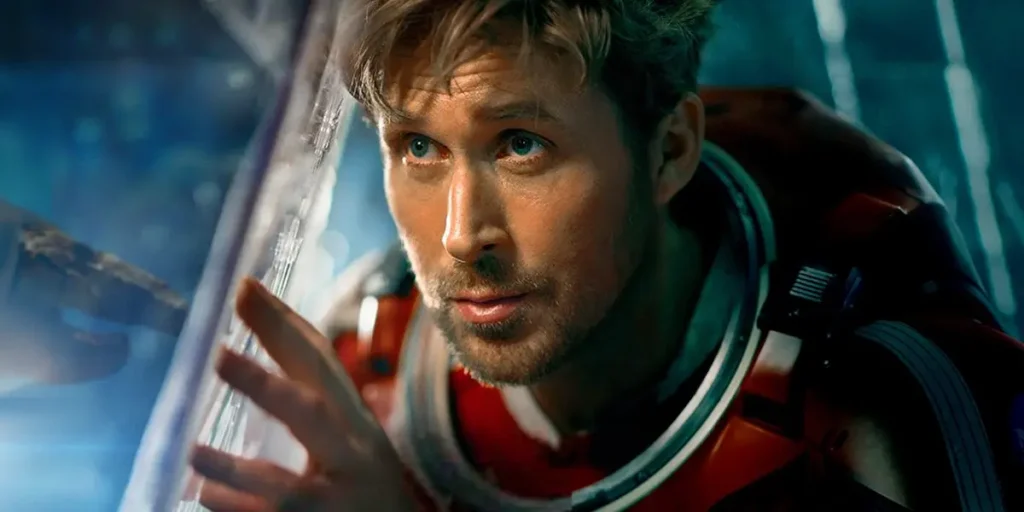
It also served a practical purpose within the story. For much of the film, Ryland Grace is completely alone aboard the spacecraft, grappling with memory loss and the overwhelming responsibility of saving Earth. Having Kansara physically present during filming—even though her character exists as a voice—gave Gosling someone to interact with in real time. The result is a more grounded and responsive performance, one that avoids the hollow feel often associated with acting opposite invisible or pre-recorded elements.
Kansara herself described the experience as playful and unpredictable, noting that her role often involved keeping Gosling on his toes. What might seem like a simple voice performance became, in practice, an active and evolving collaboration.
The dynamic expanded further with the inclusion of Rocky, an alien character performed by James Ortiz. As the story progresses, the interplay between Grace, Mary, and Rocky adds layers of humor and emotional complexity, shifting the tone from isolation to unexpected connection. Kansara highlighted how the presence of additional characters transformed the energy on set, making scenes more vibrant and spontaneous.

Yet beneath the film’s technical achievements and inventive storytelling lies a deeper thematic current—one that Kansara feels strongly about. She pointed to the film’s underlying optimism, a quality that sets it apart from much of modern science fiction. Rather than portraying alien encounters as inherently hostile or catastrophic, Project Hail Mary explores the possibility of understanding and cooperation. It imagines a universe where differences don’t inevitably lead to conflict, but instead open the door to collaboration.
That perspective, Kansara suggested, feels especially relevant in today’s world.
Reflecting on broader societal tensions, she noted the irony that humanity might struggle to extend the same openness and empathy depicted in the film. The story’s hopeful vision stands in contrast to a reality often shaped by fear and division. Still, she believes that this contrast is precisely what gives the film its emotional power.
It doesn’t just entertain—it challenges audiences to reconsider how they approach the unknown.
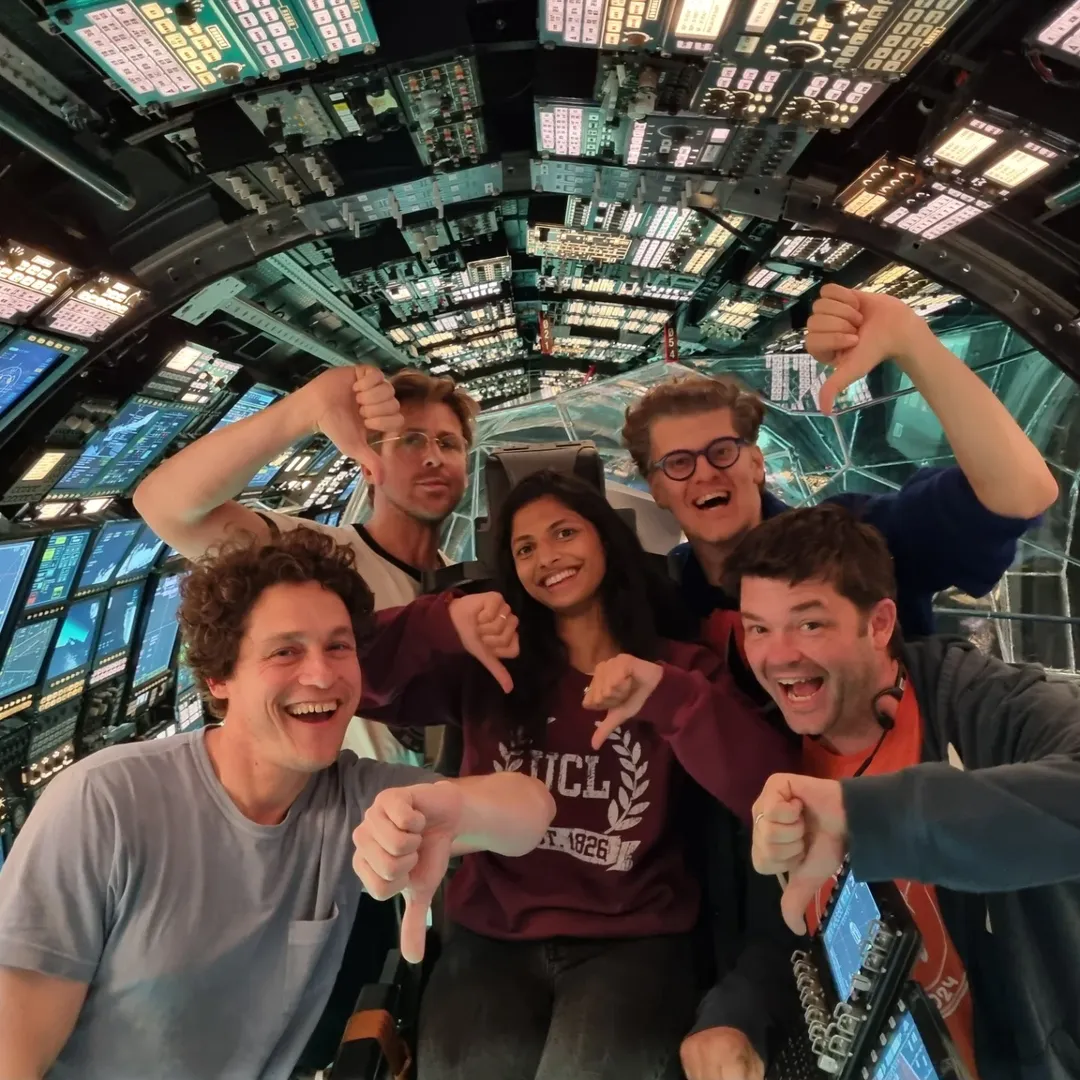
The timing of Kansara’s role also adds another layer to her journey. Shortly after working on Project Hail Mary, she moved on to another space-related project, stepping into a live-action role in Apple TV+’s “Star City.” The transition—from voicing a machine to portraying a human character in a similar genre—offered a unique opportunity to apply what she had learned while exploring entirely different creative territory.
Despite the shared setting, the two projects differ significantly in tone and approach, allowing Kansara to showcase her range as a performer.
In the end, what makes her contribution to Project Hail Mary so compelling isn’t just the performance itself, but what it represents. At a time when artificial intelligence is rapidly reshaping the entertainment industry, the film makes a quiet but powerful argument for the irreplaceable value of human creativity.
And in doing so, it leaves audiences with an unexpected realization. Sometimes, the most convincing version of artificial intelligence isn’t artificial at all—and that truth, hidden in plain sight, quietly reveals the very thing Hollywood has been trying not to lose.
