The long-awaited return of The Boys wastes no time throwing viewers back into a world spiraling toward complete collapse. Season 5 opens not with hope, but with control—absolute, suffocating control under Homelander, whose grip on power has transformed society into something far darker than before. Yet beneath the violence and political chaos, Episode 1 quietly packs in a dense web of Easter eggs, surprise cameos, and callbacks that deepen the story in ways many viewers might have missed on first watch.
Set roughly a year after the events of Season 4, the premiere establishes a grim new reality. Homelander has effectively reshaped the system in his image, while Starlight leads a struggling resistance movement against overwhelming odds. Meanwhile, key members of The Boys are imprisoned in so-called “Freedom Camps,” a chilling concept that reflects just how far the world has fallen.
But while the narrative drives forward, the episode is layered with subtle references that reward longtime fans.

One of the most noticeable recurring elements is the presence of Vought propaganda throughout Freedom Camp 47. Background details reveal items like Deeper, the in-universe autobiography of The Deep, alongside Vought-A-Burger promotions and screenings of Dawn of the Seven. These details are not just visual gags—they reinforce how deeply Vought’s influence still permeates everyday life, even in a prison-like setting.
The episode also delivers several unexpected character returns. Among them is Love Sausage, who makes a brief but memorable cameo as one of Homelander’s enforcers within the camp. His appearance is as bizarre and violent as ever, staying true to the show’s signature tone before meeting a brutal end.
Another surprising reappearance comes in the form of Cindy, a powerful Supe first introduced in Season 2. Her presence in the camp—and her continued use of devastating telekinetic abilities—adds an extra layer of danger to an already volatile situation. These callbacks not only reward loyal viewers but also expand the sense of continuity across seasons, reminding audiences that no character is ever truly forgotten in this universe.
The show also cleverly ties into events from Gen V, further strengthening the shared universe. Through a segment on Firecracker’s show, the narrative addresses the fallout from Godolkin University, reframing past events as manipulated or falsified information. This reflects one of the show’s core themes: the distortion of truth through media and power. By weaving in these references, the episode bridges storylines across series while reinforcing the idea that perception is often more powerful than reality.
Beyond cameos and references, Episode 1 is packed with narrative callbacks that deepen character arcs. One standout moment involves a subtle but powerful nod to Season 1, when A-Train avoids colliding with an innocent civilian—an intentional reversal of the traumatic event that defined his character early on. This small action speaks volumes about his evolution, suggesting a lingering sense of guilt and a desire for redemption.
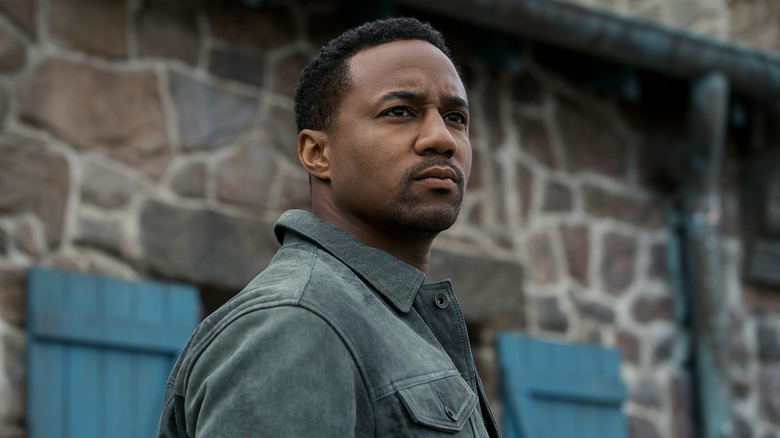
However, this moment of growth is quickly overshadowed by the brutal reality of the world he inhabits. The episode’s climax delivers one of its most shocking turns, reinforcing the idea that redemption in this universe often comes at a steep price. The tone is unrelenting, emphasizing that even the smallest acts of humanity can be crushed under the weight of power and violence.
At the same time, the premiere continues to explore the psychological unraveling of Homelander. His obsession with public perception—down to controlling memes and criticism—highlights a character driven as much by insecurity as by dominance. This duality makes him even more dangerous, as his need for validation fuels increasingly extreme behavior.

Visually and thematically, the episode reinforces the idea that the world of The Boys has crossed a point of no return. The Freedom Camps serve as a chilling symbol of systemic oppression, while the resistance storyline underscores the fragility of hope in a controlled society. Even moments meant to expose the truth—such as Starlight’s attempt to reveal past atrocities—are quickly dismissed or manipulated, showing how difficult it is to challenge a narrative controlled by those in power.
What makes this premiere particularly effective is how it balances spectacle with detail. The action sequences are intense and chaotic, but it is the smaller elements—the Easter eggs, the callbacks, the returning characters—that give the episode its depth. These details create a layered viewing experience, encouraging audiences to look beyond the surface and engage with the story on a deeper level.
As the final season unfolds, Episode 1 sets a clear tone: this is not just a continuation, but a culmination. Every reference, every cameo, and every hidden detail feels intentional, building toward an ending that promises to be as explosive as it is emotionally charged.
And in doing so, the premiere doesn’t just reintroduce the chaos of The Boys—it reveals something far more unsettling: in a world where truth can be rewritten and power goes unchecked, even the smallest details can expose just how close everything is to completely falling apart.