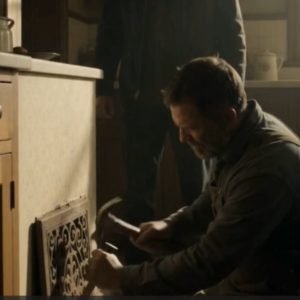
Kurt Russell’s role in The Madison has become more intriguing because the actor says his character’s marriage closely resembles the relationship he has built with Goldie Hawn. Russell plays Preston Clyburn, the husband of Michelle Pfeiffer’s Stacy Clyburn, in Taylor Sheridan’s Paramount+ drama. Although Preston dies in the opening episode, his relationship with Stacy becomes the emotional foundation of the entire story, shaping her decisions long after his death. Russell explained that some of the conversations between Preston and Stacy reminded him of conversations he has personally shared with Hawn over their decades together. That connection gives the performance an unusual authenticity because Russell is not simply imagining what a long, loving partnership might feel like. He is drawing on emotional experiences that have been part of his own life for more than four decades.
Russell’s comments are particularly revealing because he does not describe Preston and Stacy as a conventionally complicated television couple. Instead, he emphasizes that their relationship represents something increasingly rare in modern television dramas: two people who genuinely love each other without a hidden betrayal waiting around the corner. Russell described their bond as a “truly loving relationship,” which becomes important because Stacy’s devastation is not caused by discovering that her marriage was secretly flawed. She loses someone she still deeply loves, meaning her grief is intensified by the knowledge that their relationship could have continued into a future they never got to experience. This creates a different emotional engine from the usual television marriage storyline, where death may expose secrets or unresolved resentment. In The Madison, the tragedy is precisely that there was still so much love left to live.

That idea of unfinished time appears to be one of the central themes Russell connected with personally. He explained that as people grow older, they become increasingly aware that life has a limited amount of time remaining, making them look backward at what they have accomplished and forward at what they still want to experience. Preston and Stacy’s story magnifies that realization because Stacy is forced to confront the future immediately after losing the person with whom she expected to share it. Her grief therefore contains more than sadness over Preston’s death; it also contains regret over everything they assumed they would eventually have time to do. That distinction makes Stacy’s emotional journey more complicated because she is grieving both the person she lost and the future that disappeared with him. Russell’s interpretation suggests that Preston understood the value of their relationship while he was alive, but Stacy only fully confronts its meaning after it is too late. The result is a story about mortality that quietly becomes a story about how people choose to spend the years they still have.
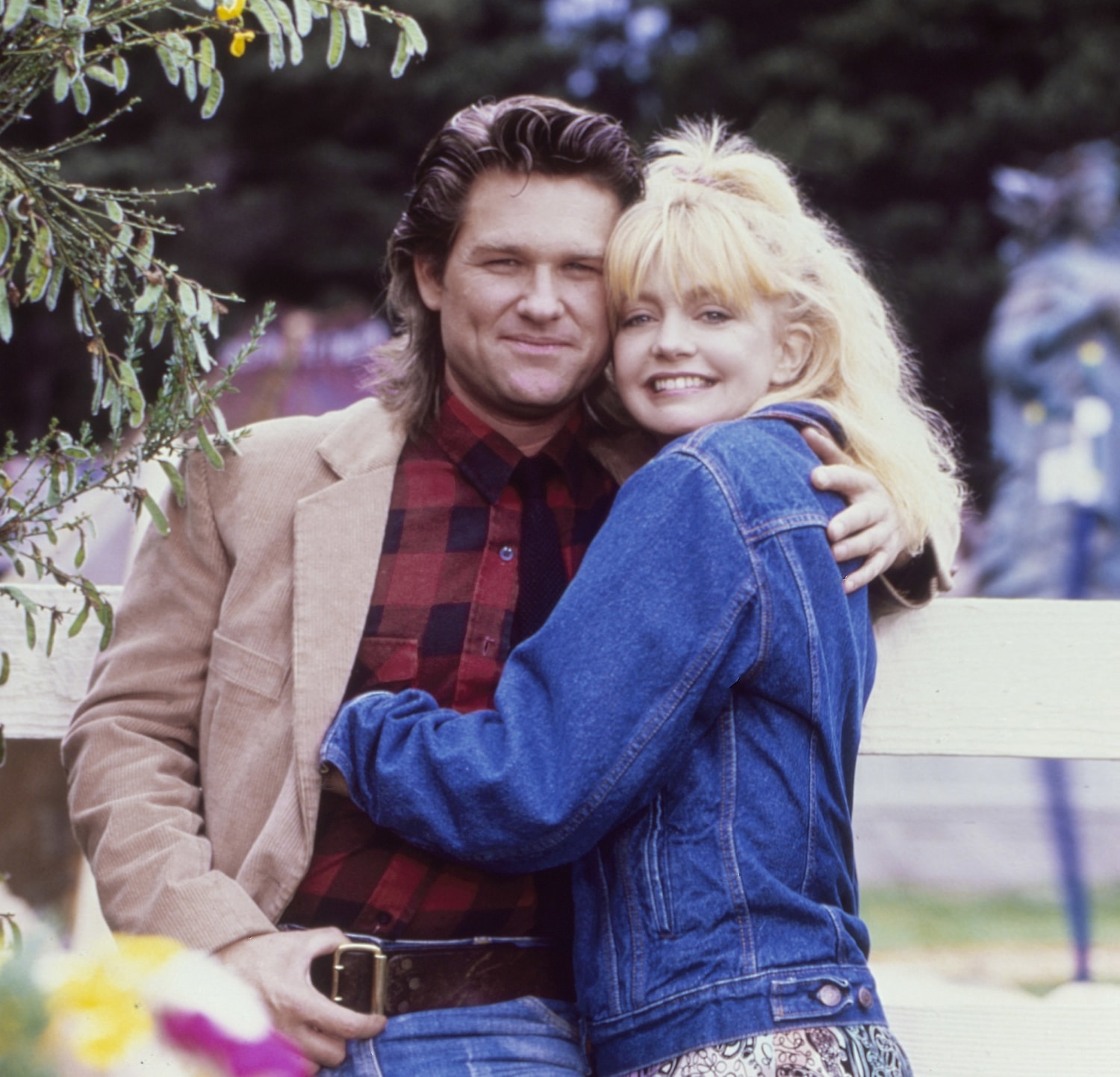
The parallel with Russell and Hawn is striking because their relationship has lasted since 1983, making them one of Hollywood’s most enduring couples. Unlike many celebrity romances that become defined by repeated public drama, their partnership has survived largely through stability, family, and a long-term commitment that has never required marriage to validate it. Hawn has previously spoken about falling in love with Russell after seeing how naturally he connected with her children, particularly when they visited her on set. Their blended family eventually included Kate Hudson, Oliver Hudson, and Wyatt Russell, creating a family structure that extended far beyond the conventional Hollywood relationship template. Russell’s understanding of Preston therefore comes from a relationship in which partnership has been intertwined with family life, personal independence, and decades of shared experiences. That background helps explain why he could recognize something of himself in a character whose greatest defining quality is not toughness, but devotion.

There is another fascinating similarity between Russell’s life and Preston’s relationship with Montana. In The Madison, Preston develops a powerful attachment to Montana, a place that represents freedom, peace, and a different way of living from the environment he previously occupied. Russell says he can understand that feeling because he developed a similar attachment to Colorado after moving there when he was 26. His own decision was essentially a choice between continuing to talk about the life he wanted and actually making the move necessary to experience it. Although his professional business remained largely connected to Los Angeles, Russell managed to divide his life between Hollywood and Colorado, allowing him to maintain his career without abandoning the environment where he felt most comfortable. That personal experience gave him a direct emotional reference point for understanding why Preston could become so attached to Montana.
This connection between character and actor makes Preston’s death more meaningful even though Russell’s physical presence in the series is limited. From a traditional television perspective, killing a major character in the opening episode might appear to waste a recognizable star. But Sheridan uses Preston differently, turning him into the emotional ghost around which the remaining characters organize their lives. His death becomes the event that forces Stacy to leave New York and confront the Montana world that meant so much to him. In other words, Preston does not disappear from the narrative when he dies; he becomes more influential because every decision Stacy makes is measured against the life they shared. Russell’s performance therefore has to establish an entire marriage quickly enough that the audience understands why its loss is devastating. His personal familiarity with long-term partnership may have helped him communicate that history without needing endless scenes explaining it.
The most painful element of Stacy’s situation is the regret Russell identifies in her emotional journey. She begins to realize that there were possibilities within her marriage that she did not fully pursue because she assumed there would always be more time. That realization is devastating precisely because it is universal: many people postpone conversations, trips, dreams, or changes because ordinary life convinces them tomorrow will always be available. Preston’s death destroys that assumption overnight. Stacy is left not only mourning what happened, but confronting the uncomfortable question of whether she could have lived differently while he was still alive. This is why Russell believes audiences may connect with her situation, because the story transforms a specific fictional tragedy into a broader meditation on unfinished lives. The emotional power comes from the possibility that viewers may recognize their own postponed choices inside Stacy’s regret.
For Russell, playing Preston may therefore have required less invention than expected and more emotional translation. He could take experiences from his own relationship with Hawn and transform them into the fictional conversations between Preston and Stacy without simply copying his real life onto the screen. The distinction matters because Preston is still a fictional character with his own personality, history, and relationship dynamics. Yet Russell’s ability to understand the quiet language of a long-term partnership gives those moments additional credibility. Small conversations can reveal years of trust, familiarity, disagreement, and affection when the actors know how to avoid making every exchange sound like exposition. That is especially important for a character who dies almost immediately because the audience needs to feel that Preston existed as a complete human being before his death. Russell’s performance essentially has to build a believable marriage in compressed time and then leave that emotional imprint behind.
:max_bytes(150000):strip_icc():focal(898x348:900x350):format(webp)/goldie-hawn-kurt-russell-2025-oscars-030225-dd8f62954a134a0996cb7e3a56aed800.jpg)
The casting of Russell opposite Michelle Pfeiffer also adds another layer because the two actors already share professional history. Their previous collaboration in Tequila Sunrise gives them an established understanding of each other’s rhythms, even though decades have passed since that film. In The Madison, that familiarity becomes useful because Preston and Stacy need to feel like a couple who have spent years communicating through glances, habits, unfinished sentences, and comfortable silences. The chemistry cannot look newly manufactured for television because the tragedy depends on the impression that these people had a full life together before the audience arrived. Russell’s personal experience with Hawn and Pfeiffer’s ability to portray grief from the inside therefore intersect in a way that strengthens the central relationship. What could have been a standard prestige-TV marriage becomes the emotional foundation for a story about losing the person who made an entire way of life feel meaningful.
Ultimately, Russell’s comments reveal why The Madison works best when viewed as a story about time rather than simply a story about grief. Preston and Stacy represent a relationship that appears emotionally secure, yet even the strongest love cannot protect people from the brutal limitation of time. Russell’s own decades with Goldie Hawn give him a rare perspective on that idea because he understands what it means to build a life with someone while still recognizing that the years eventually become finite. His connection to Colorado also helped him understand Preston’s desire to choose a place that reflects the life he actually wants rather than simply accepting the life circumstances handed to him. That combination of personal experience and fictional storytelling makes his performance unusually grounded despite Preston’s limited screen time. More importantly, it gives The Madison a deeper question beneath its tragedy: if people knew exactly how much time they had left, would they finally stop postponing the life they truly wanted?