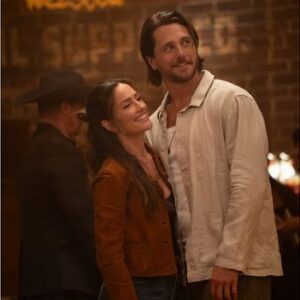
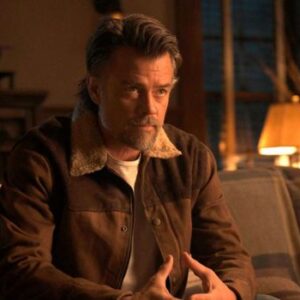
One of the most emotionally devastating moments in The Chosen arrives not through spectacle, but through restraint. In Season 3, Jesus does something many viewers may not have expected and some may have found difficult to accept: He chooses not to heal one of His own disciples, Little James, who lives with a lifelong disability. It is a scene that cuts against instinct, against hope, and against the kind of miracle many people assume should happen without hesitation. That is exactly why creator Dallas Jenkins knew he could not approach it carelessly.

The weight of the moment was even greater because the actor portraying Little James, Jordan Walker Ross, lives with a visible disability in real life. Ross has cerebral palsy and scoliosis, which meant the show was not dealing in abstraction. This was not just a script exploring suffering from a distance. It was a story touching directly on the lived experience of the actor standing in the scene. Jenkins understood early that once Ross had been cast, the show would eventually have to confront the reality that Jesus had chosen a disciple with a clear disability, and that if healing did not happen on screen, the silence around it would become impossible to ignore.
View this post on Instagram
Rather than guessing his way through such a sensitive storyline, Jenkins sought guidance from people whose lives had already been shaped by exactly this kind of question. He wanted to understand what it means to keep believing when God does not remove the suffering in this lifetime. One of the people he contacted was Nick Vujicic, who was born without limbs and has spent years speaking publicly about faith, purpose, and endurance. Jenkins also leaned on Joni Eareckson Tada, another longtime friend who has lived with disability while continuing to speak openly about how God can still work powerfully through pain that never fully leaves.
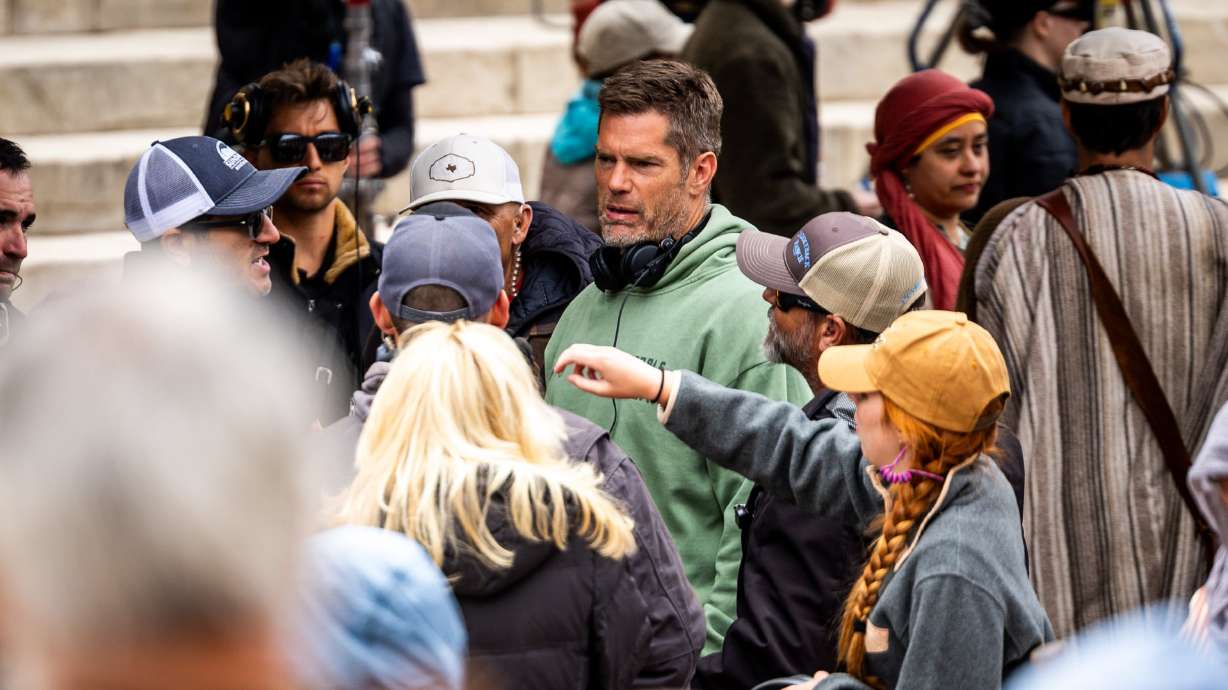
Jenkins explained the reasoning behind those conversations with unusual honesty. “I reached out to Nick because in Season 3 of THE CHOSEN. We have a scene with Little James, who’s a disciple in the show, who’s played by an actor who has a very noticeable disability,” he said. “When we cast him in that role, I knew I’m going to have to address this at some point, the fact that Jesus has an apostle who has a clear disability, and unless God heals Jordan, the actor on the show, we’re going to have to address it.”

That sentence alone reveals how much pressure sat behind the scene. Jenkins was not merely writing a theological idea into a television drama. He was stepping into a deeply personal and often painful territory where easy answers can feel hollow and clichés can feel cruel. So instead of leaning on his own assumptions, he turned to voices that had earned the right to speak from experience.
He said, “Between Nick V and Joni Eareckson Tada, which is another friend of mine, who both have lifelong disabilities that God has not chosen to heal, but He has worked through their disability,” he said. And there are some people who, of course, believe, ‘Well, you just need to have more faith. God doesn’t want this for you. And if you had more faith, He would heal you.’ And I’m like, ‘You’ve clearly never met Nick V or any people who have more faith in their in their fingernail than you might have in your whole body, and God has chosen not to heal.’”
That perspective appears to have shaped not only the writing of the scene, but its emotional force. Jenkins later called it one of the defining moments of the entire series. “That was another touch point for us that was, in many ways, a defining moment for the show. That scene has impacted people all over the world and I think in a large part because of some of the things that I gleaned from Nick.”
What makes the moment so powerful is that it refuses the simpler version of faith many people long for. Rather than offering instant relief, the scene offers purpose. Rather than removing the pain, it reframes it. In the clip, Jesus tells Little James, “…but think of the story that you have, especially in this journey to come, if I don’t heal you: to know how to proclaim that you still praise God in spite of this.” It is a line that lands with such force because it does not try to pretend the wound is small. It acknowledges the ache, then asks whether praise can still survive inside it.
For Jordan Walker Ross, that question is not just his character’s burden. It is also something he understands personally. He has spoken before about the emotional journey Little James goes through in Season 3, describing a disciple wrestling with resentment and bitterness. “In Season 3, my character Little James has resentment and bitterness emerging. He asks, ‘Why me?’ or ‘Why not me?’ Little James has to come to the conclusion that he doesn’t need the healing, as he thinks he does.”
That realization is what gives the storyline its staying power. The scene does not present disability as something to be ignored, minimized, or spiritually polished into something painless. It lets the question remain painful. It lets the frustration breathe. Then it dares to suggest that a life can still carry extraordinary meaning without receiving the miracle it begged for.
There is another layer to that truth as well. Just as Little James is told that purpose can still pour out of a life that remains unhealed, Ross himself becomes part of that message simply by standing in the role. His presence gives the story a kind of credibility and tenderness it might never have reached otherwise. He is not just playing the idea of visible weakness. He is embodying a testimony that the world too often overlooks.
Ross himself has said, “I hope that Little James can use it to help others.”
That may be why the moment has resonated so widely. It is not merely sad. It is not merely inspirational. It is uncomfortable in the most honest way. It forces viewers to sit with the possibility that God’s glory does not always arrive through removal of suffering, but sometimes through the strength to keep praising Him while the suffering remains. That is a far harder message. It is also, for many people, a far more recognizable one.