When Project Hail Mary blasted into theaters this year, audiences were swept up in its compelling blend of high-stakes science fiction and heartfelt storytelling. But amid the awe‑inspiring visuals and nail‑biting tension, a small laboratory moment in the film ignited a surprisingly intense debate among space enthusiasts, engineers and lab professionals — and not because of interstellar travel or alien encounters. It was a basic centrifuge mishap that set the internet alight.
The scene in question unfolds as the movie’s hero, Dr. Ryland Grace — played by Ryan Gosling — turns to everyday scientific tools in his quest to solve the devastating astrophage crisis threatening Earth. Among microscopes and lab benches, he reaches for a bench‑top centrifuge, a staple of biological research used to separate samples by spinning them at high speeds. But what he does next has stirred up confusion and criticism.

Viewers noticed that Grace places two sample tubes on the same side of the rotor inside the centrifuge — a configuration that real‑world scientists recognize as fundamentally incorrect. A properly balanced centrifuge requires samples to be evenly spaced around the rotor to maintain stability during operation. Trained laboratory technicians learn this basic rule early in their careers, making the on‑screen oversight striking to those familiar with lab practice.
The moment didn’t go unnoticed. On social media platforms, especially among lab workers and engineers, reactions ranged from bemusement to incredulity. One clip posted on X (formerly Twitter) showing the unbalanced centrifuge garnered hundreds of thousands of views and sparked a flood of commentary from professionals eager to weigh in.
Critics pointed out that operating a centrifuge in such an unbalanced state could cause intense vibration and even damage — a phenomenon familiar to anyone who’s ever used such equipment. One commenter humorously likened an out‑of‑balance cycle to a washing machine during its spin cycle, while others emphasized that even minor imbalances can create dangerous conditions in real laboratory settings.
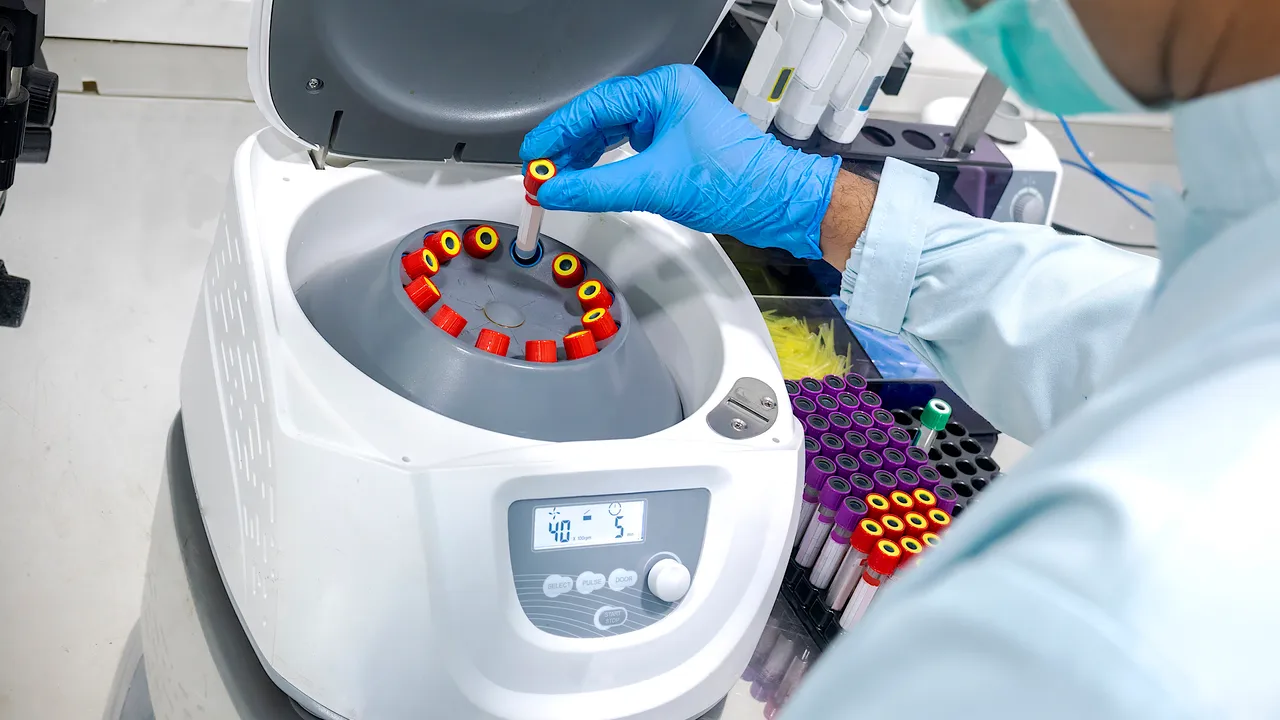
Defenders of the film acknowledged that some modern centrifuges include self‑balancing mechanisms capable of compensating for uneven loads. However, even these devices have limits, and experts noted that the type of bench‑top centrifuge depicted in the movie would unlikely tolerate such an extreme configuration.
Part of the frustration stems from the contrast between the film’s overall attention to scientific detail and this seemingly simple error. Project Hail Mary — adapted from Andy Weir’s acclaimed science fiction novel — has been widely praised for its adherence to plausible science, including its depiction of a spacecraft that uses rotational mechanics to simulate gravity. (In both the book and the film, the vessel’s rotating sections create artificial gravity, a concept rooted in real physics even if the specific implementation is fictional.)
Given the effort that went into rendering believable laboratory and spacecraft environments, some fans wondered how such a basic misstep slipped through the cracks. Enthusiasts online humorously speculated whether any technical consultant on set was actually present that day, given how obvious the error seemed to veteran scientists watching the film.

The discussion also highlighted a broader theme: audiences are becoming more scientifically literate and more inclined to analyze what they see on screen. In earlier eras of science fiction cinema, such details might have sailed past unnoticed. But with a new generation of viewers well versed in lab techniques and engineering principles — often through hands‑on experience or professional training — mistakes like this are rapidly called out and examined.
Some social media users even shared their own experiences with centrifuges, recounting moments of rotor failure due to imbalance, or explaining how they’d learned to avoid such hazards early in their scientific careers. One self‑described lab worker jokingly offered to give Ryan Gosling a private centrifuge safety tutorial, underscoring how seriously some viewers took the on‑screen error.

These debates may seem trivial in the grander context of a story about interstellar travel and alien ecosystems, yet they underscore how deeply audiences engage with the science in their fiction. When a film builds an immersive world grounded in realism, any departure from established scientific practice — no matter how small — becomes a point of fascination and discussion.
For Project Hail Mary, the centrifuge controversy reveals an unexpected aspect of modern filmmaking: viewers today are not just passive consumers of visual spectacle. They are informed, curious and ready to scrutinize the science they’re presented with in pop culture. Whether the debate over the centrifuge will influence future portrayals of laboratory science remains to be seen, but right now it’s a rare moment where Hollywood’s craft and real‑world expertise intersect in public conversation.
And in that intersection lies the most revealing twist of all — that the smallest scientific detail can spark the biggest discussion.