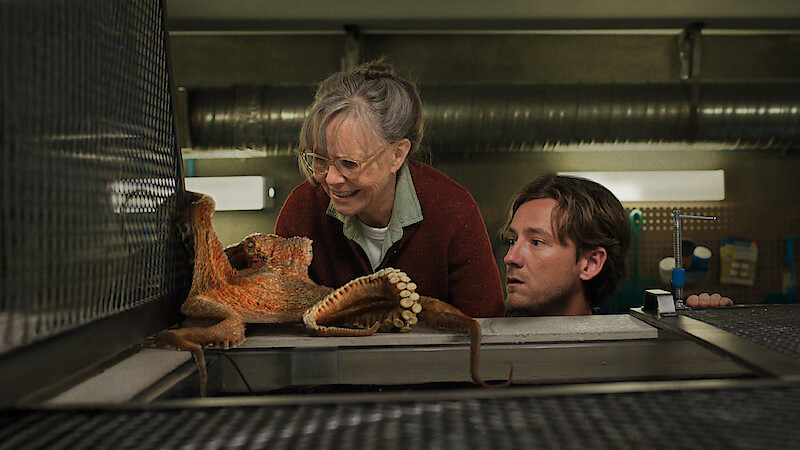
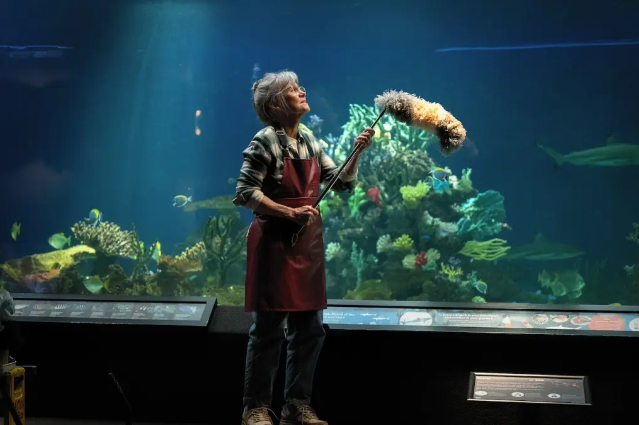
Netflix’s 2026 adaptation of Shelby Van Pelt’s bestselling novel Remarkably Bright Creatures delivers a poignant blend of grief, friendship, and unexpected family revelations. Directed by Olivia Newman, the film stars Sally Field as Tova Sullivan, a 70-year-old widow in a small Washington coastal town who finds solace in her nightly cleaning shifts at the local aquarium. There, she forms an unlikely bond with Marcellus, a Giant Pacific octopus nearing the end of his short lifespan. Through voice-over narration voiced by Alfred Molina, audiences gain insight into the creature’s sharp intelligence and growing affection for Tova. What begins as a quiet story of loneliness evolves into a heartfelt mystery that ties together loss, hidden truths, and the healing power of connection.

At the film’s core lies the unresolved tragedy of Tova’s son, Erik, who vanished at sea nearly three decades earlier when he was just 18. Tova has carried the weight of this loss ever since, filling her home with memories that make moving on feel impossible. She harbors deep guilt over their final argument the night before his disappearance. Erik had begun acting strangely—sneaking out and taking his father’s beer—leading his parents to suspect a secret romance. When Tova confronted him, the exchange turned heated. Erik smashed a cherished figurine belonging to his grandmother before storming out. The next morning, he took his sailboat and never returned.
Authorities later discovered the empty boat with its anchor line neatly severed, exactly as Erik’s father had taught him to do if the vessel became trapped on rocks. Tova has always insisted it was a tragic accident. However, local rumors suggested suicide, a notion that has tormented her with the fear that her son died angry and unreconciled. This lingering uncertainty keeps her emotionally anchored to the past, preventing her from embracing retirement or new beginnings.
Parallel to Tova’s story runs the journey of Cameron, a young man played by Lewis Pullman, who arrives in town searching for a man named Simon Brinks—the presumed absent father who supposedly owes him money. Cameron’s own mother has recently passed away, leaving him a class ring engraved with the word “EELS.” Assuming it points to his father’s interest in marine life, he tracks down Simon Brinks only to learn a disappointing truth: Simon was his mother’s gay best friend who posed as her boyfriend to shield her secret. He has no knowledge of Cameron’s real father. Devastated, Cameron discards the ring into the aquarium’s eel tank during a heated argument with Tova and leaves town.
Enter Marcellus, whose remarkable intelligence drives the story’s most touching twists. Observing the growing but strained friendship between Tova and Cameron, the octopus senses their shared pain and decides to intervene before his own death. After escaping his tank one final time, he retrieves the discarded ring from the dangerous eel enclosure at great personal cost. When Tova finds the weakened creature and decides to release him into the ocean from the very pier where she once waited desperately for Erik, she discovers the ring at the bottom of her bucket. The engraving’s true meaning dawns on her: “EELS” stands for Erik Ernst Lindgren Sullivan—her late son.
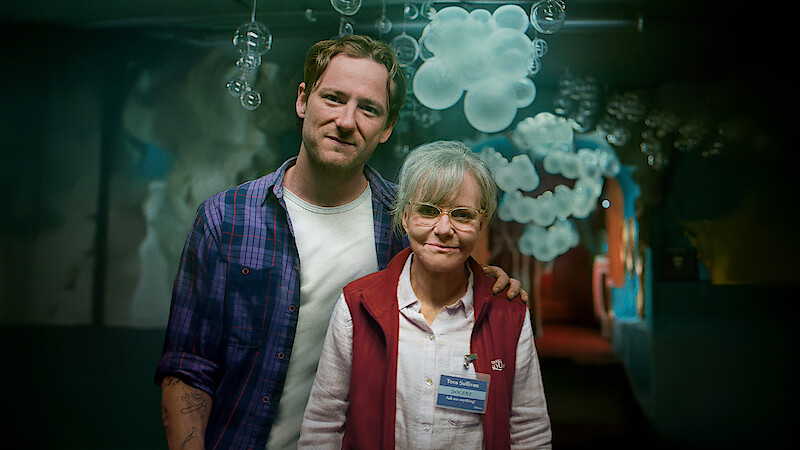
This revelation transforms everything. Erik had secretly dated Cameron’s mother, Daphne, as a teenager and gotten her pregnant. Before he could tell anyone or take responsibility, the boating accident claimed his life. Daphne, overwhelmed by grief, never revealed the father’s identity, raising Cameron alone. In a beautiful act of interspecies empathy, Marcellus had somehow perceived the familial link and worked to bring grandmother and grandson together.
Cameron returns to apologize, and Tova shares the truth on that same pier. The emotional payoff deepens further when Cameron helps renovate Tova’s house and uncovers a hidden box of Erik’s treasures beneath the floorboards. Inside are photographs of a young Erik with Daphne, along with a list of baby names—Cameron’s name circled with care. Even more moving is the carefully repaired figurine that Erik had broken in anger the night before his death. This final detail brings Tova profound peace: her son had not died harboring resentment but had been attempting to make amends.
The film closes on a note of quiet optimism. Tova chooses to remain in her cherished home rather than move to a retirement community, with Cameron moving in to support her. Marcellus, true to his nature, passes away after one last taste of freedom in the ocean he longed for. Through these intertwined fates, Remarkably Bright Creatures explores how grief can isolate us yet also open doors to unexpected family and healing. The octopus serves as both comic relief and a symbol of intuitive wisdom that humans often overlook.
Ultimately, the story affirms that some bonds transcend time, species, and even death. Tova’s long-held questions about Erik’s fate find answers not through cold investigation but through compassion, coincidence, and the remarkable intelligence of a creature who saw what humans could not. The film leaves audiences with a tender reminder: letting go does not mean forgetting. Sometimes, it means welcoming new connections that honor the past while illuminating the future. In its gentle, tear-jerking resolution, Remarkably Bright Creatures celebrates the bright threads that link generations and the quiet miracles that guide us home.