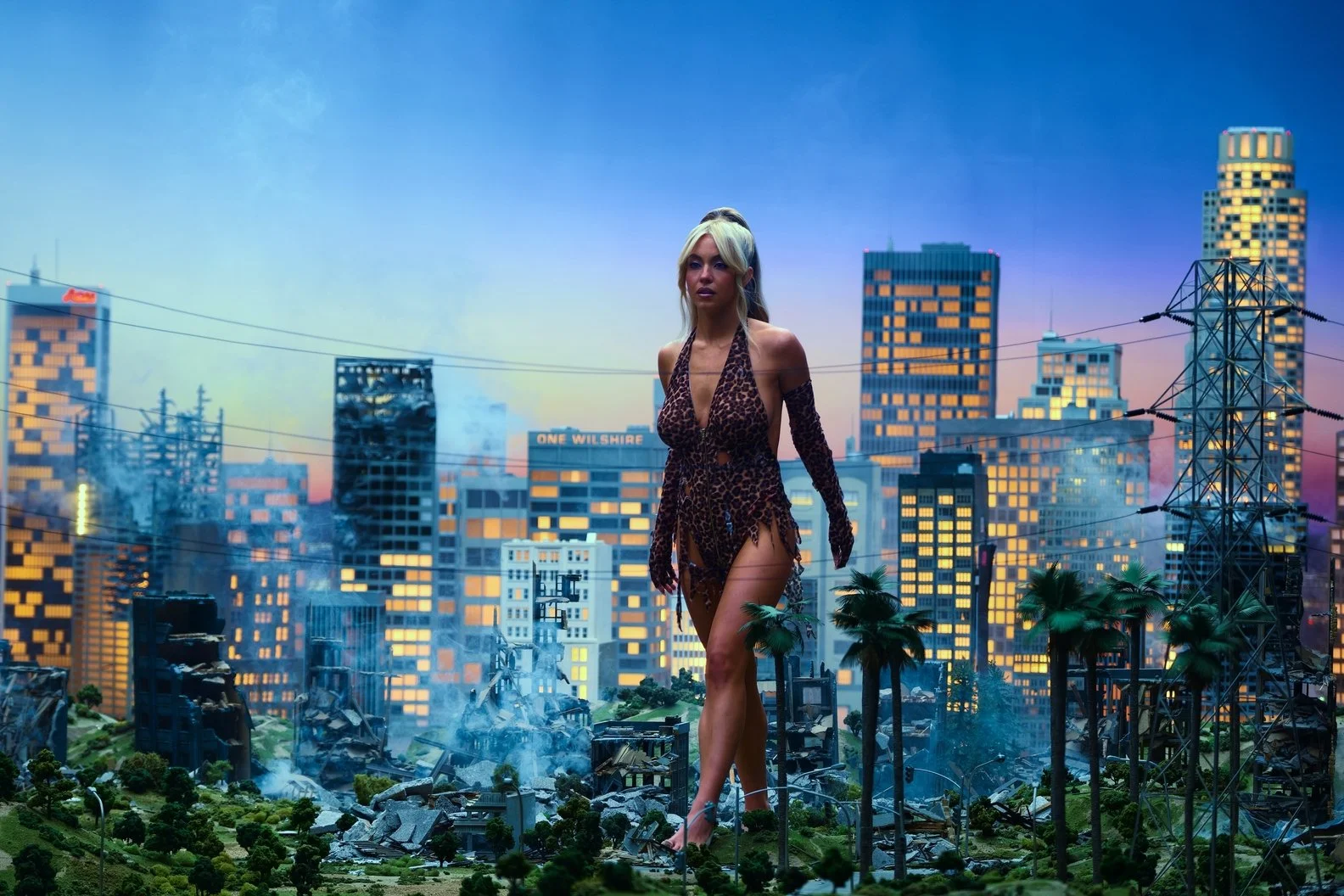
Euphoria Season 3 has once again divided audiences with one of its most audacious sequences yet. In a recent episode, Sydney Sweeney’s character Cassie Howard appears in a surreal fantasy scene where she transforms into a colossal, Godzilla-like figure rampaging through a miniature version of Los Angeles. The visually striking moment, which blends elements of classic monster movies with the show’s signature provocative style, has triggered strong reactions across social media, with many viewers calling it excessive or even humiliating.
The sequence unfolds as part of Cassie’s expanding storyline involving her OnlyFans career. In this dream-like segment, Cassie grows to enormous proportions, towering over the city much like the iconic giant woman from the 1958 film Attack of the 50 Foot Woman or the legendary kaiju from the Godzilla franchise. She stomps through buildings while helicopters circle her, creating a chaotic and visually impressive spectacle. Rue Bennett’s voiceover narrates the moment dramatically, declaring that Cassie knew “this was her destiny to triumph, to conquer, to win.”

The scene’s production involved significant technical effort. According to behind-the-scenes details, the team constructed a detailed miniature model of Los Angeles to achieve the giant-monster effect. Sweeney herself has described the sequence as one of the most exciting and challenging things she has ever filmed, praising the level of craftsmanship and creativity involved. Director and creator Sam Levinson appears to have drawn inspiration from classic monster cinema to create a bold, satirical, and visually ambitious moment.
However, the internet’s response has been overwhelmingly negative. Many social media users have labelled the scene a “humiliation ritual” for Sweeney, questioning why the show continues to place her in increasingly explicit and bizarre situations. Comments range from accusations that Euphoria is simply adding more fetishes to its narrative to broader frustration that the series has drifted far from its original focus on addiction and teenage struggles. One common complaint highlights the reduced emphasis on Rue’s recovery journey, with viewers asking why the show named after a feeling of intense happiness now feels so detached from its core themes.
Criticism has also targeted creator Sam Levinson directly. Some accuse him of turning the drama into little more than pornography, while others wonder what creative direction he is pursuing with these increasingly outlandish storylines. The backlash reflects a growing divide among fans: some appreciate the show’s willingness to experiment and provoke, while others feel it has lost its emotional depth in favour of shock value and visual spectacle.

This controversy arrives amid wider conversations about how female actresses are portrayed in modern television and film. In a recent interview, Sweeney addressed the frequent scrutiny she faces regarding nude and intimate scenes. She expressed pride in her work on Euphoria, describing her performance as strong and meaningful, yet noted that much of the public discussion focuses solely on her nudity rather than her acting ability. Levinson has publicly defended her, praising the brilliance of her performances and emphasising the artistic intent behind the choices.

Despite the heated reactions, the sequence demonstrates the show’s continued commitment to pushing boundaries. Euphoria has built its reputation on unflinching explorations of youth, sexuality, trauma, and identity. Cassie’s giant fantasy fits into her current arc, which explores themes of empowerment, objectification, financial independence, and the commodification of the body through digital platforms. The surreal nature of the scene may also serve as commentary on fame, desire, and the absurd extremes of online culture.
Production-wise, the team went to great lengths to realise the vision. Building a miniature city and coordinating practical and digital effects required months of preparation. Sweeney’s physical performance, combined with clever camera work and lighting, creates a convincing and memorable monster-movie homage within the context of the series’ heightened aesthetic.
As Season 3 progresses, the show continues to generate headlines and conversations. With Zendaya’s Rue facing her own dramatic challenges and the ensemble cast navigating complex interpersonal dynamics, Euphoria remains one of television’s most talked-about dramas. The extended series finale, reportedly running nearly 93 minutes, is expected to deliver significant resolutions and emotional payoffs.
Whether this Godzilla-inspired moment will be remembered as a creative triumph or an example of excess remains to be seen. For now, it has reignited debates about artistic freedom, the responsibilities of creators, and the treatment of performers in prestige television. Sydney Sweeney’s willingness to embrace such demanding roles continues to fuel both admiration and criticism, highlighting her status as one of Hollywood’s most compelling young talents.
Euphoria Season 3 is currently airing on HBO and streaming on Max. As the remaining episodes unfold, audiences will likely continue dissecting every bold choice, ensuring that the series maintains its position at the centre of cultural conversations. The giant Cassie sequence stands as yet another example of the show’s fearless approach to storytelling in an era where television increasingly blurs the lines between drama, fantasy, and social commentary.