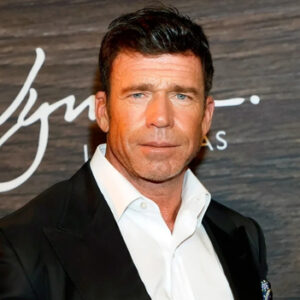
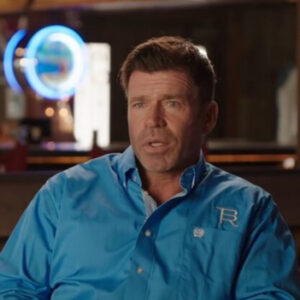
Working for Taylor Sheridan is not a lifestyle brand. It is a pressure test. The man behind Yellowstone and a parallel economy of spin-offs and standalones is, in the words of people who have been on his sets, a frustrated actor with a large ego—loyal to his circle, unsentimental about anyone outside it, and uninterested in the industry’s preferred scoreboard. That combination has been enough to build an audience empire valued, in his move toward NBCUniversal, in the neighborhood of a billion dollars, while collecting relatively little of what Hollywood still calls prestige.
The job description: don’t mess up, or leave

Ed Harris, a screen legend by any measure, recently said he felt “misled” by the size of his role on Dutton Ranch and told his team to “get me the f**k out of here.” Zoe Saldaña, lead of Lioness, has framed Sheridan’s sets as a binary: accept the challenge and do not fail—or quit. Those stories travel because they match a wider reputation: the script is the script, the bar is high, and comfort is not the product.
Yet the same ecosystem has revived or redirected late-career heat for Helen Mirren, Harrison Ford, Demi Moore, Michelle Pfeiffer and others—often at seven-figure-per-episode television money that feature films no longer reliably pay. Sheridan’s paradox is durable. He can be a hard boss and still be the reason an A-lister’s phone rings again.
Loyalty, and the people who swear by it
Jill Wagner, who co-created Special Ops: Lioness with her husband David Lemanowicz and pitched the idea to Sheridan—her former acting coach—has been blunt about the temperature. “He’s not necessarily always nice. He’s fair and if he tells you he’s going to do something, he does it. And that’s rare in the industry.”
When she asked him to do the show, he could have taken the concept and run alone. “He didn’t, and he’s included me in every step along the way. He wants me to learn.” Wagner stars as CIA operative Bobby, executive-produces, and watches Sheridan play Sergeant Major Cody Spears on screen. Her emphasis is on a trait Hollywood speeches about more than it practices: lifting people as you rise, staying loyal to the circle that built the machine.

That circle shows up as a stock company—James Jordan, Gil Birmingham, Moses Brings Plenty, Dawn Olivieri, Michelle Randolph, Neal McDonough and others returning across titles—while multiple sources insist Sheridan sets do not improvise. “When you get that script, that’s the script you’re shooting,” Lioness’s Michael Kelly has said.
The Costner fracture
Not every bond holds. Sheridan and Kevin Costner, the face of Yellowstone’s John Dutton, no longer talk after a public unraveling near the end of Season 5, Page Six has reported. Sheridan said he was “disappointed” by Costner’s exit; Dutton was killed off. Costner, promoting his own Western saga Horizon, argued the show had not told the truth about his schedule—that he had fitted film work into gaps the series kept moving.
Horizon underperformed. Yellowstone’s universe kept minting spin-offs. A source close to Costner has downplayed eternal warfare: the contract ended; he had hundreds of people depending on Horizon; there is “no reason for them to talk” and less personal blame than the internet prefers. The professional fact remains. The partnership that made linear cable feel national ended in frost.

From $800 to the 6666
Sheridan’s origin story is now industry folklore. In 2011 he was a working TV actor down to roughly $800 when he sold a screenplay that became Sicario. He has been candid about the ceiling he hit in front of the camera. “I was a fair actor, but that’s all I was ever going to be,” he told The Hollywood Reporter in 2023. Hollywood, he argued, will tell you what you are if you listen; twenty years of banging on the acting wall is data. The first thing he wrote seriously—Mayor of Kingstown’s pilot—got him meetings everywhere.
Yellowstone arrived on Paramount Network in 2018. Within a few years it was the rare linear-cable monster. Sheridan’s explanation was cultural, not algorithmic: people could not understand how a hard-to-find channel had the biggest show on television because of cowboys in a “dead” genre. “Of course, that’s not what the show is really about, that’s just the sugar on the pill.”
The money went back into the fantasy that predated the fame. He has said ranching was always the dream—an escape from failing as an actor in West Hollywood—while the movie-star plan (Scorsese when he felt like it) never arrived. Instead he poured earnings into the 142,000-acre 6666 Ranch in King County, Texas, leading a group that bought it in 2022 for about $320 million. On Landman, colleagues still describe a horse trailer at base camp and Sheridan riding the periphery of his own production like a man who never fully clocked into the lot.

How the factory actually writes
He is famous for writing alone on the core mythology: all of Yellowstone, and the solo pages on Landman, 1883, and 1923. Other engines, such as Stallone’s Tulsa King, run with writers’ rooms. The distinction matters. The Sheridan brand is not “showrunner as manager of a room” first; it is “author of a world” first—then scale.
That authorship model is why movie stars show up. An industry insider’s blunt math: it is almost unheard of to greenlight this easily, and stars who no longer clear old feature quotes can still clear more than a million an episode inside his tentpoles.

Ego, Demi Moore, and the Emmy shrug
Sheridan does not perform humility for the trade press. On The Bill Simmons Podcast he dismissed studio and network executives as knowing “nothing.” He told Demi Moore she would essentially be an extra in Landman Season 1 before becoming central in Season 2—knowing critics would accuse him of underusing her and of failing women on the page. “I don’t care what they think and it annoys the s**t out of them that I don’t care.”
The awards ledger matches the attitude. His shows command audiences; Emmy shelves stay light. Insiders point to work like Billy Bob Thornton and Ali Larter on Landman and ask why the punishment. Sheridan’s answer is demographic and philosophical. He calls himself “pretty common,” writing for people who understand common stories—most of America. Emmys are not the goal. “My goal is to sit somebody on their couch and move them, make them think, make them laugh, scare the s**t out of them.”
The next stages: NBCU, Call of Duty, and Harris returning

He is leaving the Paramount era that made his fanatic audience for a NBCUniversal pact talked about in billion-dollar terms—while still entangled in Paramount projects through the remainder of existing pipelines. He is co-writing and producing a live-action Call of Duty film for Paramount Pictures and Activision with Peter Berg, aimed at a June 30, 2028 release in the Modern Warfare vein. One Hollywood source’s preview of that collaboration: two large personalities used to controlling a set; “interesting” is the polite word.
As for Ed Harris: for all the Season 1 frustration on Dutton Ranch, the reporting closes on a practical punch line. He is expected back for Season 2.
The empire’s real architecture
Sheridan did not out-Hollywood Hollywood. He built a bypass:
- Solo authorship on the mythic titles, rooms where he allows them
- Cable and streaming scale instead of prestige-first rollout
- A-list salaries without requiring A-list theatrical viability
- A Texas ranch identity that doubles as brand and balance sheet
- Loyalty upward and sideways for the trusted; frost for the broken partnerships
- Contempt for critics and Emmys as a feature, not a bug

The result is a television economy that does not need the old capitals to feel national. Whether NBCUniversal inherits the golden touch or only the volume remains a future story. The present one is already strange enough: a former working actor with a horse trailer on the lot, a script you do not rewrite, a billion-dollar chair at the end of the Paramount chapter—and a standing instruction to the talent that still chooses him. Meet the standard. Or go home.