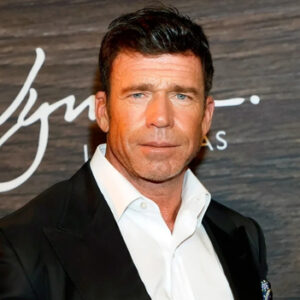
Sam Elliott has now appeared in two Taylor Sheridan series, which might suggest blanket approval of the whole empire. It does not. When Sheridan first approached him about the Yellowstone prequel 1883, the veteran actor made his feelings about the flagship show painfully clear in three blunt words. Sheridan later recounted the exchange on The Howard Stern Show in June 2026—and, crucially, he was not offended. He agreed.
“I don’t like that Yellowstone”
As Sheridan told the story, Elliott did not soften the pitch meeting. “I don’t like that Yellowstone. That’s a cowboy soap opera.” The line lands like a spur to the ribs for anyone who has watched the Dutton saga become a cultural phenomenon. Yellowstone built its audience on ranch dynasties, land wars, family betrayals and the kind of heightened drama that invites the “soap” label even from people who love it.
Sheridan’s response was not defensive. “I said, ‘You’re right. I’m not asking you to be on that […] That’s the punk rock me, throwing middle fingers at the industry […] This is going to be the grown-up me.’” He framed Yellowstone as the brash, confrontational version of his voice and 1883 as something more sober—closer to the tragic, grounded Western he wanted Elliott to inhabit. He described the character he had in mind. Elliott’s reply flipped the temperature of the room: “That’s beautiful. I’d love to do that.”

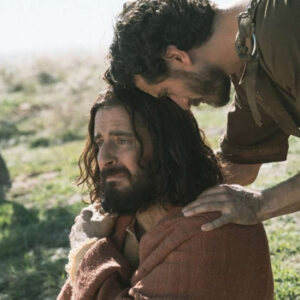
The rest is on screen. Elliott’s Shea Brennan—grieving, weathered, leading a wagon party toward a future that would eventually feed the Dutton legend—became one of the prequel’s emotional anchors.
Elliott kept the distance on purpose
Even after committing, Elliott was careful not to let 1883 be swallowed by the mothership’s brand. Speaking to Esquire in December 2021, he was adamant about separating the two. “I’m very adamant to dissect this from Yellowstone. 1883 stands on its own. The only connection to Yellowstone, in my estimation, is the fact that this is how John Dutton ended up in Montana on this journey. That’s it.”
That stance fits both the actor’s reputation and the show’s tone. 1883 asked for endurance, loss and a kind of frontier fatalism; Yellowstone often asked for power plays and contemporary swagger. Elliott signed on for the former and refused to pretend they were the same job.
Sheridan, for his part, still describes Elliott as “one of the most delightful human beings I’ve ever met.” He also hired him again—which is the practical form of not holding a grudge.
From Shea Brennan to T.L. Norris
Three years after 1883, Elliott returned to Sheridan’s world as T.L. Norris in Landman. In a November 2025 conversation with Variety, he talked about how the role demanded more open emotion than much of his earlier work. “One of the great gifts about Taylor’s material is that it just allows that kind of emotion to flow. I spent a good part of my time in tears this entire season, so it wasn’t something I expected, but it’s just something that happened.”

He also connected with Sheridan’s habit of writing people who are tied to land and outdoor life—something that tracks with Elliott’s own years spent outside the purely urban actor’s circuit. “That really speaks deeply to me,” he said. Sheridan has long drawn on personal history, including growing up around a family ranch and later losing that world; those textures clearly register with a performer who has spent a career embodying Western gravity.
Friendship on the other side of the insult
The Stern appearance was not only about the three-word review. Sheridan sounded almost disbelieving that the working relationship had become personal. “You’ve got to pinch yourself sometimes when you sit there and you see Sam Elliott saying your words. I have to pinch myself more to say that I can honestly call him a friend.”
That arc—from “cowboy soap opera” to mutual admiration—says as much about Sheridan’s thick skin as about Elliott’s standards. The showrunner did not try to convert Elliott into a Yellowstone fan. He offered a different show, a different register, and a character the actor could respect. Elliott took the part, drew a bright line between the prequel and the original, and later trusted Sheridan enough to cry on camera in Landman.
Why the diss still matters
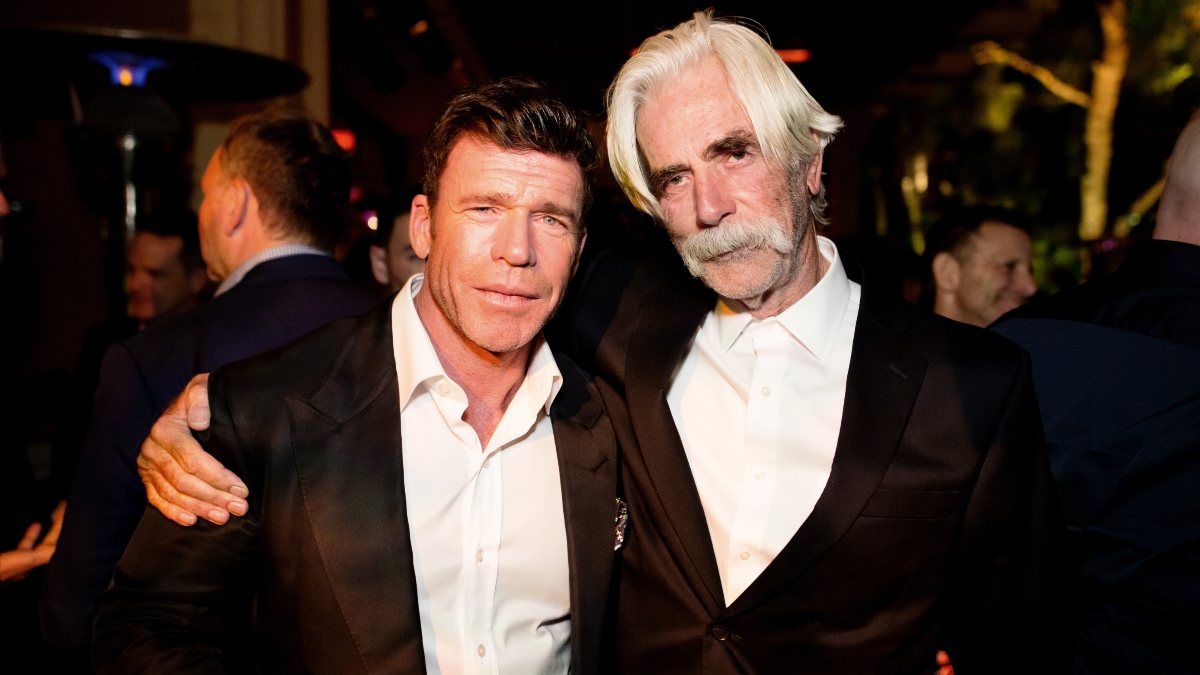
In an industry full of polite nothing-comments, Elliott’s verdict is usefully specific. Yellowstone can be both a hit and, to a certain kind of Western traditionalist, a soap with horses. Sheridan’s willingness to say “you’re right” and then prove 1883 was built on different rules is why the collaboration worked. Fans who love the Dutton present and fans who prefer the wagon-train past do not have to agree. Elliott never asked them to.
He still does not have to like Yellowstone. He only had to believe in Shea Brennan—and, later, in whatever Sheridan put on the page for T.L. Norris. On the evidence of two performances and one very public three-word review, that bargain held.